Weber's Book: Hitler's First War
BOOK REVIEW d.d. 27 March 2011
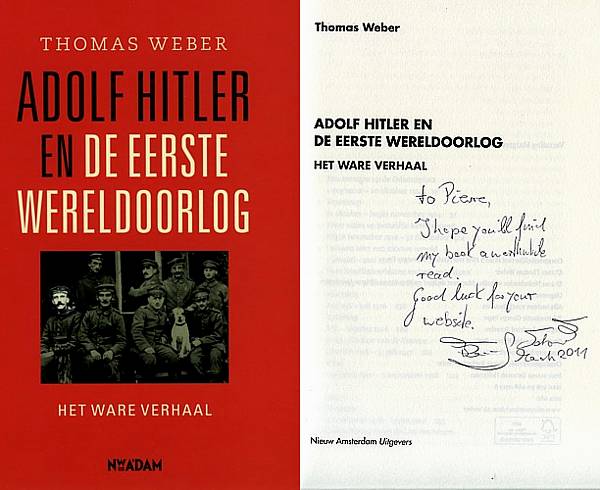
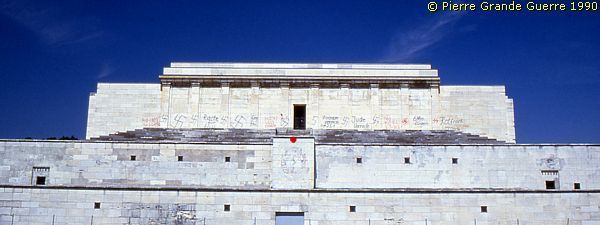
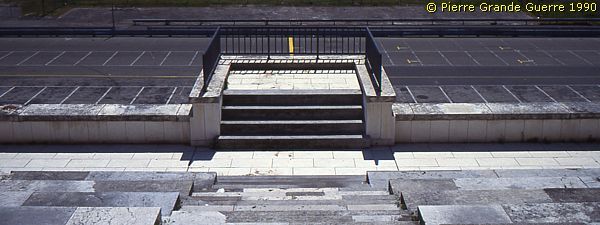
Since I read during
my school years Allan Bullock's biography,
"Hitler: a Study in Tyranny", I've been
fascinated by the abject phenomenon of Hitler.
Since I went deeper into the Great War, my
fascination has only increased for the person,
who surely may be considered as the
exponent and the personification of the
continuum of the First and Second World War.
Reason

Regimental History B.R.I.R. 16
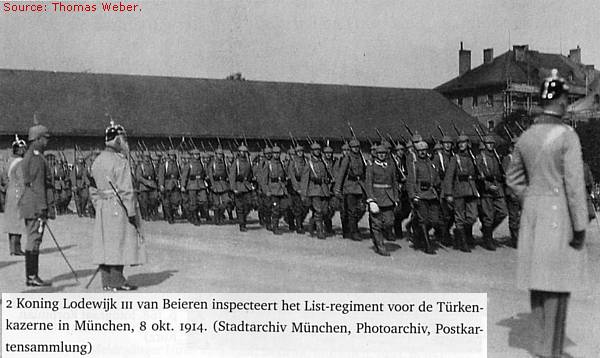
Creation of the myth of the brave soldier
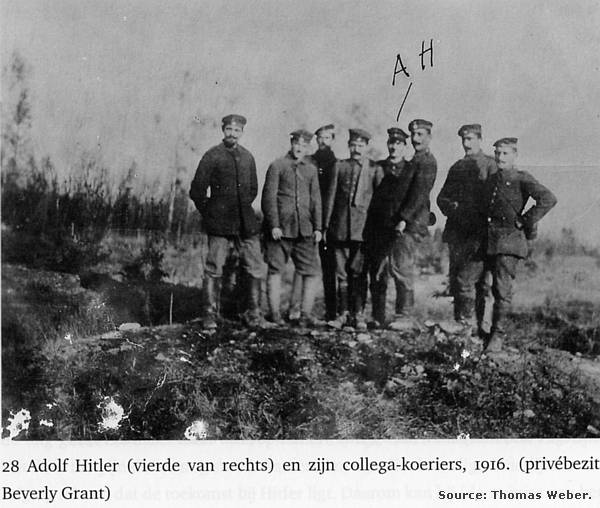
The image of a
fearless "“Meldeganger Hitler”, as the myth of
Nazi’s has created this image, and has
been taken over later by many renowned
historians, is according to Weber not
true. Even I, as a simple and humble reader,
always wrongly assumed that being a message
runner was a very dangerous task. But
concerning the risk of the distinct types
of messengers Weber makes an important
distinction between battalion messengers
and regimental messengers. Battalion
runners did have dangerous task to crawl until
the first lines to pass the messages. Regimental
runners, like Hitler, only went up and down from
the regimental headquarters to the battalion
headquarters. Compared to the circumstances of
ordinary soldiers in the trenches and battalion
messengers, Weber argues, that regimental
runners had a relatively easy life on a
relatively safe distance with much less risk and
less exposure to danger, and with better housing
and better nutrition. In short, Hitler was
indeed exposed to war, but compared to the men
in the trenches, Hitler had it a lot easier.
Therefore I find it amusing that Weber, in a
note politely but firmly settles with renowned
historians, such as Kershaw and Keegan, who
blindly have continued the tradition of the
imprinted image of the dangerous task of
Meldeganger Hitler. (5) So, food for historians!
Iron Cross First
Class
Notes