OISE - Armistice Clearing - Clairière de Rethondes - Compiègne
SPECIAL Photo Impression - Year of visit: 2005, 2008
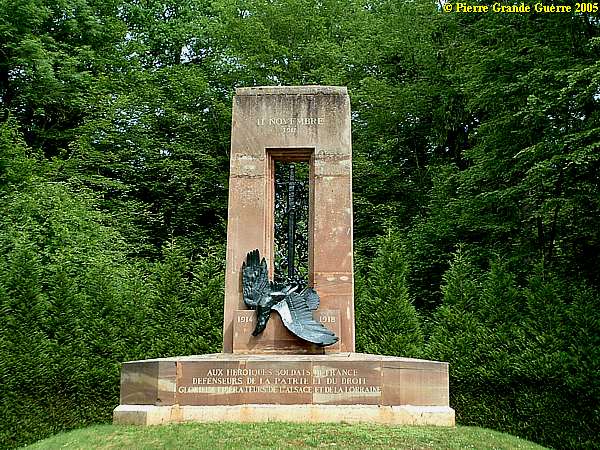
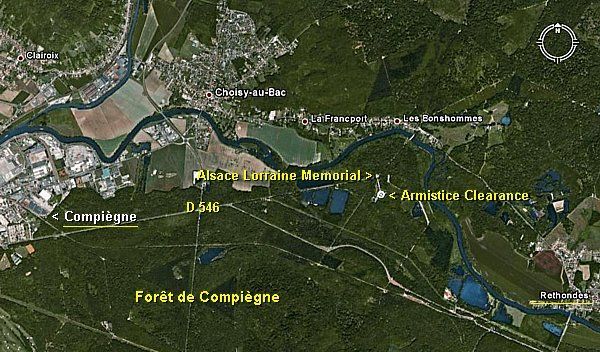
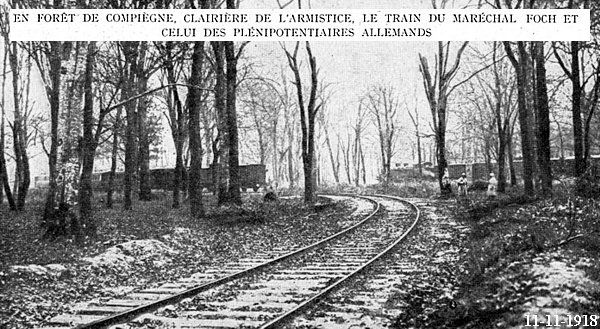
A visit to the Armistice Clearing in the Forest of Compiègne, the location, where the signature of the Armistice took place at 11 November 1918, between 5:12 AM and 5:20 AM, Paris time. An important location for the history of the 20th century, where an Armistice was signed twice.
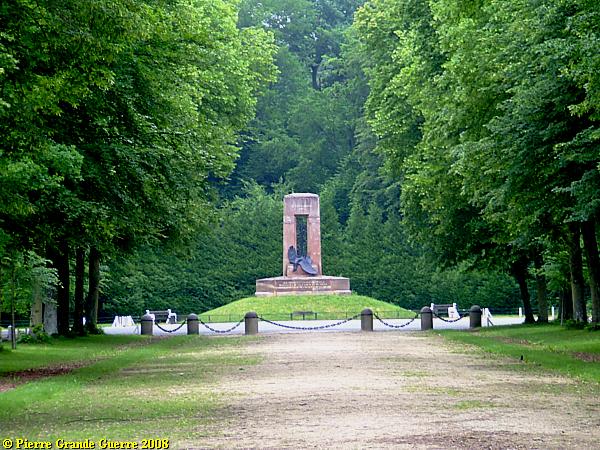
The path from the Alsace Lorraine Memorial in the Forest of Compiègne marks the former location of two railway tracks, which lead to the railway clearing.
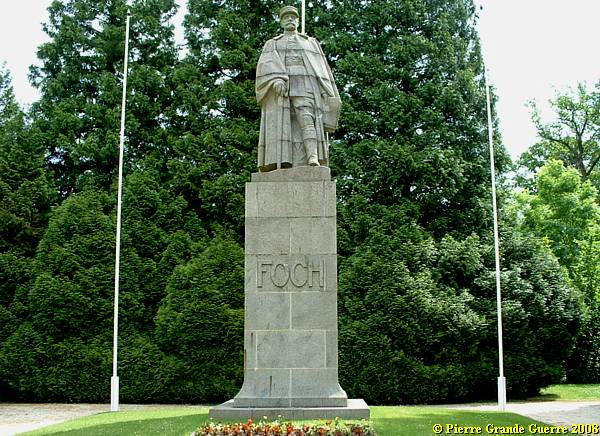
Some hundred meters southward, the statue of Marshall Foch overlooks the location where, the German and Allied Delegations met to negotiate the Terms of the Armistice.
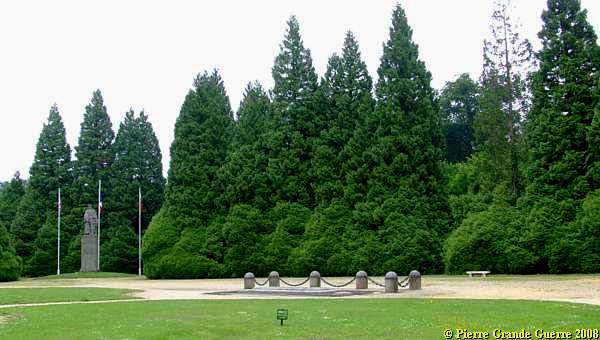
The sculptor, F. Michelet, made the statue of Foch. The statue was revealed on 11 november 1927. The clearing site was inaugurated by President Millerand on 11-11-1922.
The deterioration of Germany
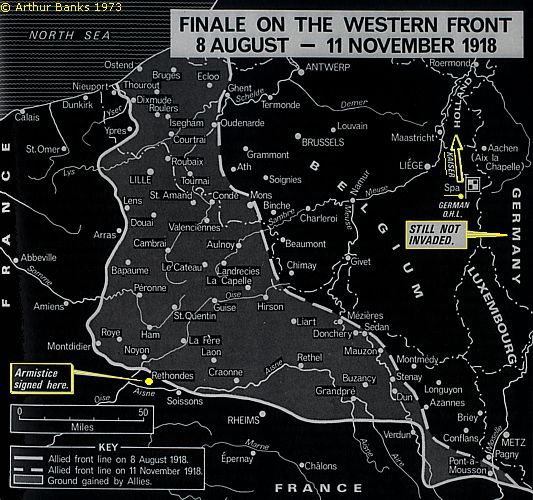
After 8 August 1918, and the later events after the Battle of Amiens , the situation of the German Armies deteriorated more and more. The Allies forced the Germans to withdraw further and further north-eastward.
Social unrest broke out in Germany. In Germany the defeat of the Great War was generally considered as Kaiser Wilhelm’s personal failure, which resulted in a mutiny within the Kaiserliche Marine, a revolution, and the proclamation of the Republic on 9 November 1918.
Negotiations about the Armistice
Under pressure of imminent
revolution in Berlin, Munich, and elsewhere across Germany, Paul von
Hindenburg had requested arrangements for a meeting with Ferdinand Foch
via a telegram on 7 November.
On 8 November the German delegation crossed the front line in five cars
and was escorted for ten hours across the devastated war zone of
northern France. They were then entrained and taken to a secret
destination, a railway clearing in the Forest of Compiègne, near the
village of Rethondes.
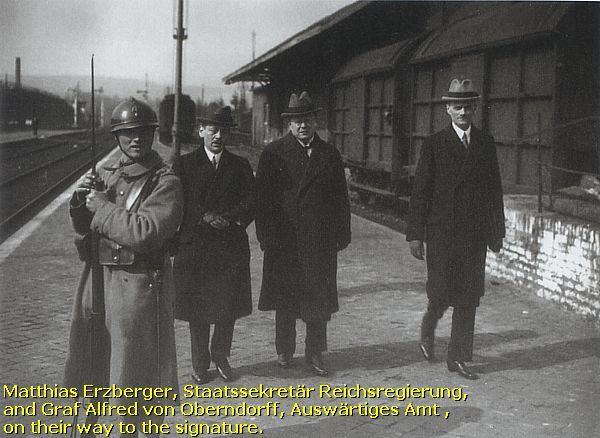
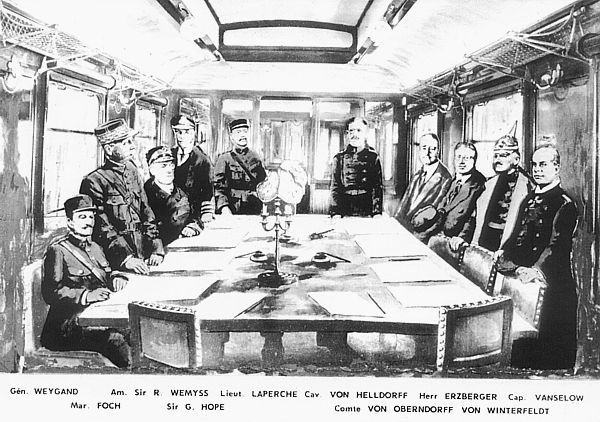
The German Delegation of Plenipotentiaries existed of Matthias Erzberger, a civilian politician representing the new German Government under the new Chancellor, the socialist Friedrich Ebert, Count Alfred von Oberndorff, from the Foreign Ministry, Major General Detlev von Winterfeldt, General von Gruennel, for the army, and Captain Ernst Vanselow, for the navy.
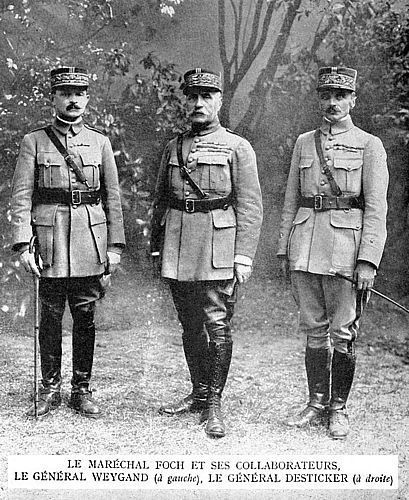
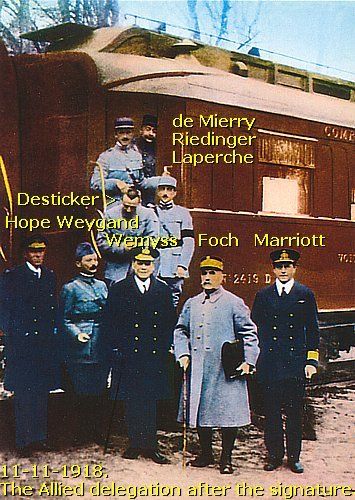
The Allied Delegation existed only of military Plenipotentiaries: Marshall of France, Ferdinand Foch, the Allied Supreme Commander First Sea Lord Admiral Rosslyn Wemyss, the British representative, General Weygand, Foch's Chief of Staff, General Desticker, and some French and British officers.
Foch appeared only twice in the three days of negotiations: on the first day, to ask the German delegation what they wanted, and on the last day, to see to their signatures. In between, the German delegation discussed the details of the Allied terms with French and Allied officers.
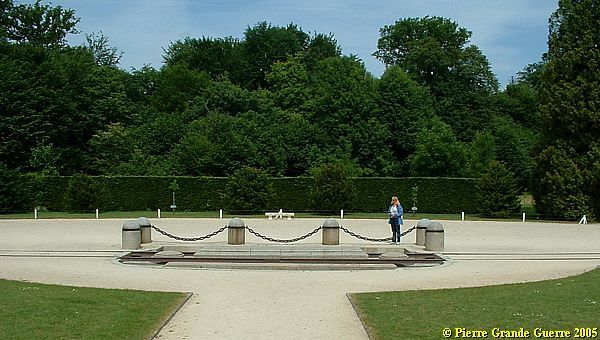
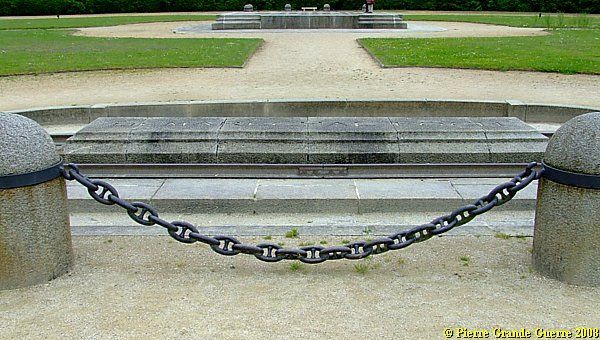
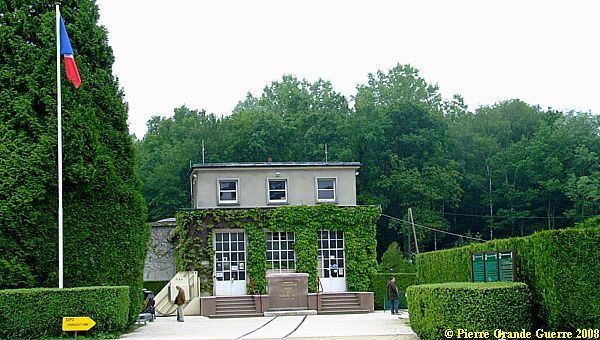
View over the Armistice Memorial from the location, the remembrance stone, where the railway carriage of the German Delegation was situated.
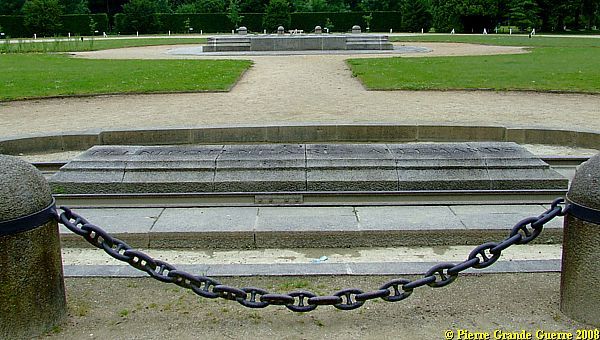
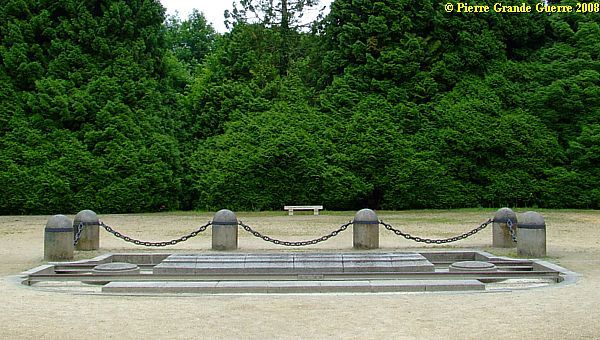
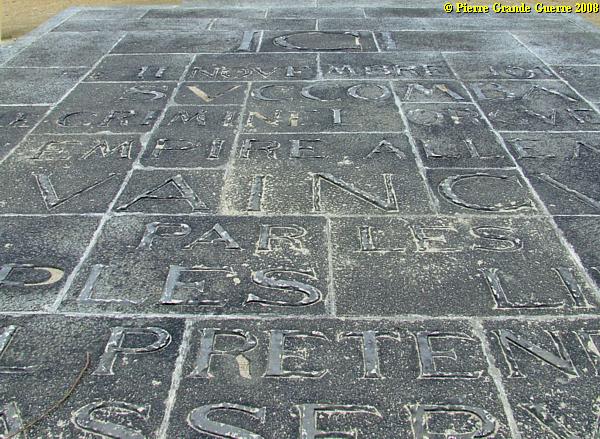
In between the two railroad tracks lies a huge tablet with a commemorative text:
"ICI
LE 11 NOVEMBRE 1918 SUCCOMBA LE CRIMINEL ORGUEIL DE L'EMPIRE ALLEMAND
VAINCU PAR LES PEUPLES LIBRES QU'IL PRETENDAIT ASSERVIR."
At the other side of the site marks a remembrance stone the exact location of the railway carriage of Marshall Foch.
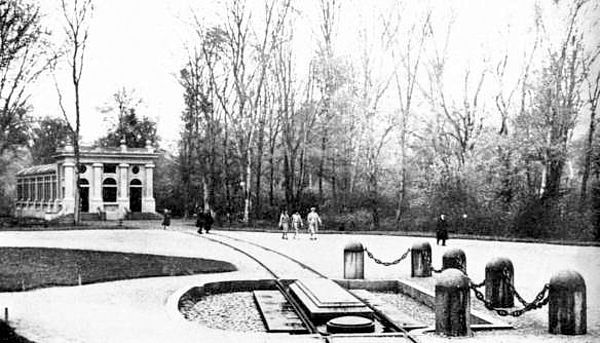
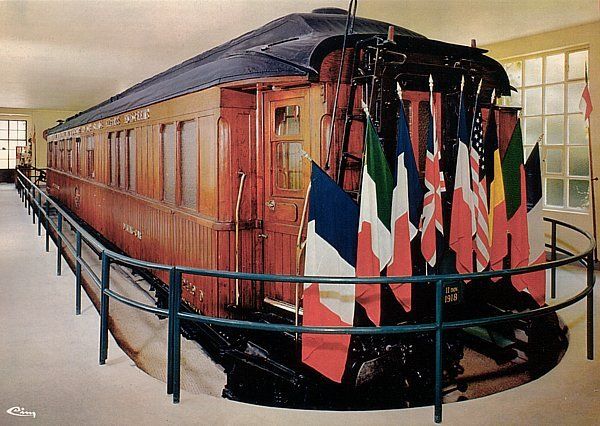
In 1927 the French Government founded a museum for Foch's railway carriage, a salon wagon, built for Napoléon III in 1867.
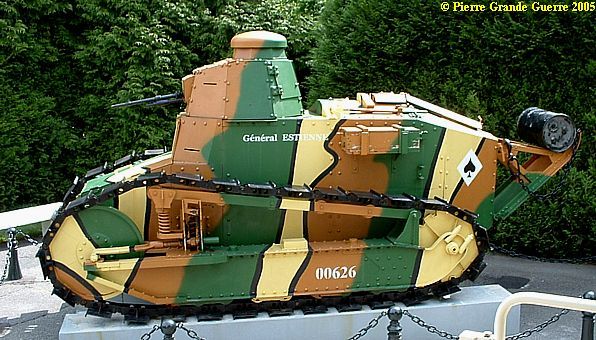
At the entrance of the nowadays Museum stands an original French Renault tank.
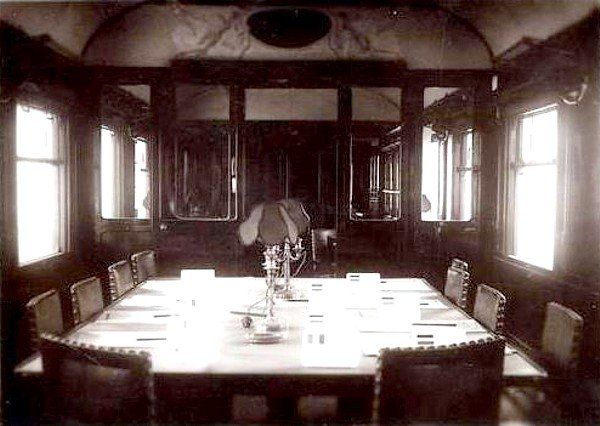
The Museum preserves a meticulously made copy of Marshall Foch's railway carriage.
The Terms of the Armistice
The Terms of the Armistice included major points such as the withdrawal of German troops from Belgium, France, the disputed territories of Alsace and Lorraine, a retreat to the original territorial boundaries in the east, and an army free zone of 30 km deep into German territory along the eastern bank of the Rhine.
The Allies demanded the immediate surrender of large amounts of materiel, including weapons and warships of the German fleet to be disarmed and put under the control of the Allies in neutral or Allied harbours.
The Germans were also called upon to renounce the Treaty of Brest-Litovsk and Treaty of Bucharest, which were the peace treaties the German Empire had already signed in February 1918 with Russia and Romania.
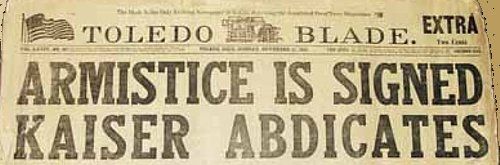
In fact there was no question of negotiation. The Germans were able to correct only a few impossible demands and registered their formal protest at the harshness of the Allied terms. But they were in no position to refuse to sign. On sunday 10 November , they were shown newspapers from Paris, to inform them, that Kaiser Wilhelm II had abdicated.
Telegrams were passed to and from the German Delegation; to Von Hindenburg in Spa and Ebert's government in Berlin. A telegram from Berlin implored Erzberger to sign immediately without any further hesitation.
The Delegations signed the Armistice in the morning of 11 November between 5:12 AM and 5:20 AM, Paris time.
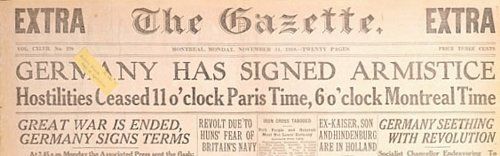
The Armistice was agreed to come into effect at the same day, at 11 November, at 11 o'clock Paris time, for which reason the time, date, and month of the effective Armistice is sometimes referred to as "the eleventh of the eleventh of the eleventh".
Of course the Armistice was great news of world-wide importance. Some period newspaper headlines telling about the Armistice, the German revolution, the exile of Kaiser Wilhelm II, and the Crown Prince fleeing to the Netherlands:
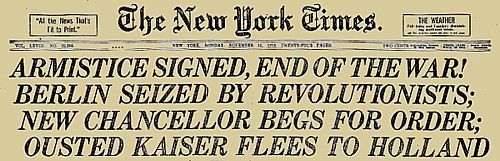
(For the sites of exile of the German Imperial Family in the Netherlands: read also " Huis Doorn " and " l'Abri du Kronprinz "!)
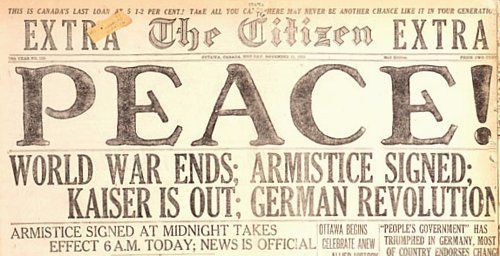
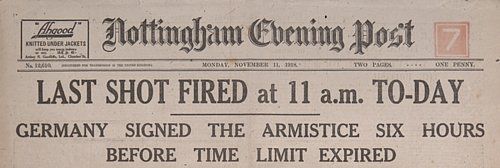
This 2 min. 48 sec. period video clip shows the international reactions on the news of the Armistice, first in the USA and later in Paris:
The Aftermath
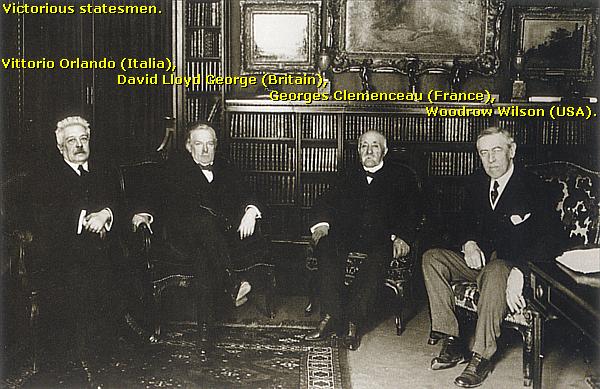
Eventually the Armistice between the Allies and Germany would subsequently be settled by the conference in Paris and the Treaty of Versailles in 1919.
The severe conditions and the high financial reparation impositions on the Germans of the Versailles Treaty would form some of the main motivations for the Germans under Adolf Hitler to start later the Second World War in 1939.
This 2 min. 35 sec.
period videoclip shows the large crowd gathered in Berlin, Germany in front of the Brandenburg Gate and the Hotel Adlon in the early days of the Weimar Republic demonstrating and protesting the terms of the Treaty of Versailles and to urge the government not to sign the treaty.
This 6 min. 10 sec. period video shows images of the signing of the Versailles Treaty on 28 June 1919:
Right after the war Foch's railway carriage was brought over to the Hôtel des Invalides in Paris to be temporarily exposed to the public.
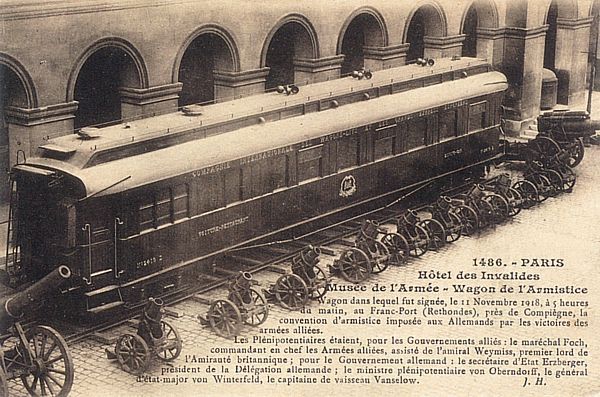
In 1927 the original carriage was taken to this Museum, which exposes now a copy of Foch's original railway carriage.
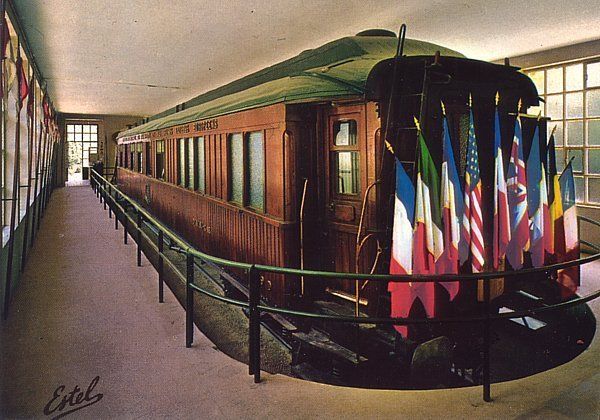
The story about Foch's lost railway carriage would continue until 1940.
Armistice 1940: Hitler's Revenge
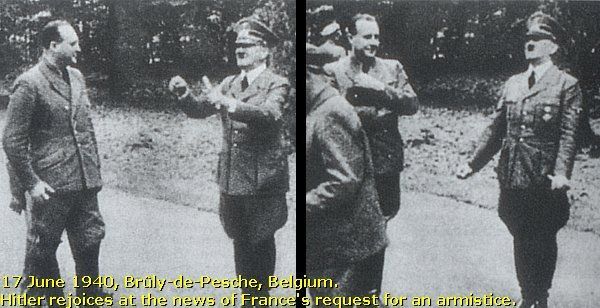
During the Second World War Adolf Hitler received on 17 June 1940 word from the French Government, that it wished to negotiate an Armistice. Hitler immediately selected the same location of the Armistice of 1918 to humiliate the French. Hitler saw using this location as a supreme moment of revenge for Germany over France.
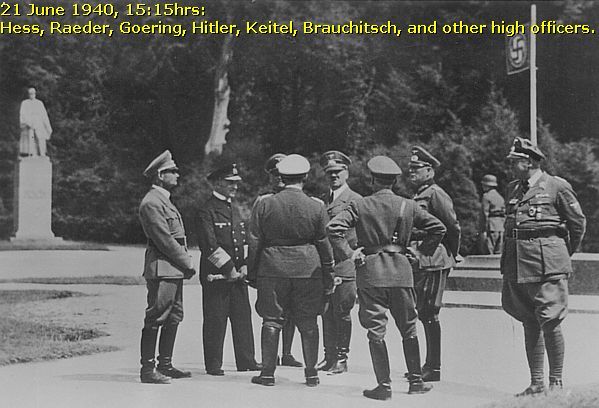
Hitler ordered to remove Foch's 1918 Armistice railway carriage from the museum building and to place it on the exact spot, where it was located in 1918.
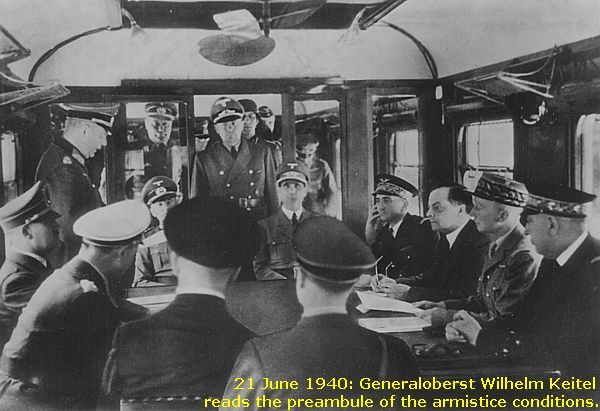
On 21 June 1940 Hitler sat in Foch's restaurant wagon in the very same chair, that Marshal Foch had sat in, when he faced the defeated German representatives. After listening to the reading of the preamble of the armistice conditions by Generaloberst Wilhelm Keitel, Hitler left the carriage with a calculated gesture of disdain to the French delegates.
This 1940 newsreel shows images of the French surrender to Hitler:
On Hitler's orders the Germans demolished the Armistice site three days later. The carriage itself was taken to Berlin as a trophy of war, along with pieces of the large stone tablet with the inscription. The railway carriage itself was taken to Crawinkel in Thuringia in 1945, where it was destroyed by SS troops and the remains buried.
The Germans also destroyed E. Brandt's Alsace-Lorraine Monument on 24 June 1940, and all evidence of the site was obliterated, with the notable exception of the statue of Marshal Foch. Hitler intentionally ordered the statue of Foch to be left intact, so that it would be honouring only an empty wasteland.
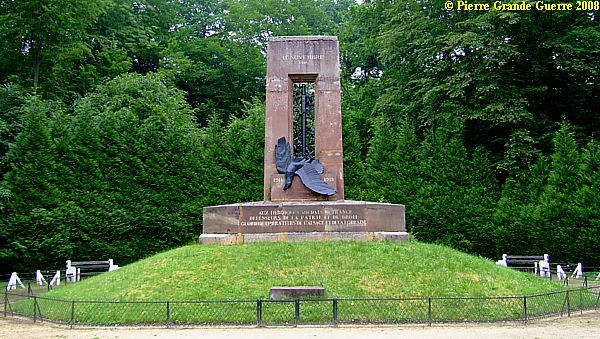
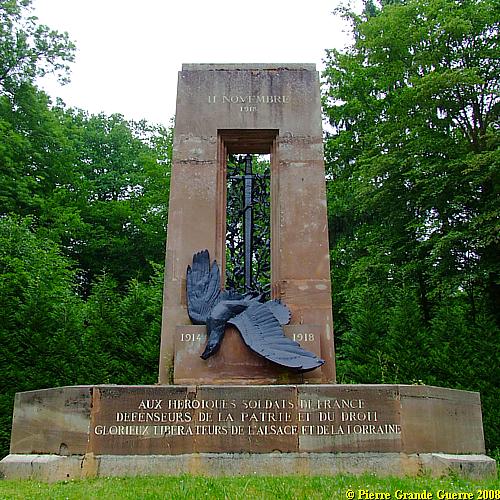
We are back at our starting point: the Alsace Lorraine Memorial . The French Sword has brought down the German Eagle; Alsace and Lorraine were back in French possession. The Memorial symbolises the great importance of the return of the in 1871 lost territories of Alsace and Lorraine to France.
Continue to the next Special Photo Impression: " The NETHERLANDS - Huis Doorn - The Kaiser's Exile"