YPRES SALIENT - Traces of Bairnsfather - The Christmas Truce - St. Yvon - Ploegsteert
SPECIAL Photo Impression - Years of visit: 2006, 2016
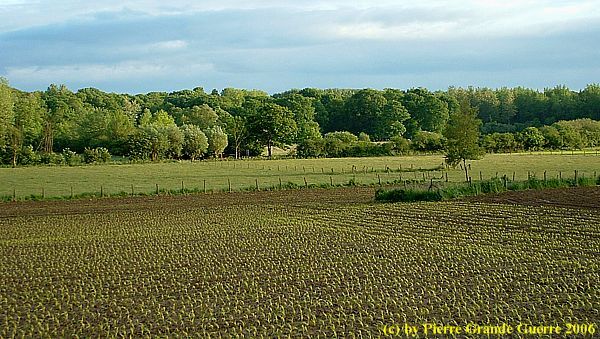
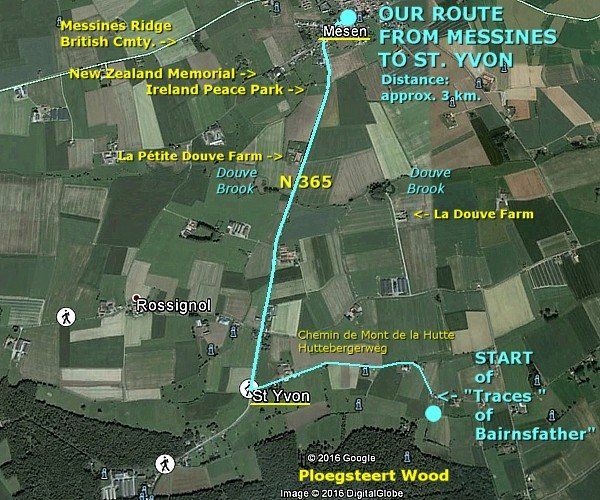
From Messines (in Flemish: Mesen) we depart southward via the N 365 to the north of Ploegsteert Wood, or rather “Plugstreet”. In and around the hamlet of St. Yvon we try to follow some traces of the front cartoonist and witness of a 1914 Christmas Truce football event, Captain Bruce Bairnsfather. We start at "Bairnsfather's Cottage". Next we will visit the site of the Christmas Truce Football Game of 1914 and its 2014 Memorial. This page will end with a leap northward to visit Mouse Trap Farm near Pilkem Ridge, north-east of Ypres, where Captain Bairnsfather was seriously wounded in April 1915.
If you are not familiar with the back ground of the Ypres Salient, start with the
Ypres Salient part 1
.
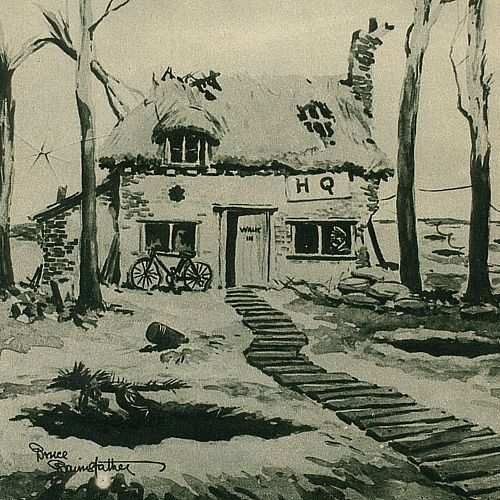
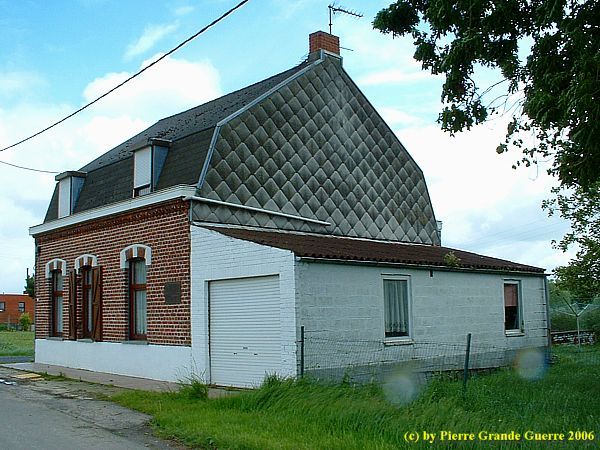
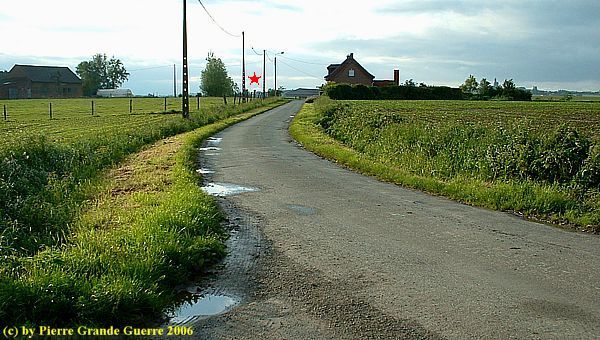
We start our explorations at this house in the hamlet of St. Yvon, east on the satellite photo, which stands on the spot of the former cottage, beneath which Bairnsfather stayed during in the winter of 1914-1915 in his billet a dug-out.
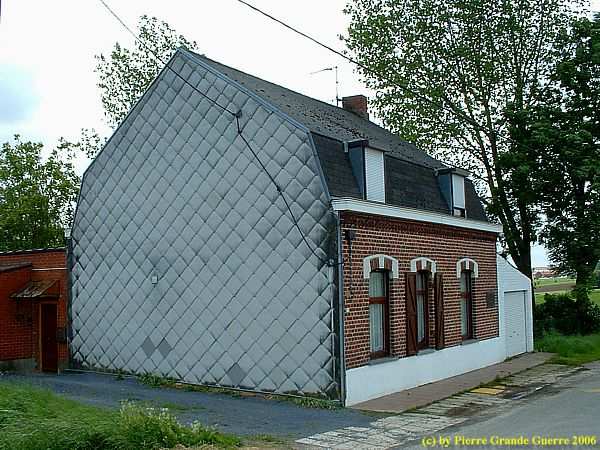
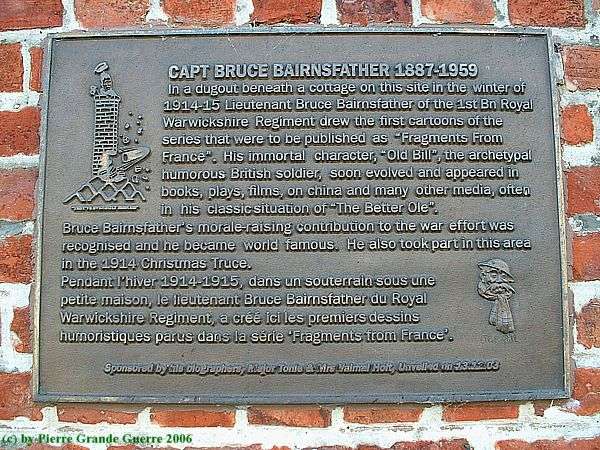
| No. 12, Chemin de Mont de la Hutte / Huttebergerweg - In 2003 Major and Mrs. Holt , the experienced, veteran battlefield guide authors and Bairnsfather biographers, sponsored and unveiled this informative plaque to Captain Bruce Bairnsfather. |
| Captain Bruce Bairnsfather |
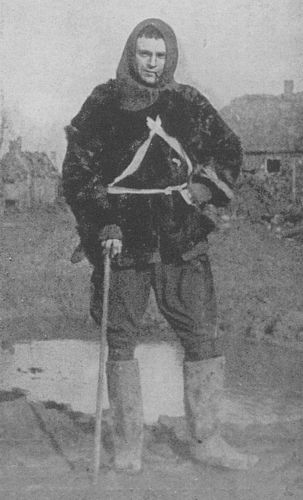
In 1914, when Bairnsfather re-enlisted with his old unit, the Royal Warwickshire Regiment, he was instantly promoted Lieutenant. After the battle of Mons he was assigned to command a machine-gun section at the hamlet of St. Yvon near Ploegsteert Wood , close to the Belgian-French border.
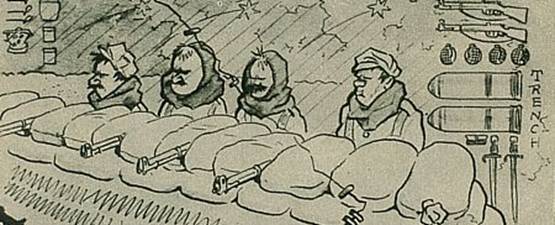
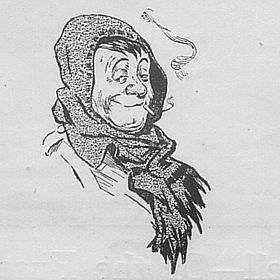
In the dug-out beneath this house Bairnsfather drew his first "trench" cartoons. For The Bystander journal he developed his humorous series of cartoons about life in the trenches, featuring a.o. "Old Bill", a grumpy soldier with a walrus moustache and a balaclava.
"Fragments of France"
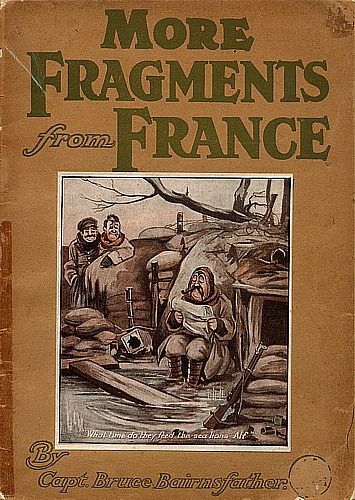
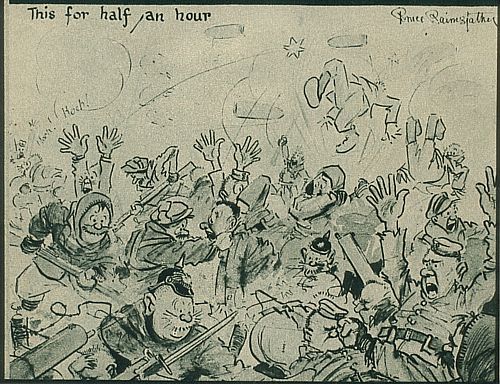
From 1914 many of his cartoons were collected in his four volumes of Fragments From France and his autobiographical Bullets & Billets (1916). Despite the immense popularity with the troops and a massive increase of sales for The Bystander , initially there were many moral objections to Bairnsfather’s "vulgar caricature".
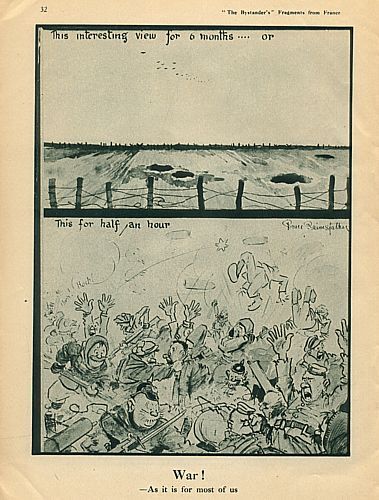
After all this commotion, the success of the cartoons in raising morale led finally to Bairnsfather's promotion and his appointment to the War Office to draw more similar cartoons.
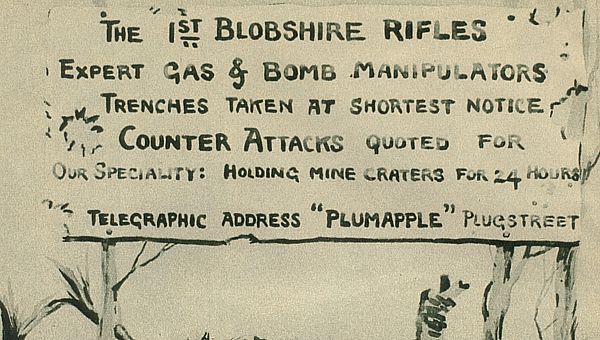
In particular this cartoon of the St. Yvon cottage in my original sample of More Fragments of France inspired me to look for his traces here.
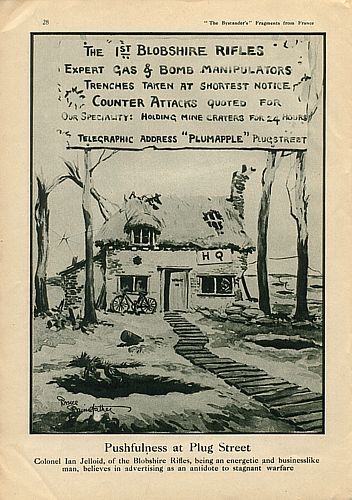
Zoom-in on three details:

Digital copies of Bairnsfather’s books are to be found on the site of Open Library
A view from the cottage over the fields to the former German lines...
... in the direction of Messines Ridge.
Bairnsfather's Situation Sketch
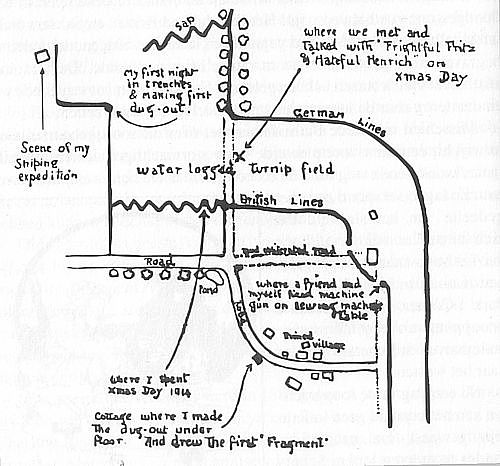
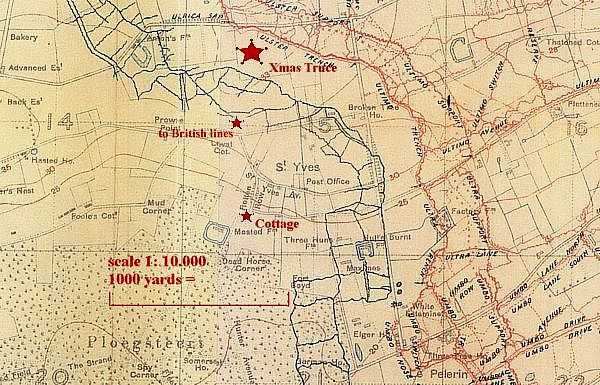
From his "Cottage where I made The dug-out under floor. And drew The first "Fragment" Bairnsfather drew a sketch of the positions of the first trench lines. He marked the site of the 1914 Christmas Truce in No Man's Land, where he "met and talked with ‘Friteful Fritz & Hateful Heinrich’ on X-mas Day."
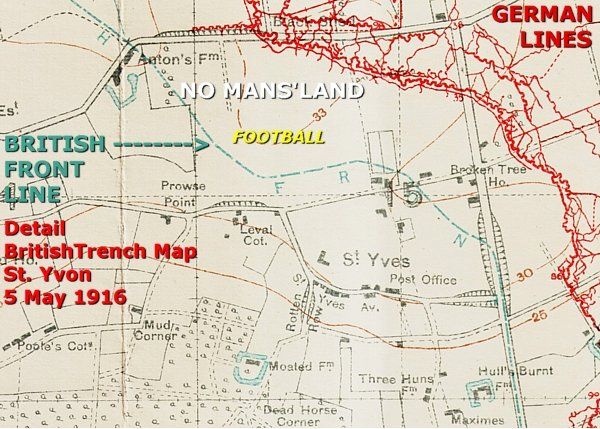
A detail of a British trench map of the same area of Bairnsfather’s sketch. Although the map was drawn on 5 May 1916, one and a half years years after the 1914 Christmas Truce event, the situation after the Truce of the opposed front lines and of No Man’s Land did not change much. Of course, since Christmas 1914 both sides of the wire had actively expanded their trench systems to mazes of trenches, and the British had gained a few metres eastward, between Anton’s Farm and Leval Cottage. Still, this trench map detail offers a good impression of the front line at St. Yvon ( also spelled on trench maps as St. Yves ), and this map detail matches Bairnsfather’s sketch.
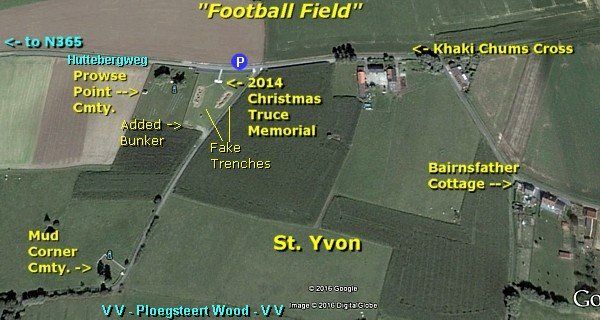
To help you compare the trench map detail with the situation today I show a satellite photo of 2016.
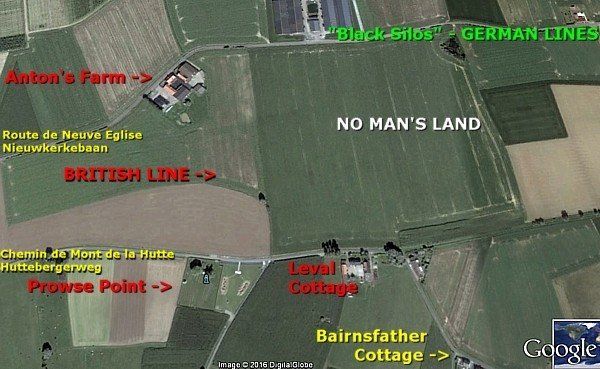
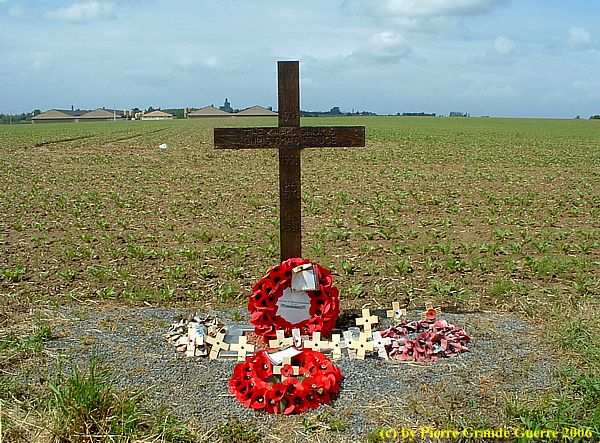
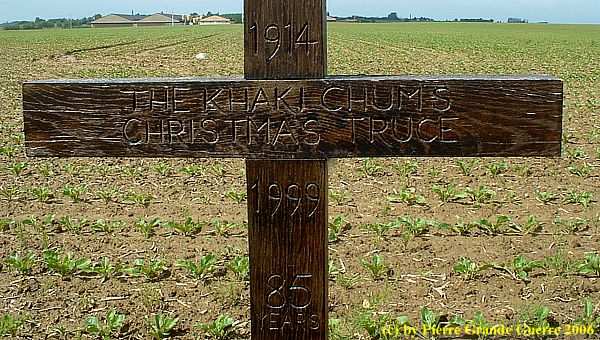
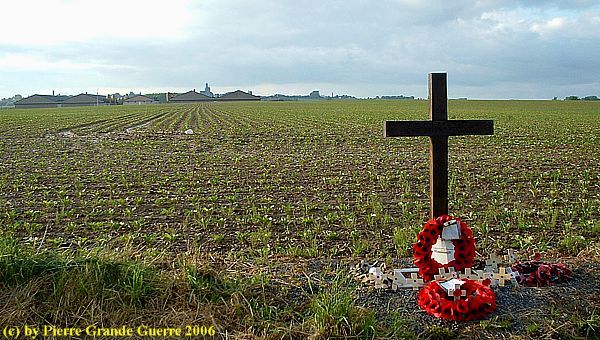
Opposite of the site of the "Black Silos", in 1999 the Association for Military Remembrance of the Khaki Chums erected this cross to commemorate the Christmas Truce. Until 1999 this was the only, simple memorial at this site.
As we have seen on his sketch, Bairnsfather participated here in the Christmas Truce of 1914.
Bairnsfather wrote about the Christmas Truce at St. Yvon:
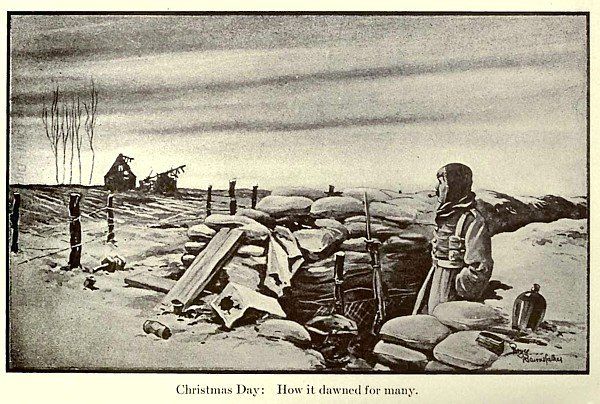
"On Christmas morning I awoke very early, and emerged from my dug-out into the trench. It was a perfect day. A beautiful, cloudless blue sky. The ground hard and white, fading off towards the wood in a thin low-lying mist. It was such a day as is invariably depicted by artists on Christmas cards—the ideal Christmas Day of fiction.
"Fancy all this hate, war, and discomfort on a day like this!" I thought to myself. The whole spirit of Christmas seemed to be there, so much so that I remember thinking, "This indescribable something in the air, this Peace and Goodwill feeling, surely will have some effect on the situation here to-day!" And I wasn't far wrong; it did around us, anyway, and I have always been so glad to think of my luck in, firstly, being actually in the trenches on Christmas Day, and, secondly, being on the spot where quite a unique little episode took place. (....)
Walking about the trench a little later, discussing the curious affair of the night before, we suddenly became aware of the fact that we were seeing a lot of evidences of Germans. Heads were bobbing about and showing over their parapet in a most reckless way, and, as we looked, this phenomenon became more and more pronounced.
A complete Boche figure suddenly appeared on the parapet, and looked about itself. This complaint became infectious. It didn't take "Our Bert" long to be up on the skyline (it is one long grind to ever keep him off it). This was the signal for more Boche anatomy to be disclosed, and this was replied to by all our Alf's and Bill's, until, in less time than it takes to tell, half a dozen or so of each of the belligerents were outside their trenches and were advancing towards each other in no-man's land.
A strange sight, truly!
I clambered up and over our parapet, and moved out across the field to look. Clad in a muddy suit of khaki and wearing a sheepskin coat and Balaclava helmet, I joined the throng about half-way across to the German trenches.
It all felt most curious: here were these sausage-eating wretches, who had elected to start this infernal European fracas, and in so doing had brought us all into the same muddy pickle as themselves.
This was my first real sight of them at close quarters. Here they were—the actual, practical soldiers of the German army. There was not an atom of hate on either side that day; and yet, on our side, not for a moment was the will to war and the will to beat them relaxed. It was just like the interval between the rounds in a friendly boxing match. The difference in type between our men and theirs was very marked. There was no contrasting the spirit of the two parties. Our men, in their scratch costumes of dirty, muddy khaki, with their various assorted headdresses of woollen helmets, mufflers and battered hats, were a light-hearted, open, humorous collection as opposed to the sombre demeanour and stolid appearance of the Huns in their grey-green faded uniforms, top boots, and pork-pie hats.
The shortest effect I can give of the impression I had was that our men, superior, broadminded, more frank, and lovable beings, were regarding these faded, unimaginative products of perverted kulture as a set of objectionable but amusing lunatics whose heads had got to be eventually smacked.
"Look at that one over there, Bill," our Bert would say, as he pointed out some particularly curious member of the party.
I strolled about amongst them all, and sucked in as many impressions as I could. Two or three of the Boches seemed to be particularly interested in me, and after they had walked round me once or twice with sullen curiosity stamped on their faces, one came up and said "Offizier?" I nodded my head, which means "Yes" in most languages, and, besides, I can't talk German.
These devils, I could see, all wanted to be friendly; but none of them possessed the open, frank geniality of our men. However, everyone was talking and laughing, and souvenir hunting.
I spotted a German officer, some sort of lieutenant I should think, and being a bit of a collector, I intimated to him that I had taken a fancy to some of his buttons.
We both then said things to each other which neither understood, and agreed to do a swap. I brought out my wire clippers and, with a few deft snips, removed a couple of his buttons and put them in my pocket. I then gave him two of mine in exchange.
Whilst this was going on a babbling of guttural ejaculations emanating from one of the laager-schifters, told me that some idea had occurred to someone.
Suddenly, one of the Boches ran back to his trench and presently reappeared with a large camera. I posed in a mixed group for several photographs, and have ever since wished I had fixed up some arrangement for getting a copy. No doubt framed editions of this photograph are reposing on some Hun mantelpieces, showing clearly and unmistakably to admiring strafers how a group of perfidious English surrendered unconditionally on Christmas Day to the brave Deutschers."
From Bruce Bairnsfather: Bullets & Billets
(1916), Chapter VIII
The Christmas Truce site from the Khaki Chums Cross.
In 2014 the Belgian authorities created another Christmas Truce Football Game memorial next to Prowse Point Cemetery.
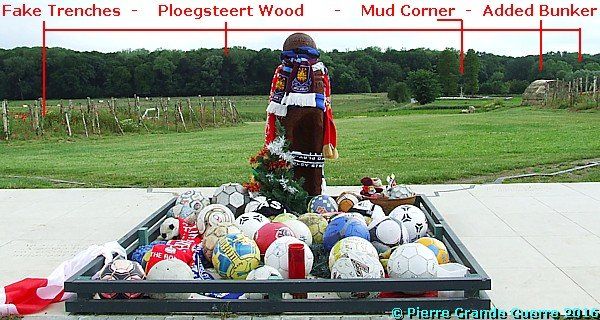
I can imagine that the authorities had to create more parking space for the centenary commemorations. Unfortunately the Commonwealth War Graves Commission decided to cut down all the trees at Prowse Point Cemetery except for two.
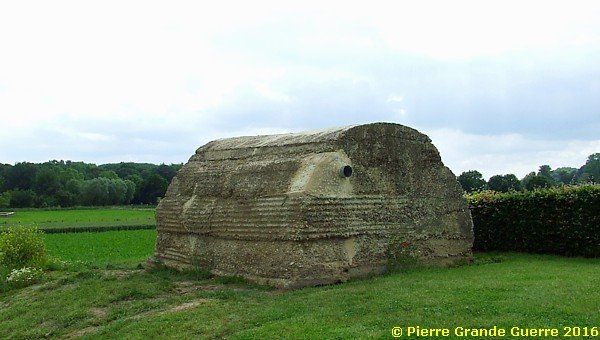
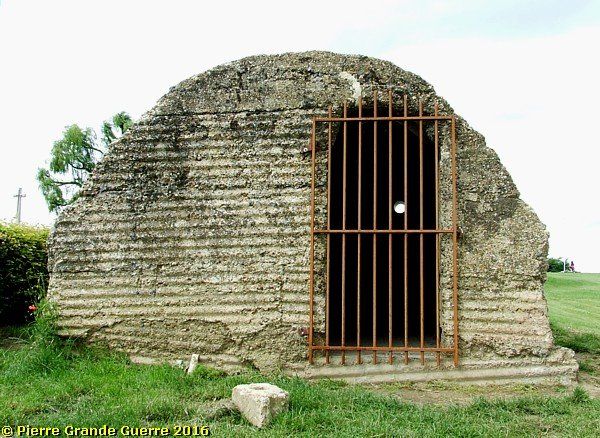
The local authorities added a British bunker, just outside, at the south-west point of the cemetery, which was never there.
Worst of all is the addition of two fake trenches. Although I normally appreciate the reconstruction of trenches, in my opinion these trenches are completely fake. The trenches are not covered inside with corrugated boards or with concrete sandbags, simulating the original ones. Instead, they are covered with modern, grey, plastic garden screens, which you can buy anywhere, in every Do-It-Yourself shop! This modern and deplorable reconstruction did not deserve to be photographed by me.
Frankly, it would have been better if the Belgian authorities had put on this site even a plastic copy of this bronze statue, which since 2014 is to be found at the Markt of Mesen.
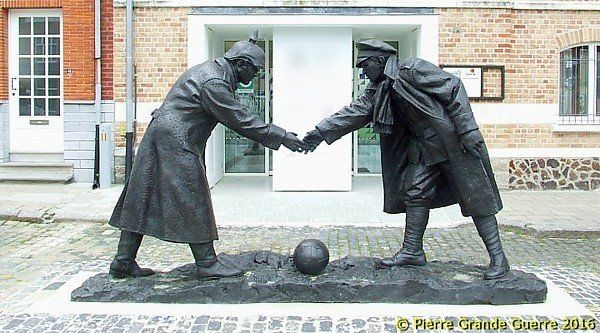
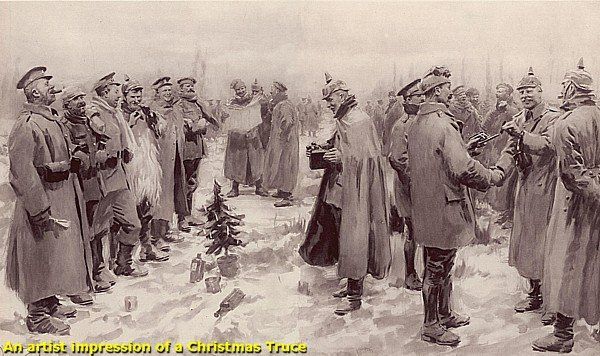
Some period photos of 1914 Christmas Truce events
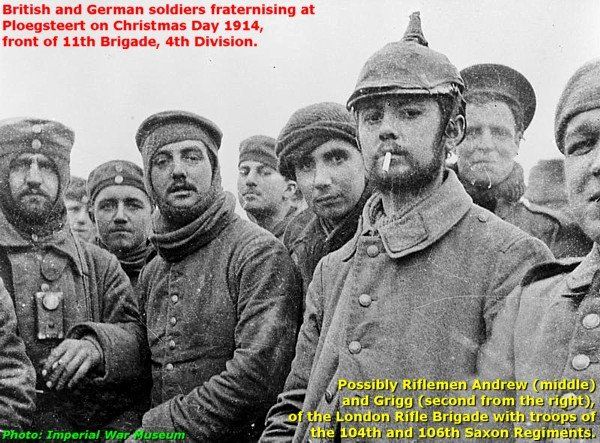
The St. Yvon site suggests that this was the only site of a Christmas Truce incident. Nowadays reputable historians are even sceptical about the fact whether a football match actually was played during the truce.
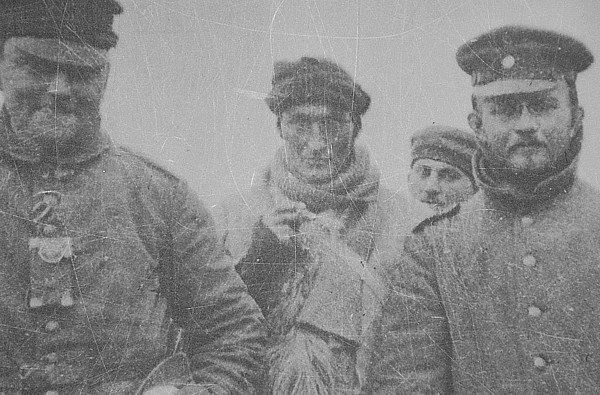
In 1914 there were several unofficial Christmas Truce incidents along the Eastern Front and the Western Front.
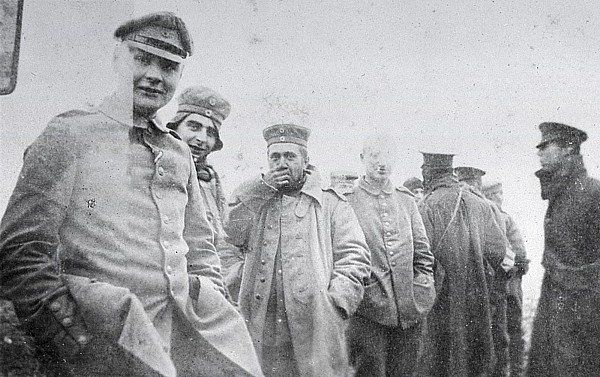
On Christmas morning the soldiers sung carols sang in the trenches and they threw rations across the opposing lines. It was not long before the more adventurous soldiers started to leave the trenches and entered No-Man’s-Land.
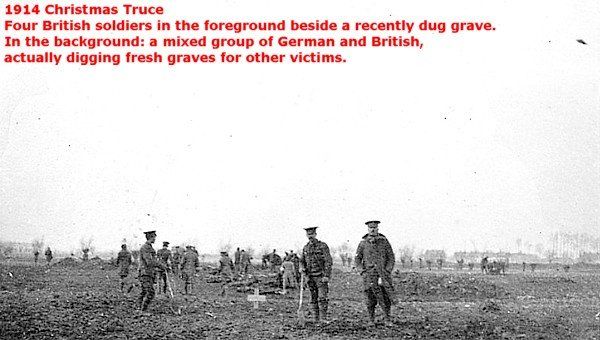
Both sides considered the lull in fighting a chance to collect the bodies of their comrades in No Man’s Land and to give them a decent burial.
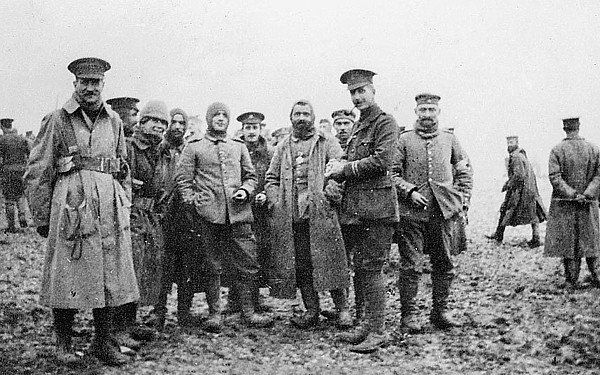
Here they exchanged food, tobacco, cigarettes, drinks, badges and buttons.
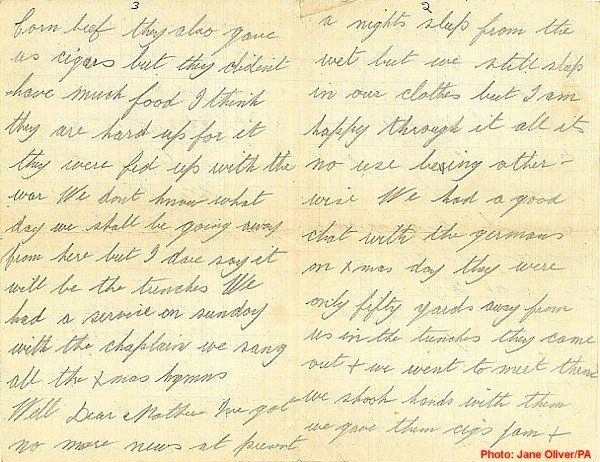
Fragment from a letter of Frederick James Davies, a private in the 2nd Battalion Royal Welsh Fusiliers.
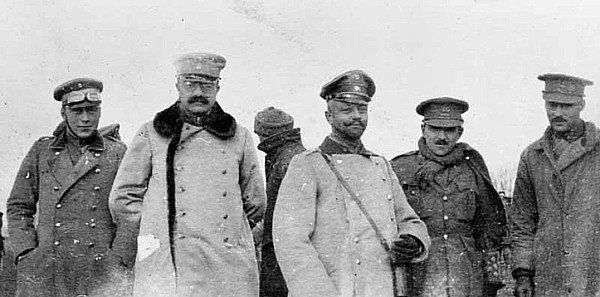
Although strict orders were issued against fraternization by the High Command, many junior officers tolerated the truce and allowed events to take their course.
French troops also fraternized with their German enemies. This event happened at the Hirtzstein in the Vosges.
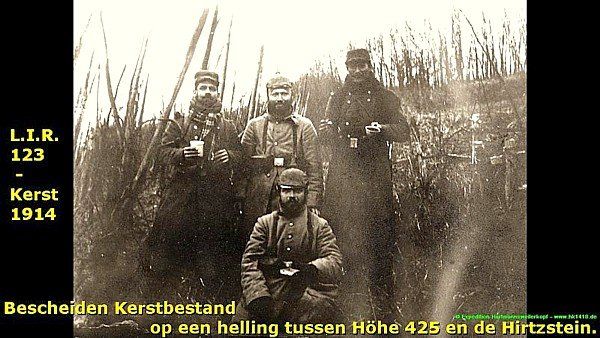
In December 1915, there were explicit orders by the Allied commanders to forestall any repeat of the previous Christmas truce. Individual units were encouraged to mount raids and harass the enemy line, whilst communicating with the enemy was discouraged by artillery barrages along the front line throughout the day. The prohibition was not completely effective, however, and a small number of brief truces still occurred.
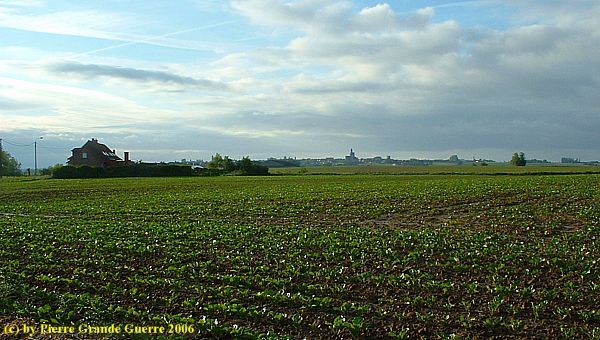
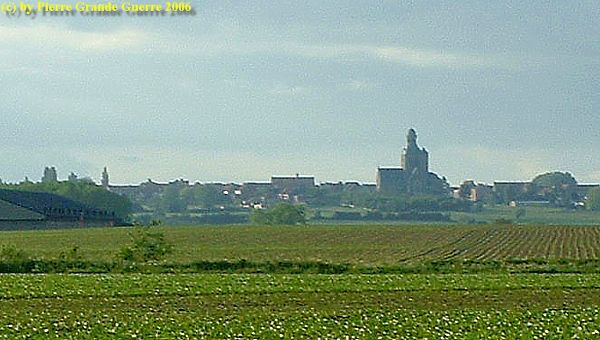
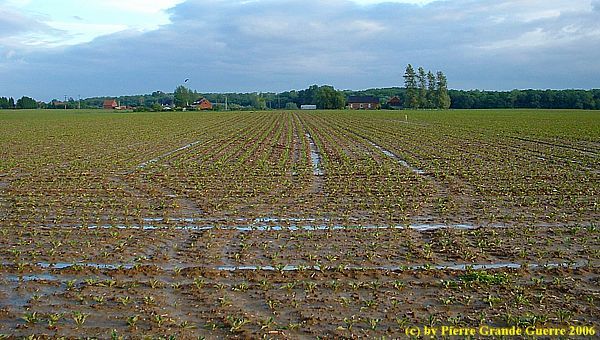
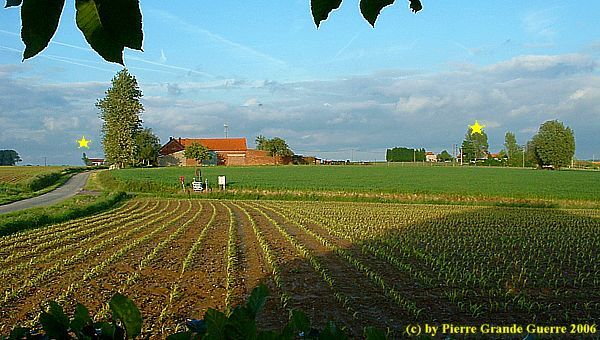
In 2006 we approached the same site "from the German side". The Christmas Truce site seen from Messines Ridge.
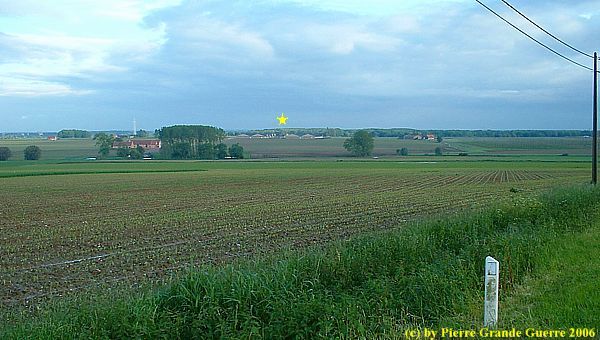
Notice the agricultural sheds on the location of the "Black Silos".
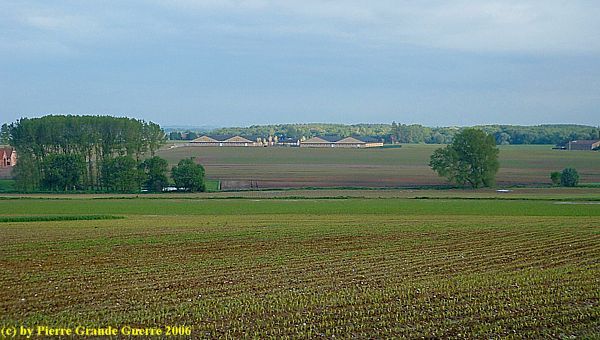
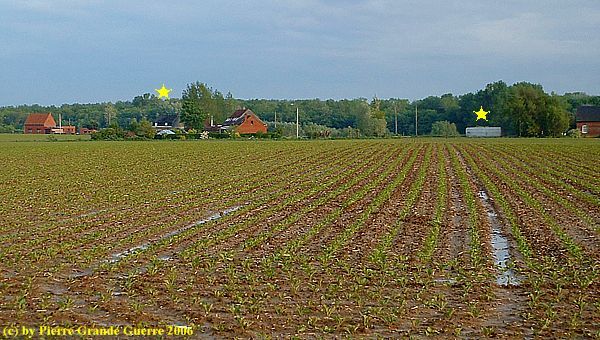
The Christmas Truce site seen from the Route de Neuve Eglise or Nieuwkerkebaan, the location of the former German lines.
The marker on the left indicates Bairnsfather's cottage, the marker on the right indicates the cross of the Khaki Chums of 1999.
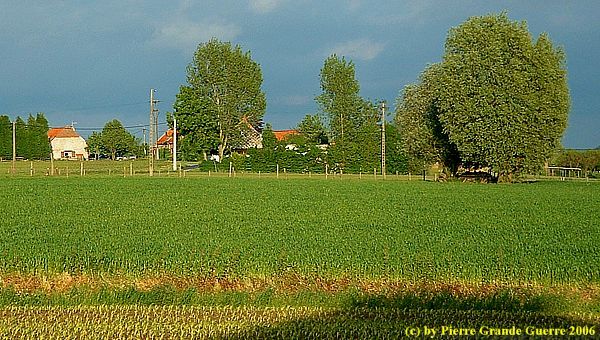
Bairnsfather's cottage seen from Prowse Point Cemetery.
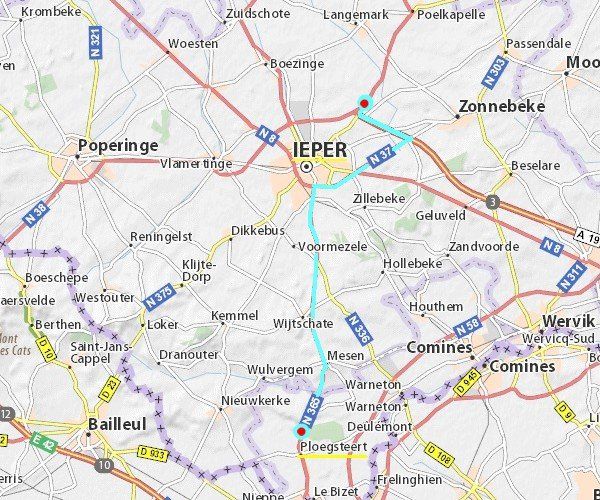
From St Yvon we make a leap of approximately 22 km. northward to Mouse Trap Farm, north-east of Ypres, to the site where Bairnsfather got severely wounded.
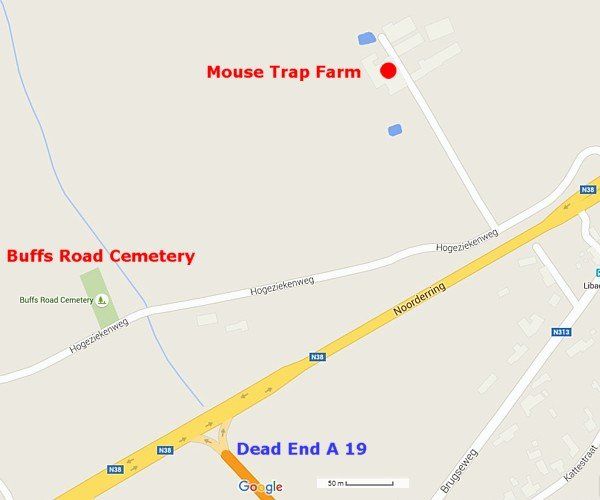
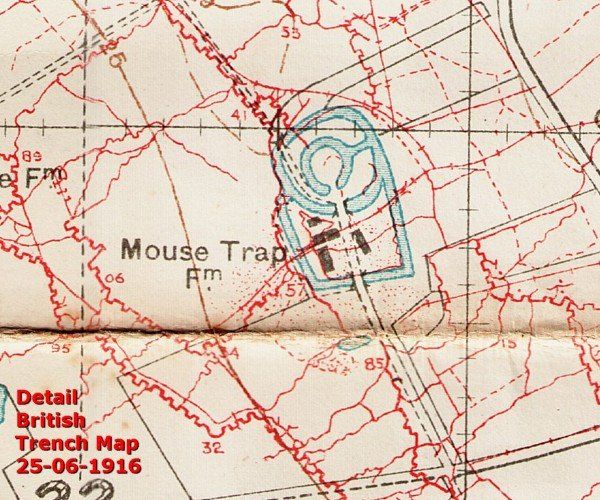
On 25 April 1915, during the Second Battle of Ypres, Bairnsfather took part in...
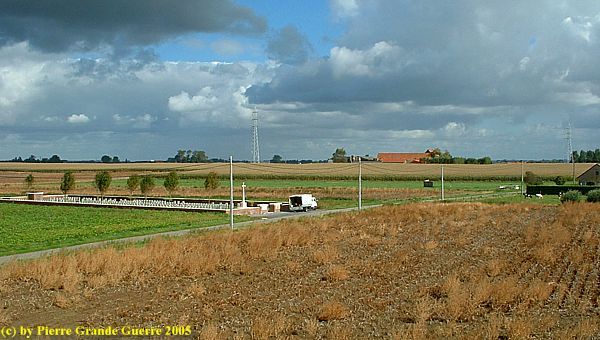
... an attack on Mouse Trap Farm near Pilkem Ridge.
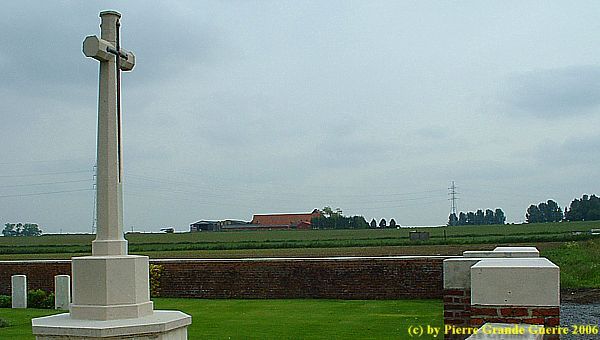
Bairnsfather was wounded by a shell explosion of chlorine gas. He was hospitalised with shellshock and hearing damages.
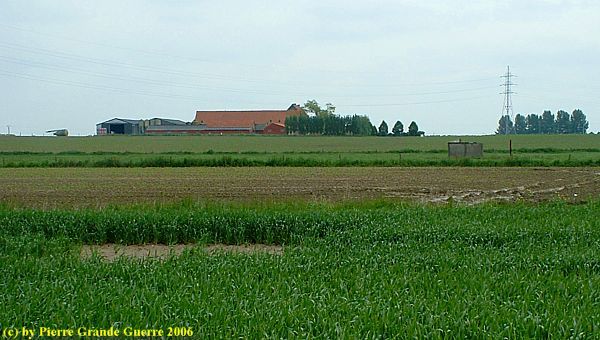
He subsequently was sent from Mouse Trap Farm to Britain to recuperate.
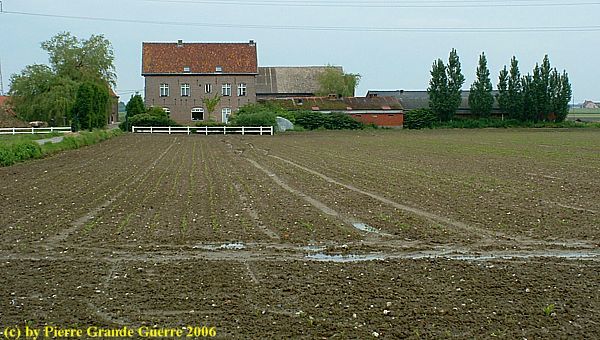
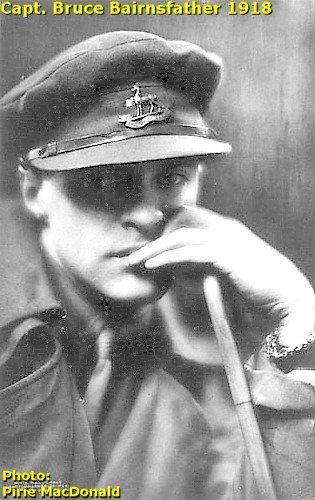
Born in 1887 in Murree, British India ( now Pakistan ), Bruce Bairnsfather died in 1959 of complications of bladder cancer, in Worcester.
Returning to St. Yvon: a last view from Prowse Point Cemetery at Bruce's daily route to the trenches.
Continue to: Ploegsteert Wood