The NETHERLANDS - Huis Doorn - The Kaiser's Exile
SPECIAL Photo Impression - Year of visit: a.o. 2006
This time not a visit along the Western Front, but a visit to an important post-war location in the "neutral" Netherlands. In the centre of the country, between the cities of Utrecht and Arnhem, we visit the village of Doorn. South-east of Doorn, just outside the village, lies the Country Estate, the Manor, and the Mausoleum of "Huis Doorn", site of exile of Kaiser Wilhelm II until 1942.
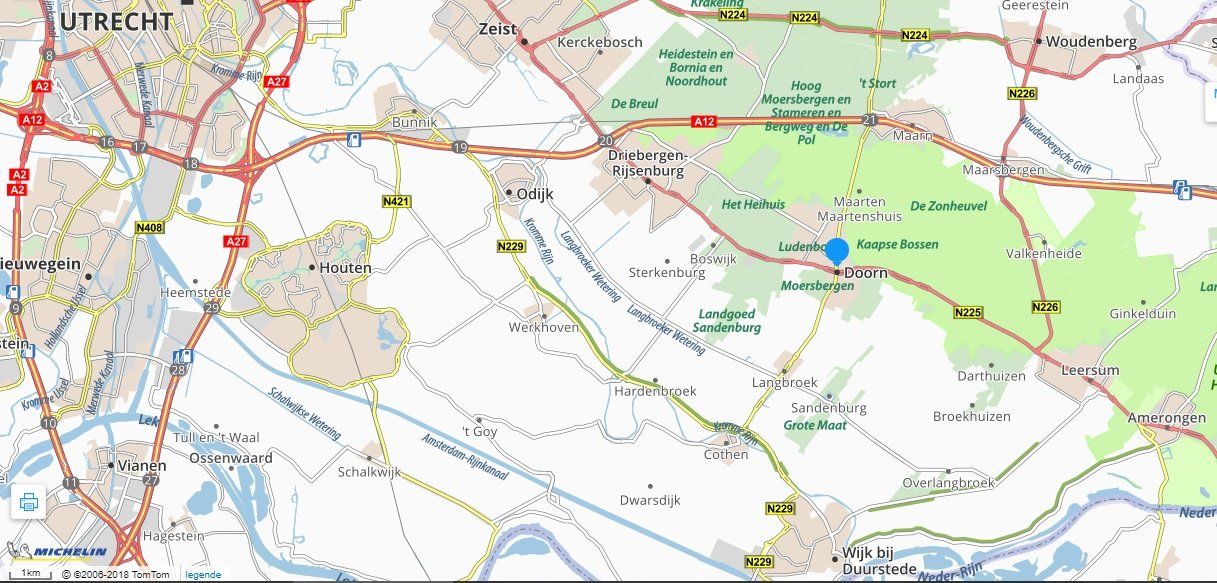
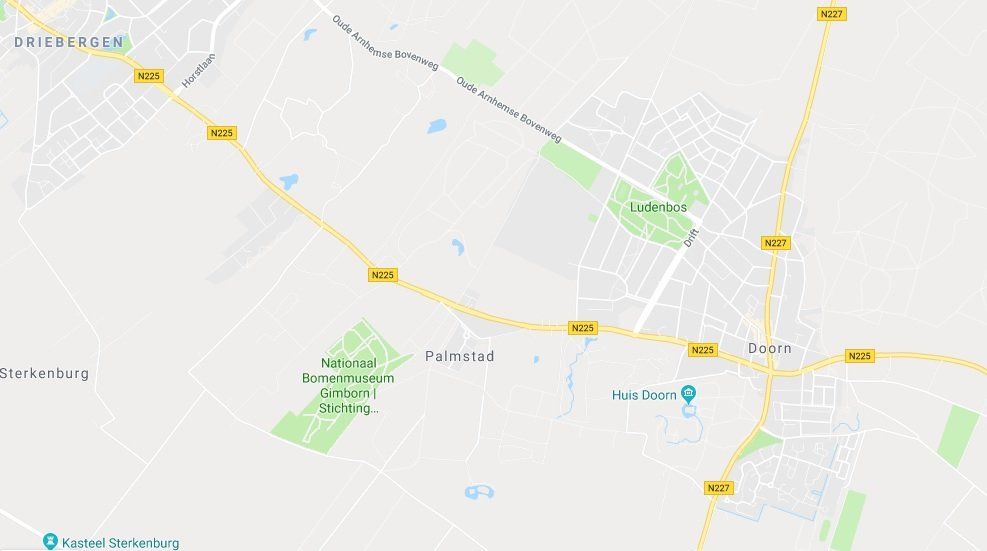
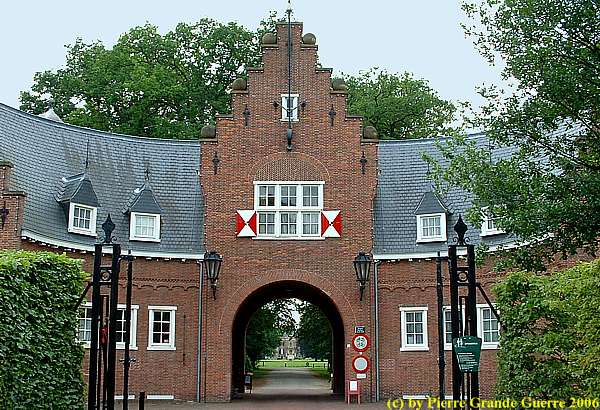
The gate to the country estate of Huis Doorn. The estate around the Manor is nowadays a public park.
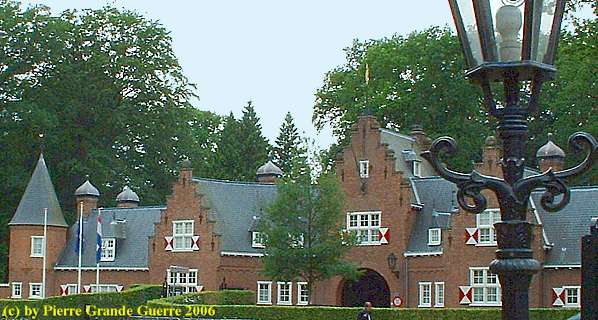
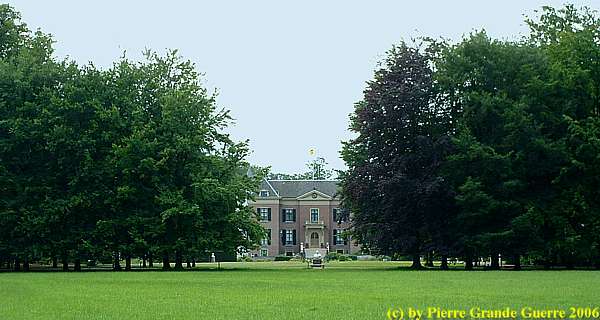
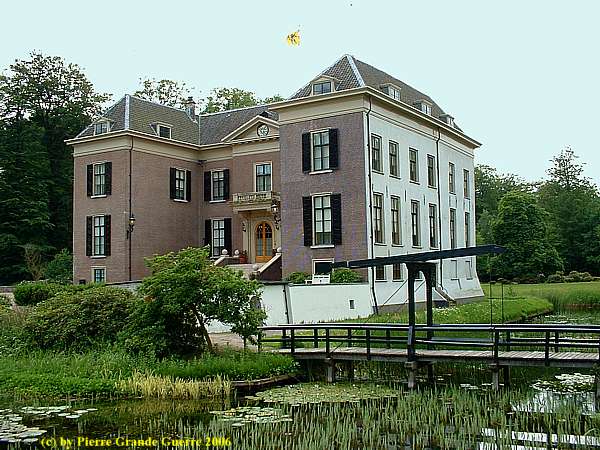
In front of the gate one can see the Manor in the background.
Kaiser Wilhelm II flees to the Netherlands
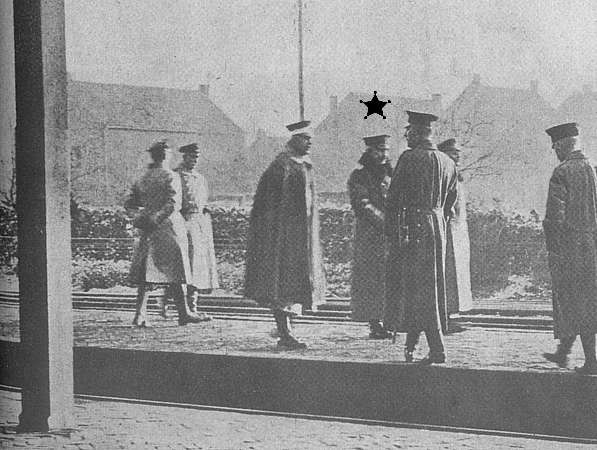
In the early morning of 10 November 1918 Kaiser Wilhelm II is impatiently pacing to and fro, to wait at Eijsden station, close to the Dutch border. In Germany the defeat of the Great War was generally considered as Wilhelm’s personal failure, which resulted in a mutiny within the Kaiserliche Marine, a revolution, and the proclamation of the republic on 9 november 1918. Wilhelm was at his Belgian headquarters in Spa when this happened, and couldn’t return to Germany.
Some days before 9 October
1918 the French Secret Service had already intercepted and deciphered a
German telegram to the Dutch Government, applying for the Kaiser's
Political Asylum . The Dutch Queen Wilhelmina later said, the Imperial
request in the early morning of 10 November came as a complete surprise
to her.
After much deliberation, the neutral Dutch government gave Wilhelm
permission to take up residence in The Netherlands. Before purchasing
the Huis Doorn country estate from Baroness Van Heemstra - de Beaufort,
Wilhelm spent 18 months at the nearby "Amerongen Castle" as
the guest of Count Aldenburg Bentinck. At Amerongen Wilhelm announced
his official abdication on 28 november 1918.
Before we continue with our visit at Huis Doorn, I show you a 2 min. 46 sec. videoclip of the impatient Kaiser pacing to and fro at Eijsden station:
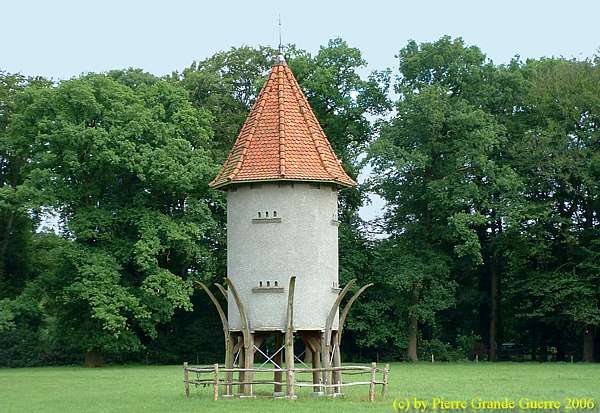
As we walk in the direction of the Manor, we pass this folly, a pigeon house.
Although the small castle of Huis Doorn looks more like a Manor ("Huis"), and although it is much smaller than a Imperial Palace, the Imperial Family settled themselves quite comfortably and kept a modest Court at Huis Doorn.
The Kaiser chopping wood
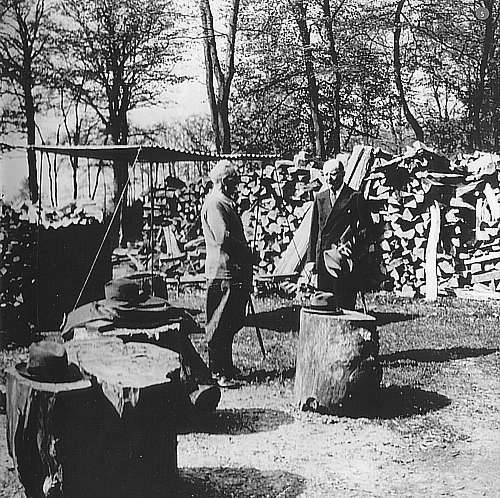
Around 1923 my grandfather
was working as a forester on the country estate of Huis Doorn. When I
was a boy, he used to tell me how he often see the Kaiser sawing wood
and cutting trees trunks in slices in the wood of the vast estate of
Huis Doorn. For well regarded guests the Kaiser used to sign his
autograph on a wooden slice and gave it to them as a souvenir.
During his stay at the country estate thousands of trees were chopped
down to humour the Kaiser. My grandfather used to tell me: "It
looked like the Kaiser wanted to recreate another devastated
battlefield around Huis Doorn!"
This 2 min. 31 sec. video shows the Kaiser in his daily life at Huis Doorn:
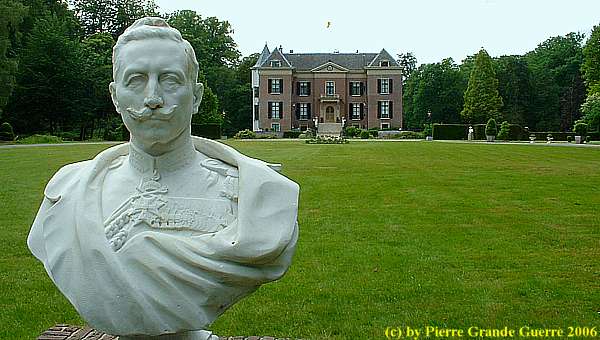
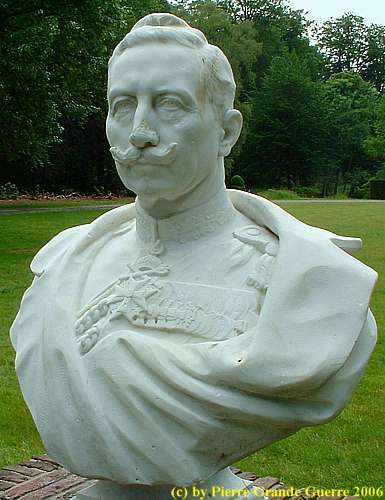
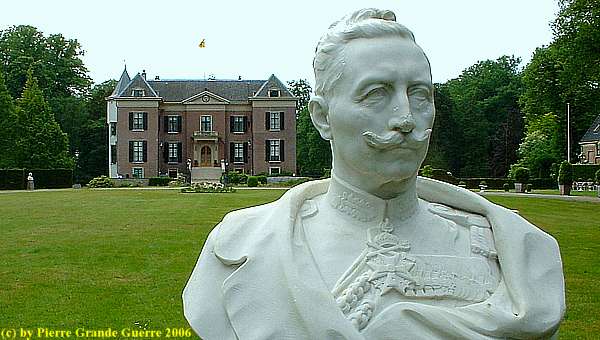
A proud bust of Wilhelm II, showing a realistic portrait, in front of the Manor of Huis Doorn.
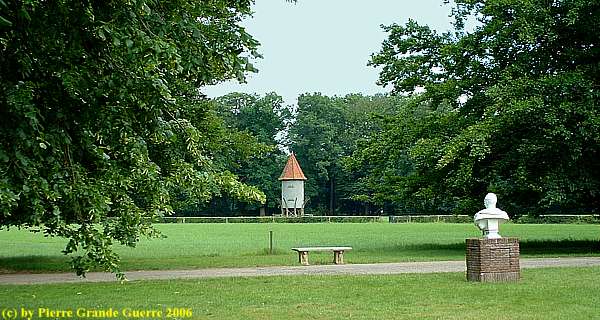
King of Prussia and Emperor of Germany
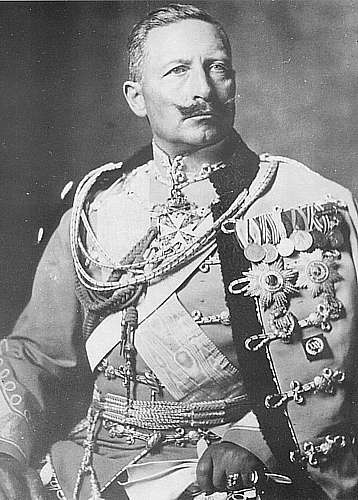
Prinz Wilhelm von Preussen
was born in Berlin on 27 January 1859 as the eldest son of Crown Prince
Friedrich and Victoria , Princess Royal of the United Kingdom. By his
grandmother, Queen Victoria of the United Kingdom of Great Britain and
Ireland, Wilhelm was closely related to almost every European
court. He married Auguste-Victoria von Schleswig-Holstein in
1881.
In 1888 Germany buried both Emperor Wilhelm I and -, after a reign of
only ninety-nine days,- his son, Emperor Friedrich III. Wilhelm II became
King of Prussia and Emperor of Germany at the age of 29. He replaced
his experienced advisors with a "Persönliches Regiment" and
it wasn’t long before his self-willed and stubborn political actions
began to meet with criticism both at home and abroad.
The Manor of Huis Doorn, still with the yellow Hohenzollern flag flying.
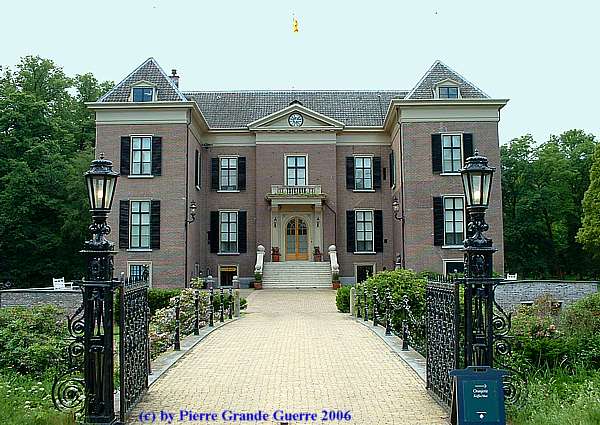
Before we enter Huis Doorn later, we continue our walk through the beautiful park on our way to the Kaiser's Mausoleum.
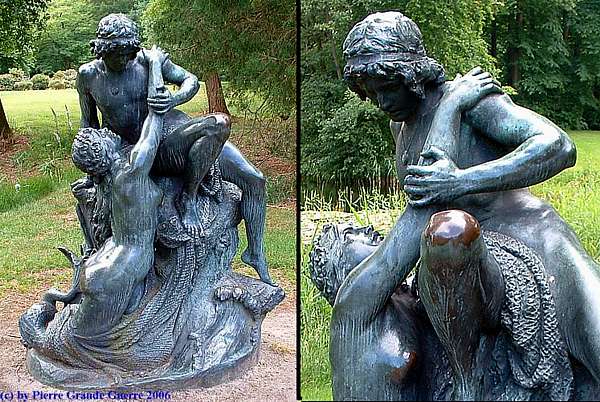
The Kaiser loved baroque, folly statues, like this romantic mermin craving for love. Pairs in love have rubbed the knee of Narcissus, believing it will bring them luck.
The red marker in the photo below indicates the spot, ...
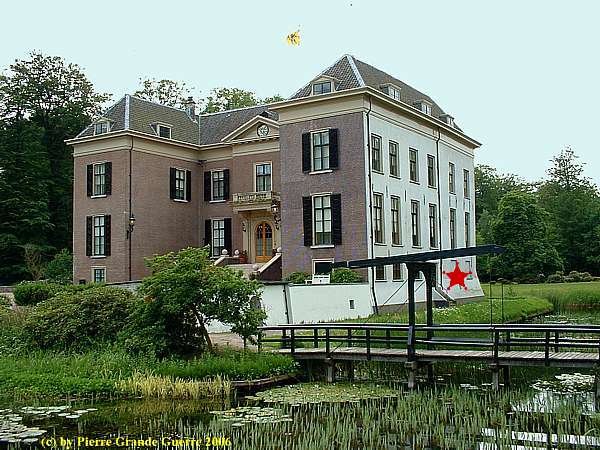
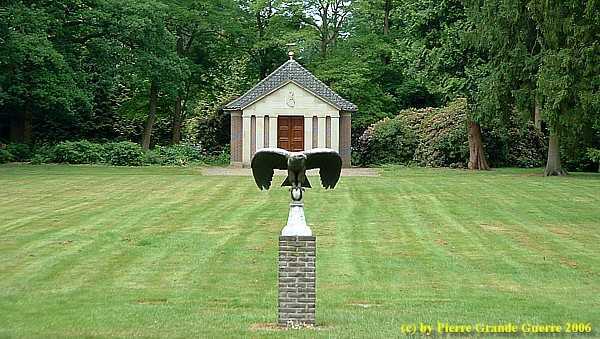
... from where I took this picture of the statue of the German Imperial Eagle and the Kaiser's Mausoleum some 100 m away.
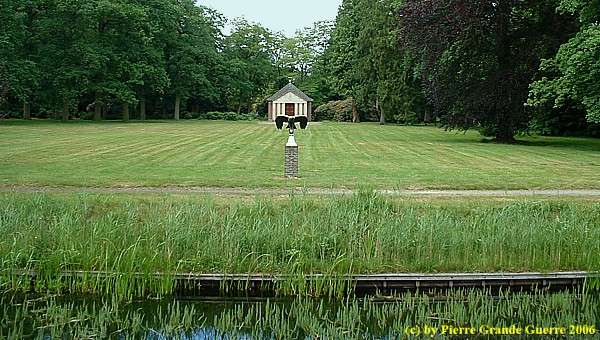
This statue of the Imperial Eagle was erected by the Kaiser, when his favourite Dachshund, Senta, died in 1927.
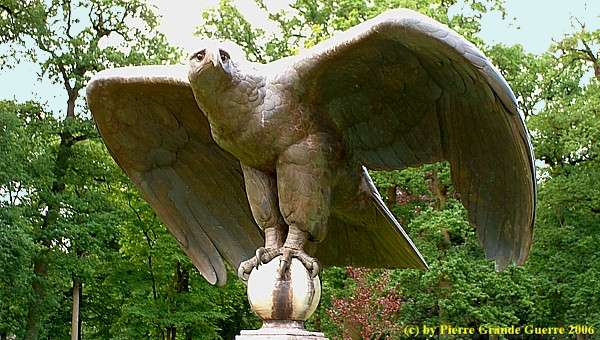
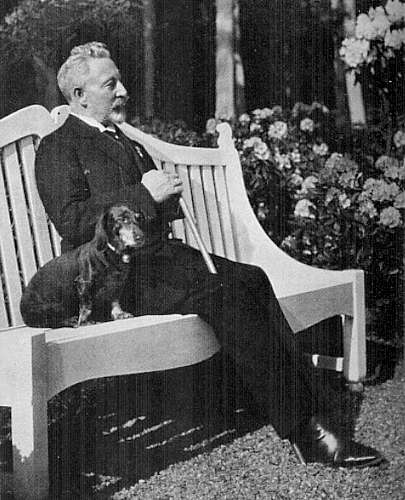
The German Imperial Eagle, right behind it on the ground , but inconspicuous, are the 5 grave stones of the Dachshunds of the Kaiser. In the background a glimpse of the Mausoleum.
Before we visit more closely the last resting place of
Wilhelm, a short survey of the more glorious days of the
Kaiser's eventful life in period photographs.
The
Kaiser's eventful life in period photographs
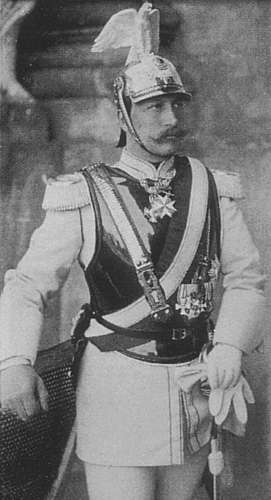
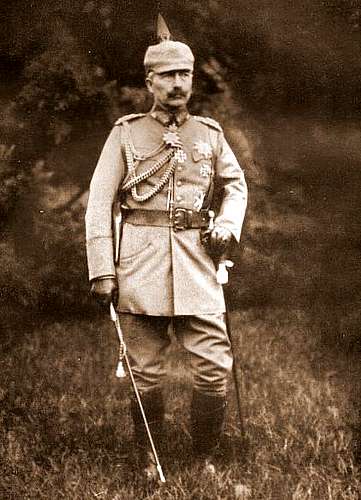
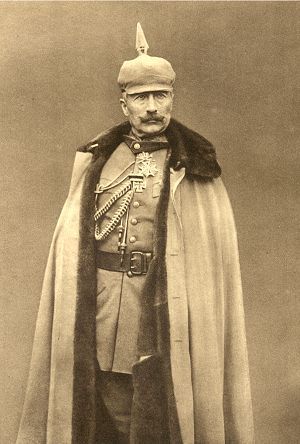
As always on almost every picture of a later period, the left arm of the Kaiser is resting on his sword. This is one of the rare photos, in which one may detect the handicap of the Kaiser. His left arm is shorter and his left hand is smaller than the right one. This handicap has been caused at the time of his birth. His foetus was in "breech presentation". The gynaecologists of those times did not discover yet the knowledge of the "ceasarian section". So while being born, the gynaecologists probably hurt Wilhelm's left arm.
The withered left arm is usually disguised. That's why most of the time the left arm in the picture is resting or hidden in the pictures, somewhere by posing the left side more to the background or under a battle cape, etc., to distract attention from the arm. Watch for it in the next period photographs!
Sepia pictures of the Kaiser in battle dress, or field uniform, around 1915-1916.
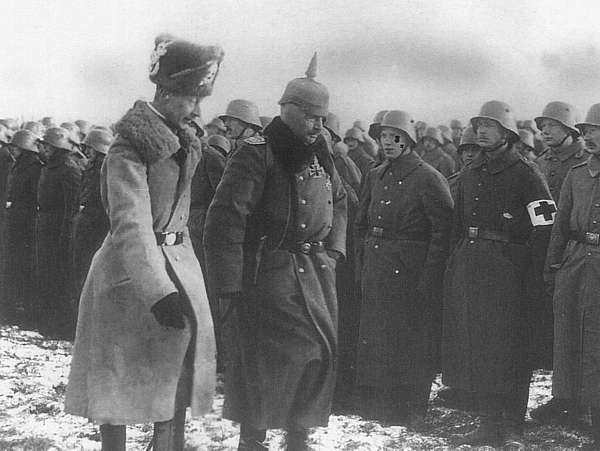
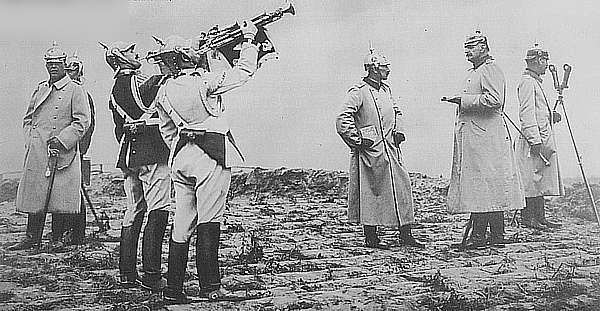
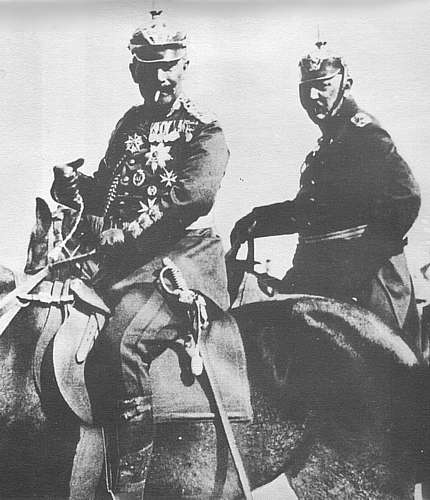
The Kaiser with his son, Crown Prince Wilhelm, "Little Willie", on 30 May 1916, one day before the attack at Fort Vaux near Verdun . "Little Willie" would also end up in exile in the Netherlands , on the former Dutch island of Wieringen.
( Visit also my page about the Crown Prince's exile and click on "L'Abri du Kronprinz" )
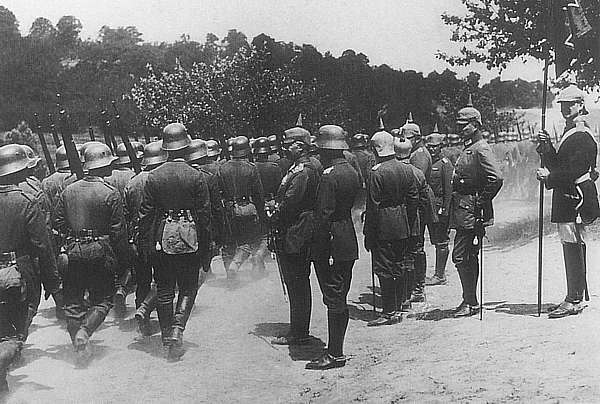
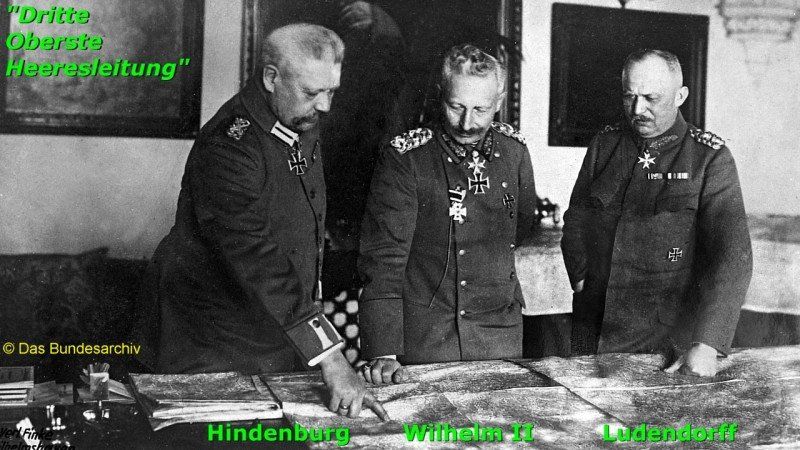
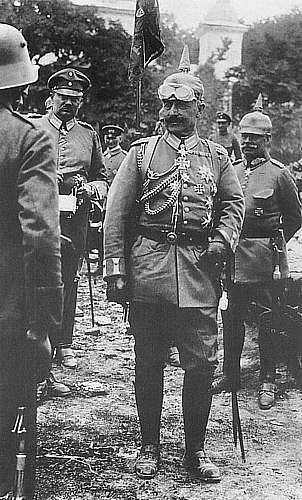
Wilhelm visiting the troops at the Eastern Front in November 1917, at the end of the campaign in Russia .
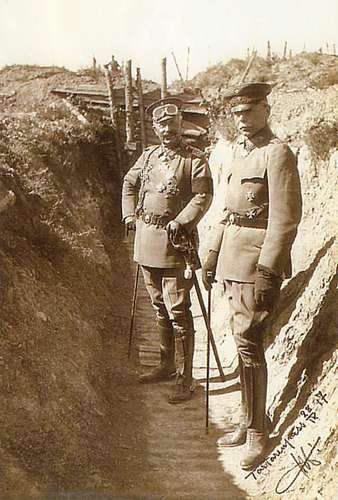
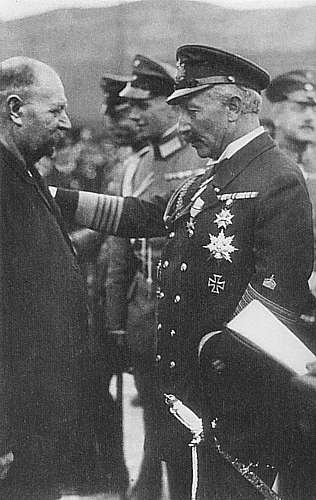
One of the last war period pictures of Wilhelm. The Kaiser visits in naval uniform a shipyard in Kiel in October 1918 to decorate some labourers.
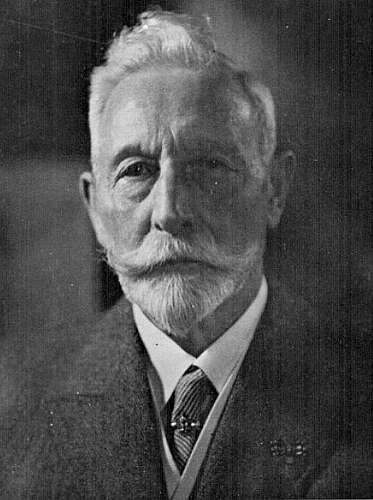
Kaiser Wilhelm II in 1930, a portrait which would slightly alter by ageing until his death.
We continue to the Kaiser's Mausoleum.
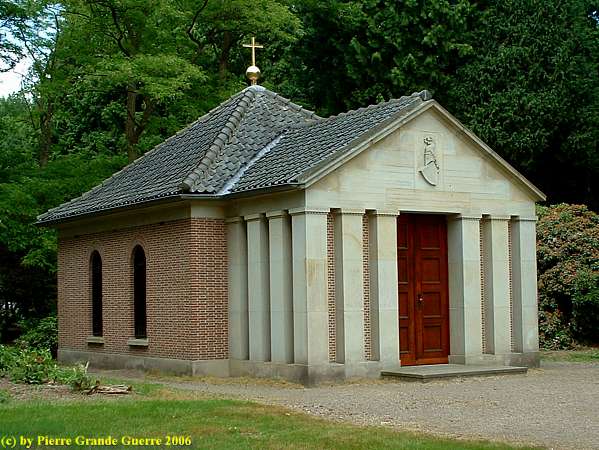
| Wilhelm II assigned Hanns
Martin Kiessling to be his architect of his Mausoleum short after 1935.
|
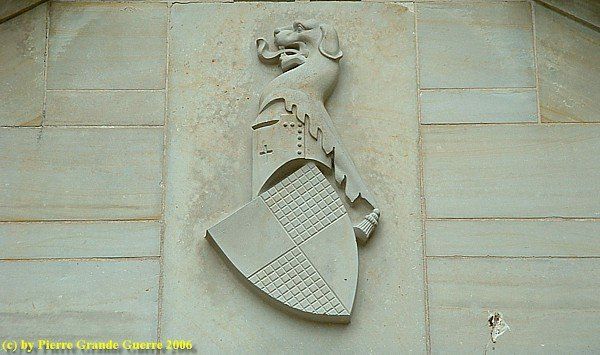
On the outside no name or indication to Wilhelm II, only the globe with the Christian Cross, the heraldic sign of Wilhelm II on the architrave...
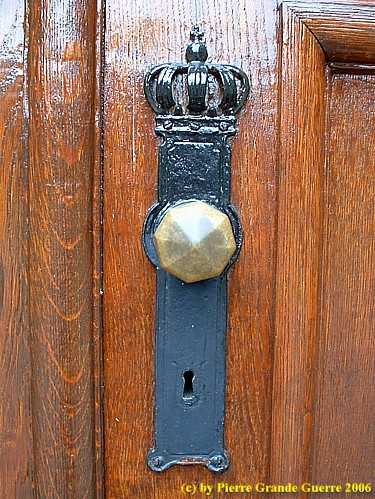
... and an Imperial Crown on the lock of the doors.
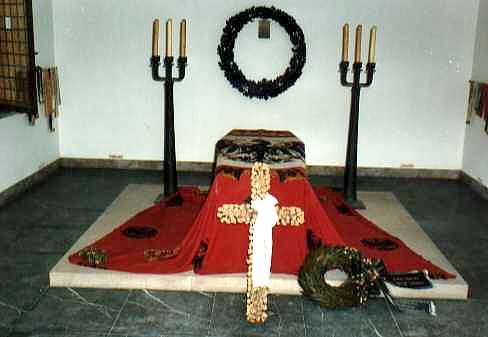
We are not allowed to enter the mausoleum. Through the green glass windows we could detect from the outside fresh flowers on the Imperial flag spread out over the coffin.
We continue from the Mausoleum to visit the interior of the Manor.
Huis Doorn Interiors
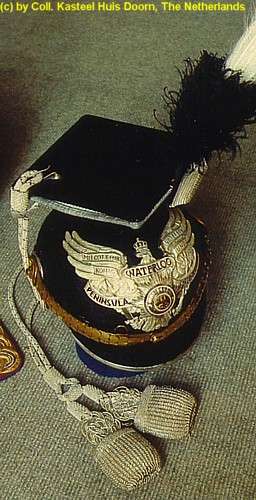
By exception most of the pictures about the interior of Huis Doorn are not my photo's! Alas, but it is for understandable reasons not allowed to take pictures inside. For my friends overseas I scanned the postcards, which I bought at the museum shop j ust to share my impressions of the interior during my visits io the Manor. To show you a little of the impressive collection of uniforms, I posted these scans trying to respect as much as possible the copyrights of Huis Doorn.
Grateful for the hospitality of the staff of guides, I do honestly and highly recommend to visit yourself Huis Doorn or at least it's website!
A realistic view of the Kaiser's study.
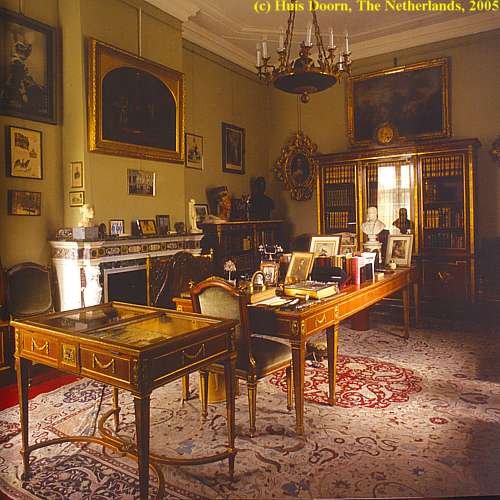
From September 1919 until February 1920 the Kaiser imported 59 trainwagon loads with a limited selection of his possessions. Furniture, paintings, silver work, china, crystal, his huge collection of snuff tobacco boxes, and more than 300 uniforms, were transported from the "Stadschloss" and the "Schloss Bellevue" in Berlin to Huis Doorn.
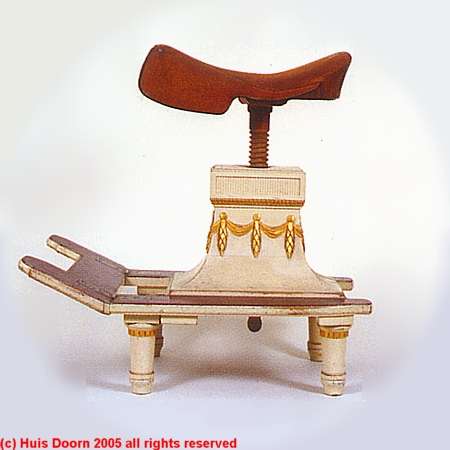
Now some views of some of the interiors of Huis Doorn, still left in the state of 1942; a time capsule.
Before more photoscans of the interior, Huis Doorn possesses the complete collection of Wilhelm's uniforms and Pickelhaube helmets. Unfortunately Huis Doorn only displays 3 Imperial uniforms for its ordinary visitors.
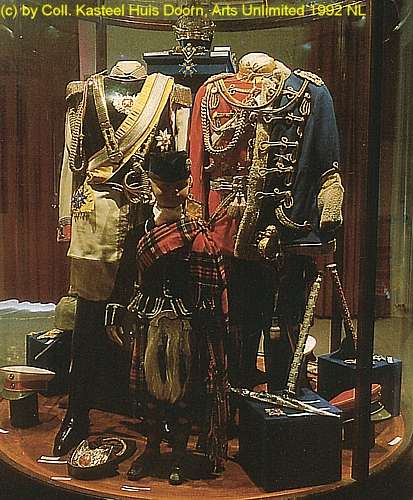
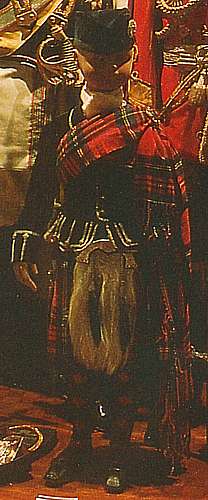
In his childhood long before the war, young Wilhelm had to wear this Scottish uniform on the occassion, that he had the duty to pay his respects and visit his Grandmother, Queen Victoria, at Balmoral Castle in Scotland.
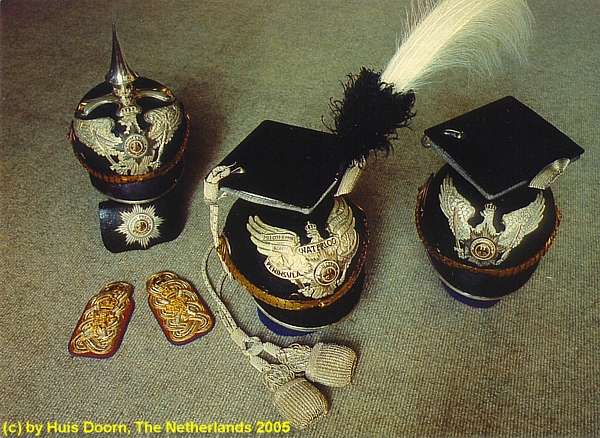
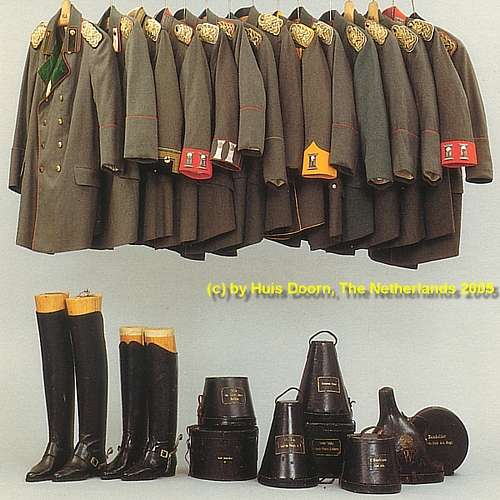
Some "inside views" of other parts of Wilhelm's personal uniform collection, which alas is not shown to the public by Huis Doorn.
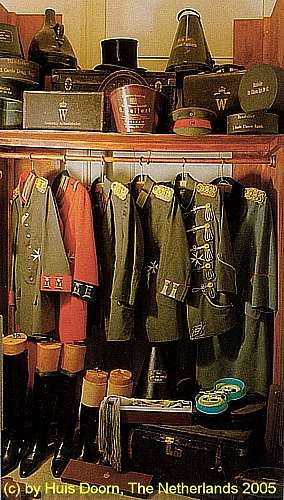
Notice: the left sleeve of the uniform jackets are a little shorter.
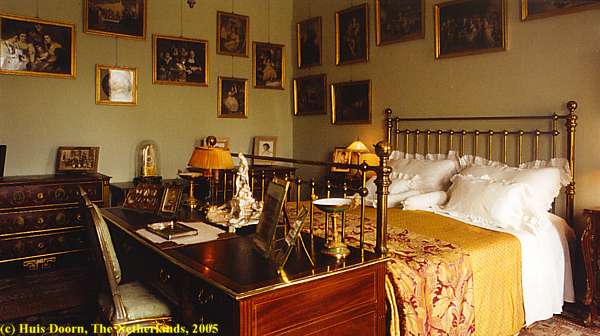
Back to the living spaces of the Imperial pair in Huis Doorn. The sleeping room of Wilhelm and his wife, Hermine.
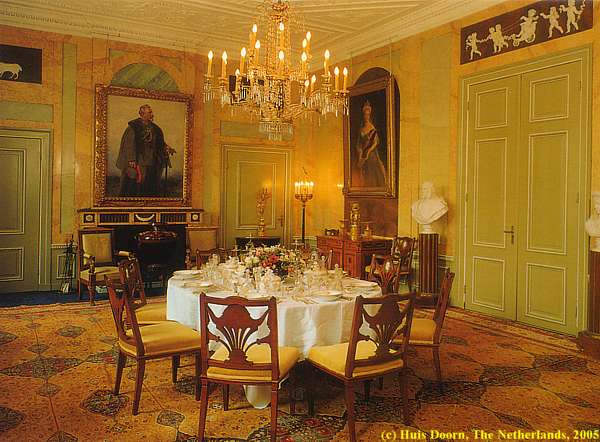
The dining room; the table still dressed with damast tablecloth, Imperial china, Imperial silver and Imperial crystal.
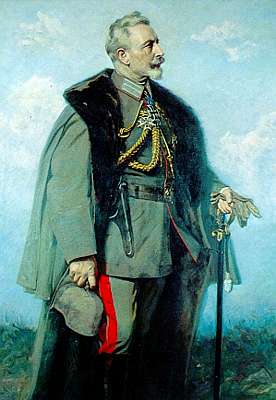
Above the mantlepiece of the fireplace hangs this highly remarkable painting of Alfred Schwarz from 1928: a portrait of the Kaiser overlooking a battlefield at the summit of his power.
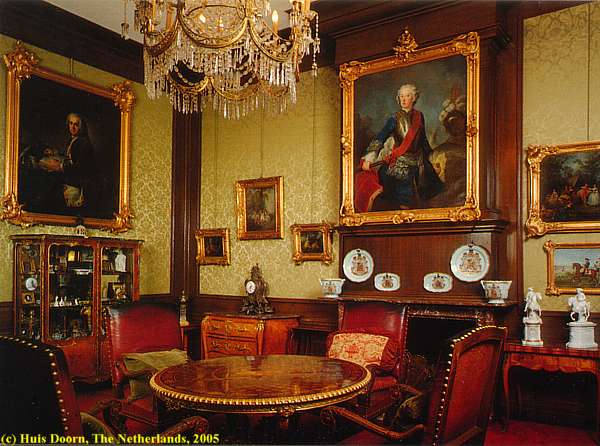
The smoking room. After dinner the Kaiser and his male guests withdrawed to this room for some gentleman's conversation.
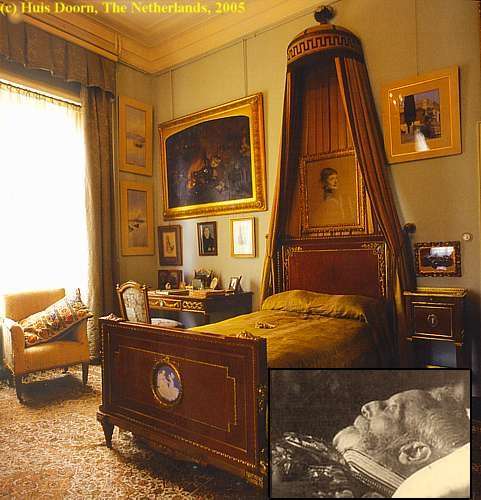
The room where Kaiser Wilhelm used to rest, his private sleeping room. In this bed he died on 4 June 1942 at the age of 83 years old. Insert in the photo: a portrait made shortly after his death.
This 2 min. 55 sec. videoclip shows images of the funeral service of Kaiser Wilhelm II, König von Preußen, at Huis Doorn, featuring a.o. Kronprinz Wilhelm von Preußen, Generalfeldmarschall August von Mackensen, and SS-Obergruppenführer Arthur Seyß-Inquart, Reichskommissar für die Niederlande, representing the Nazi government.
With this view of the buste of Kaiser Wilhelm II and Huis Doorn, this Special Photo Impression from the Netherlands about Huis Doorn has come to an end.
Continue to the next Special Photo Impression: " Canadian National VIMY Memorial "