ARTOIS - Notre Dame de Lorette
Year of visit: 2008, 2014
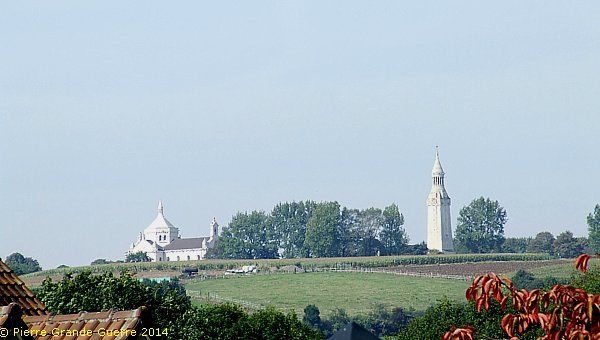
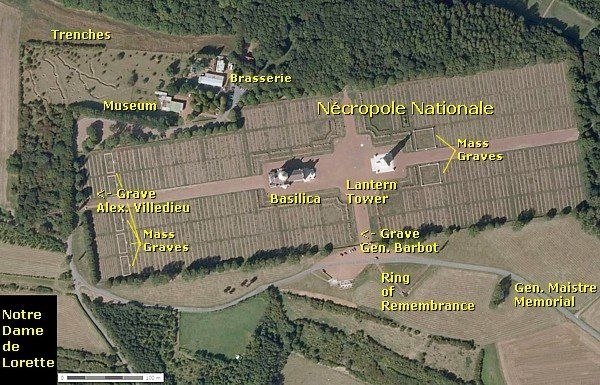
From the ruins of the St. Nazaire church in Ablain-St. Nazaire we continue our route uphill via the steep Route de la Blanche Voie to visit the Mont de Notre Dame de Lorette. We visit the General Maistre Memorial to be followed next by a frame about the recently inaugurated “Ring of Remembrance ” international memorial. After this impression we pay a visit to the relics of the trenches. We finish our tour on the hill with a visit to the Cimétière Nationale de Notre Dame de Lorette with its typical Basilica and its Lantern Tower. But first of all we start with some landscape pictures, photographed from locations south of Notre Dame de Lorette.
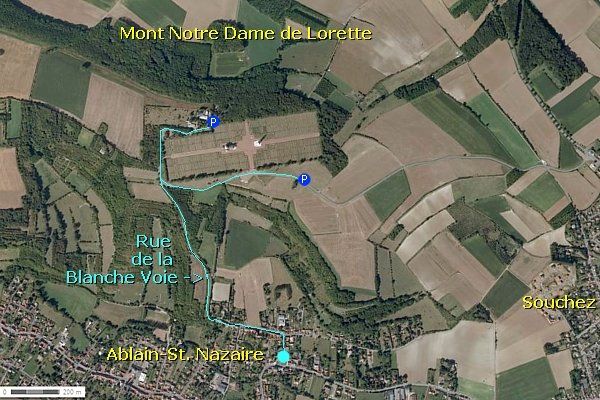
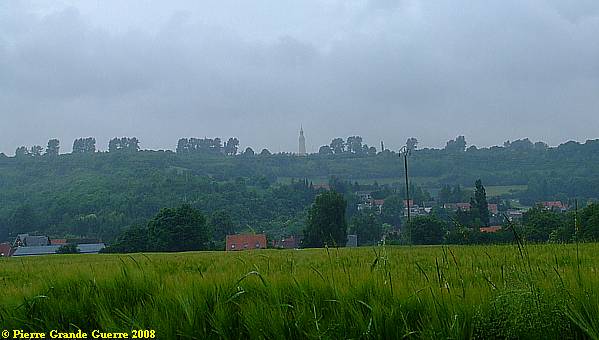
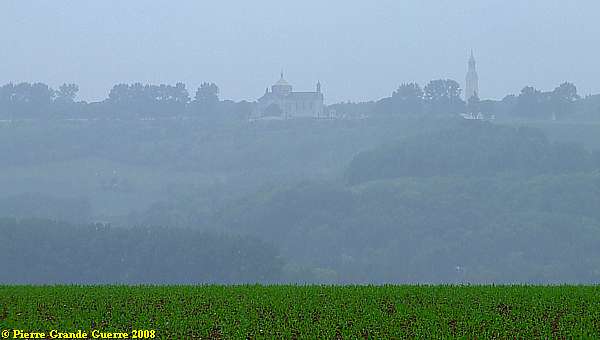
View at the Mont de Lorette from Cabaret Rouge.
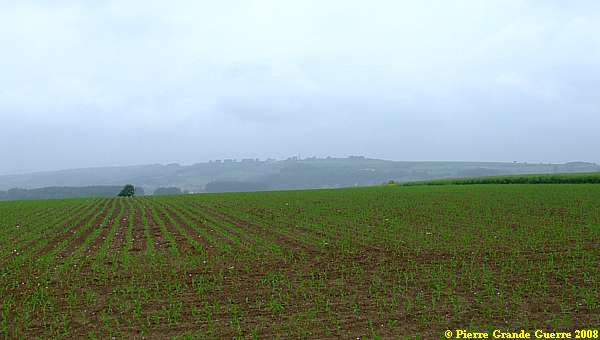
View over Ablain -St. Nazaire to the 165 m. high hill.
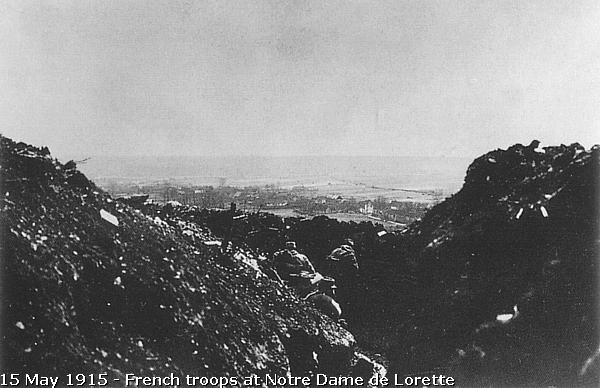
A summary note about the Second Battle of Artois - 9 May - 18 June 1915
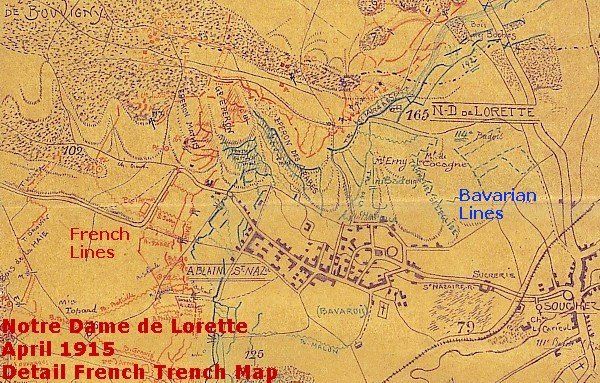
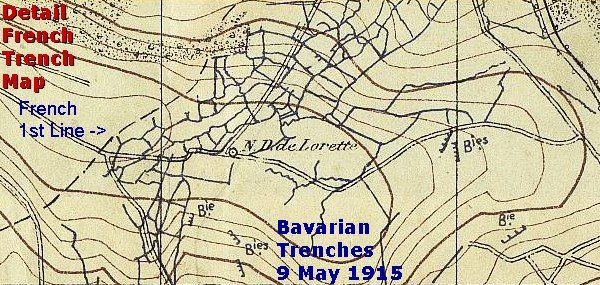
During the period of the "Race to the Sea" the Germans captured the hill and Ablain-St.Nazaire in October 1914. These two trench map details of April 1915 show the situation at Notre Dame de Lorette Hill before the Second Battle of Artois.
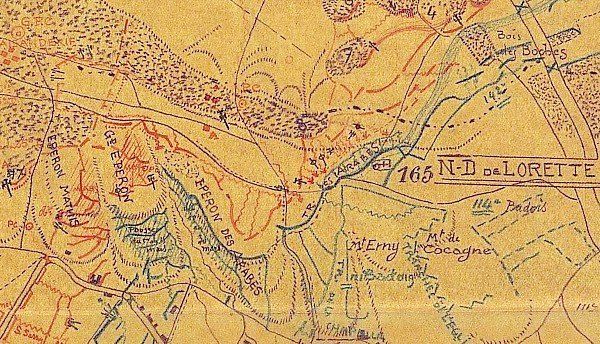
On 9 May 1915 five Army Corps of the 10th Army of Général d'Urbal launched an offensive at Notre Dame de Lorette and Vimy Ridge . Crown Prince Rupprecht von Bayern's 6th Army defended this front sector.
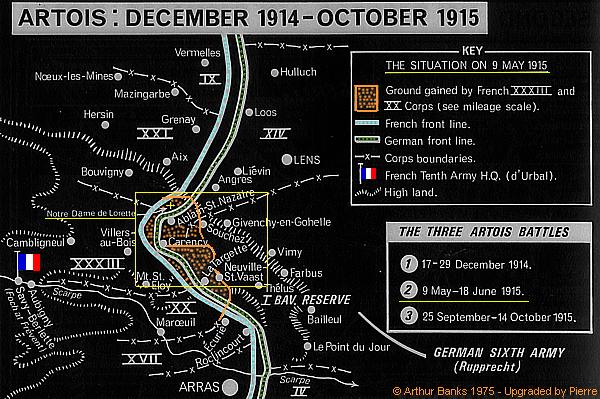
At 6.00 AM the French artillery began a preliminary bombardment of 4 hours . After these 4 hours the French infantry attacked .
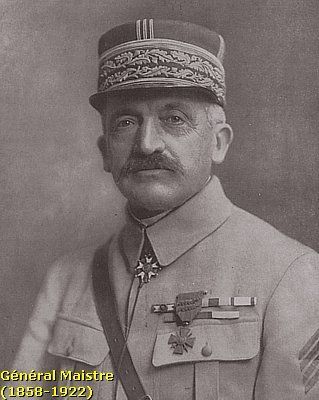
At Notre Dame de Lorette XXI Corps of Géneral Maistre attacked the hill again . Maistre knew how to conquer the summit of the hill at 12 May. But it would take another 10 days before the hill was cleared of Germans .
On 18 June 1915 the Second Battle of Artois came to an end. The French conquered Notre Dame de Lorette, Ablain St. Nazaire, and Neuville St. Vaast. Souchez and Vimy, including the lower grounds around, would stay in German possession until 12 April 1917.
(For more details about the Second and Third Battle of Artois, visit my previous Neuville-St. Vaast - Souchez
photo impression.)
Since December 1914 Général Maistre has been attacking the hill many times.
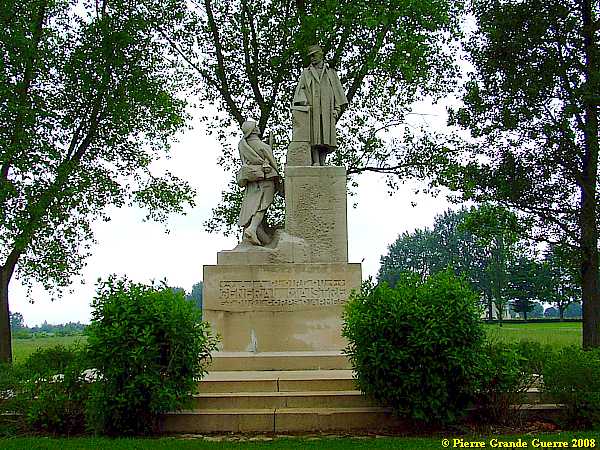
The Memorial for Général Maistre and XXI Army Corps.
A thick fog clouded the panorama over the Douai Plain. With clear weather this spot would offer a beautiful panorama over Souchez.
During our visit in the last week of September 2014, the situation near the statue of General Maistre , south of the Nécropole Nationale, had changed. Construction workers were busily finishing a huge memorial, the Ring of Remembrance , to be inaugurated on 11 November 2014.
To give you an impression of the memorial and to keep you up-to-date, in this frame below I show you some photos , which I collected from several publications in the French media , released in November 2014. Of course I hope to photograph myself the completed memorial in 2015 to show you later my own photos.
| “ L' Anneau de la Mémoire ” |
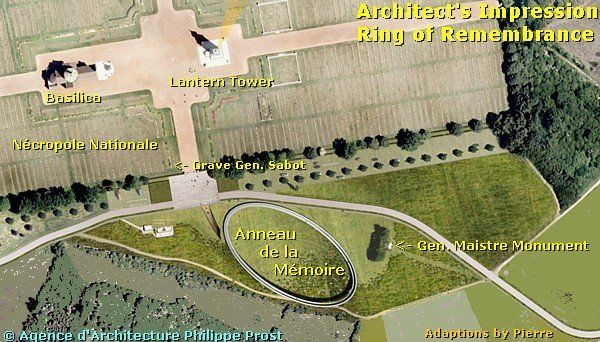
On 11 November 2014 the French President François Hollande inaugurated the international memorial of the “ Anneau de la Mémoire ”, the Ring of Remembrance. The memorial, designed by architect Philippe Prost, consists of a ring of a perimeter of 345 m, weighing 300 tons , lighted at night by LEDs. On its inner side there are 500 gold panels, about 3 metres in height.
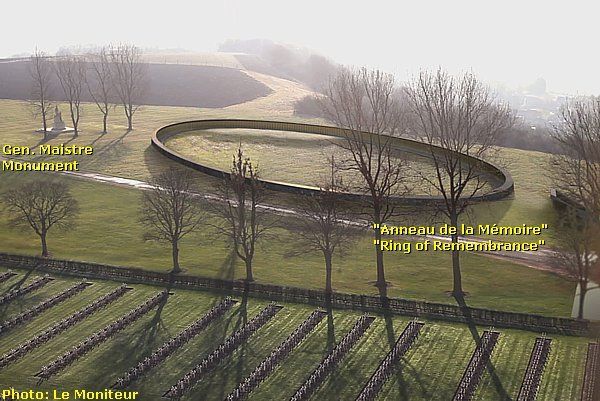
On these panels the names are inscribed of 579,606 officers and men, killed during the Great War in the Nord-Pas de Calais front sector. The men are mentioned in alphabetical order, regardless of nationality , rank or religion. The first in the list is "A Tet", a Nepalese Ghurkha fighting in the British Indian Army ; the last entry mentions " Paul Zschiesche ", a German soldier.
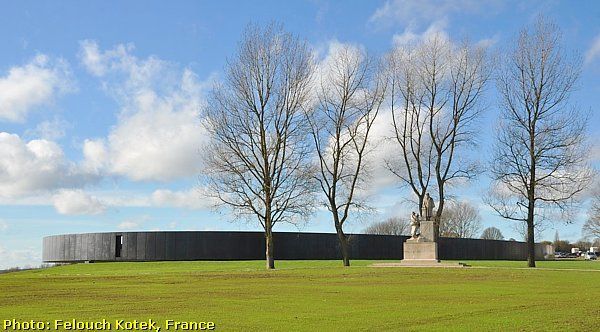
The list gives the names of soldiers from 40 nationalities, among others 241,214 British soldiers
(including the names of soldiers of the former British Empire),
106,012 French (including the
names of soldiers of the former French
Empire and those of the Foreign Legion
and 59 Swiss, Chileans, Argentines), and the names of 2,326 Belgians, 2,266 Portuguese,
1,037 Russians, 6 Americans,
and 173,876 Germans.
Source
and
photos
: several publications in the
French media of November 2014.
We make a short tour around the Nécropole Nationale de Notre Dame
de Lorette to the north side of the hill, where
we park our car near the
"Brasserie" to visit the relics of the trenches.
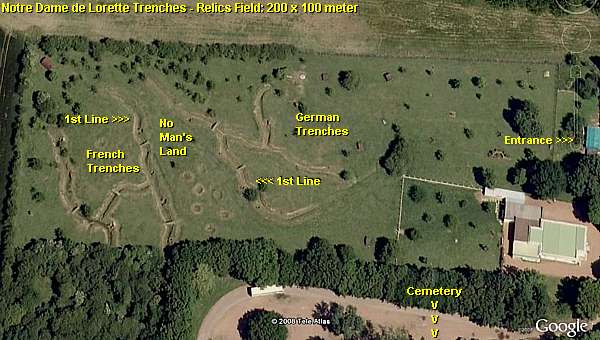
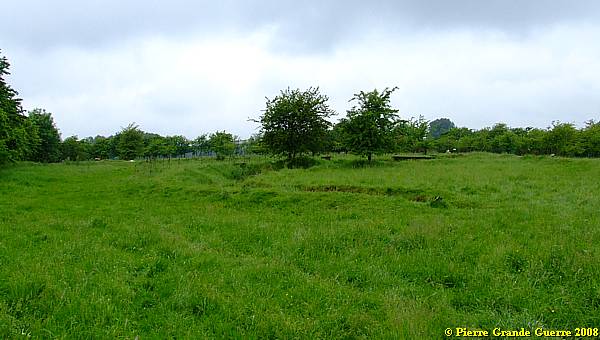
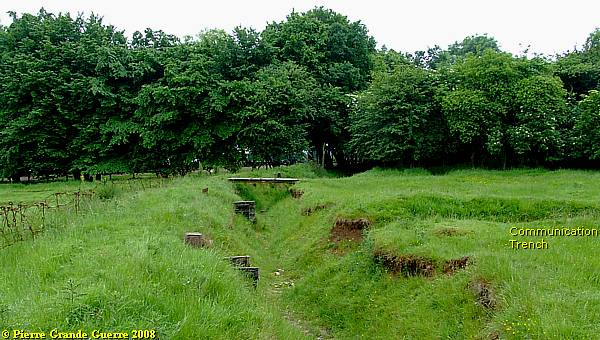
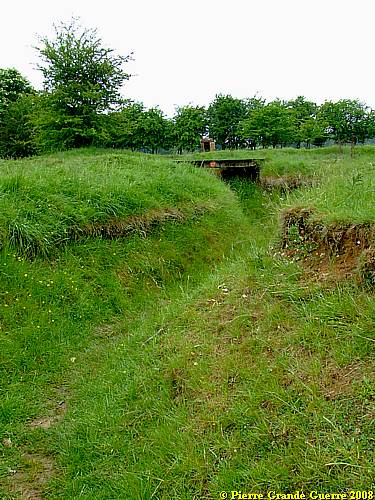
Alas , in 2008 the trenches were rather sloppily preserved with high, wet grass , and a lot of sheep dung. So , be careful , where you walk!
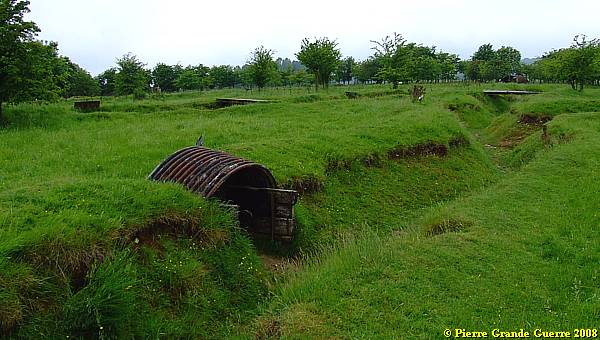
First we will visit the French 2nd line. View from the 2nd line over the 1st line and farther on.
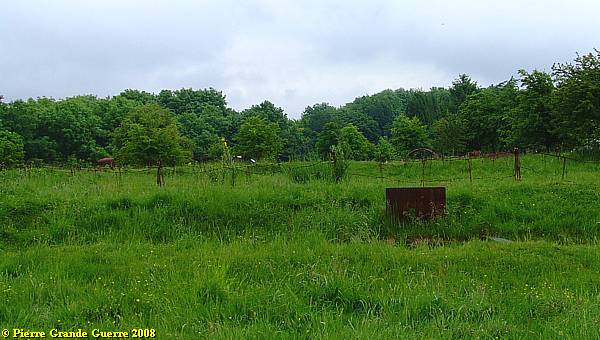
The trenches are in their original position.
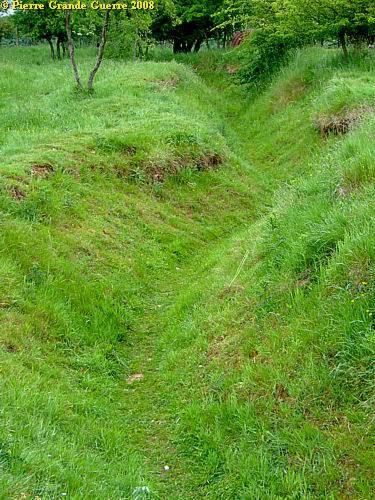
But I doubt , if some objects are all in their original position.
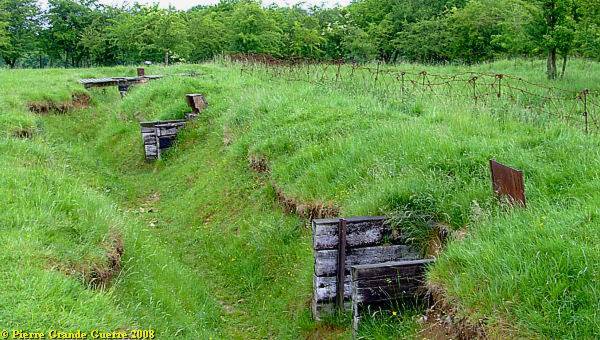
A " Giraud "-model rifle shield.
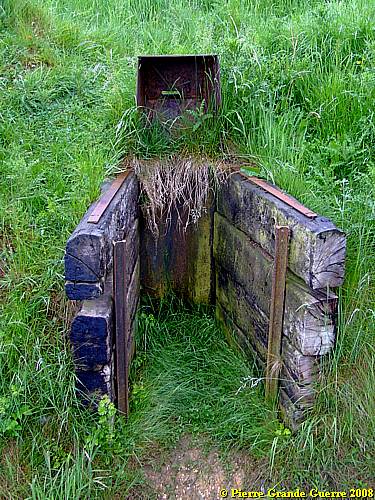
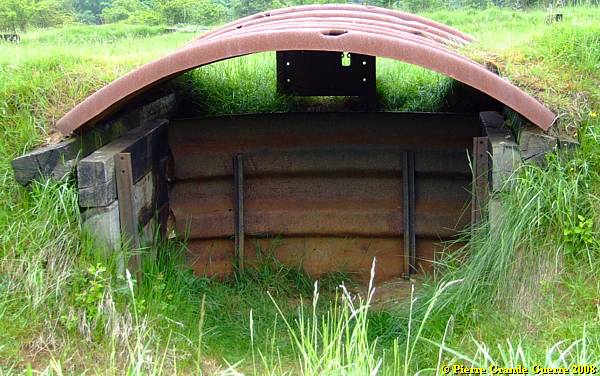
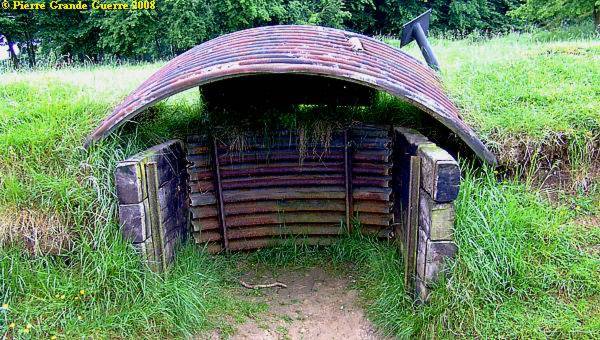
A thinly armoured observation post.
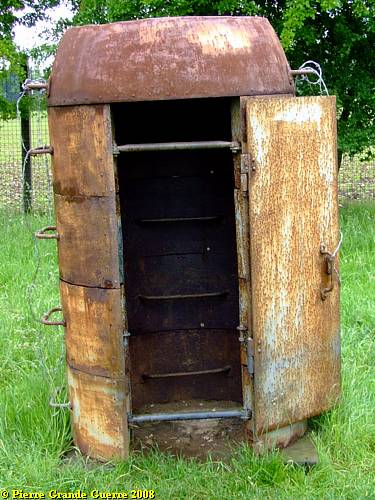
A machine gun post. The shield could be opened further.
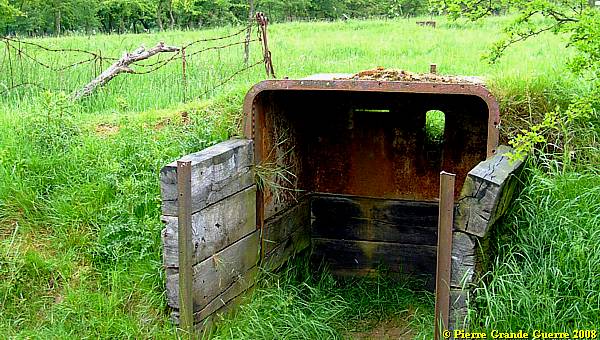
Same machinegun post from the French 1st Line.
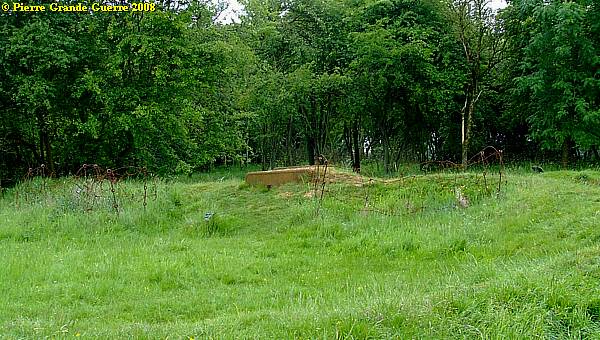
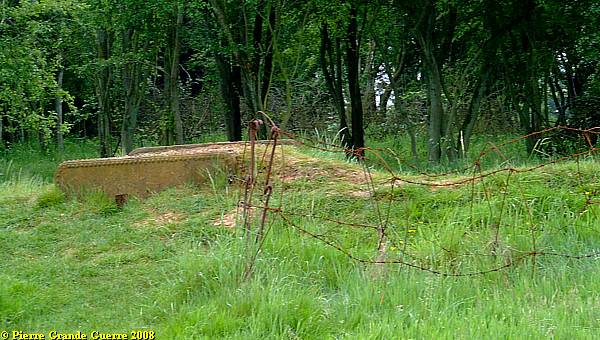
In the north -west corner of the field.
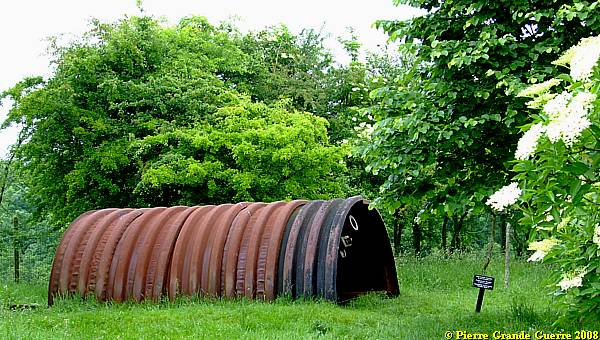
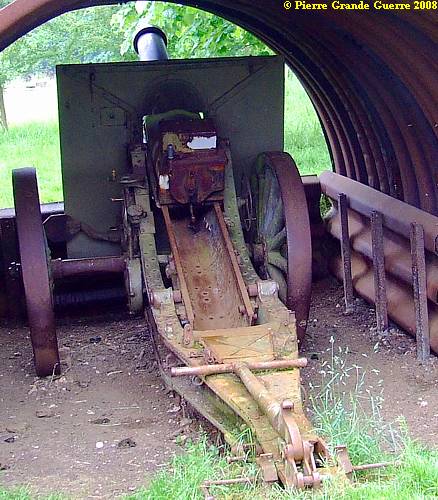
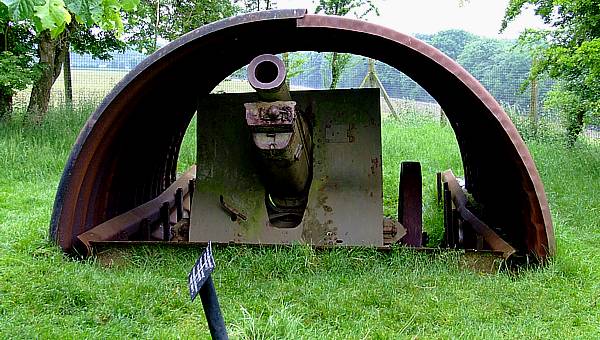
French 155 mm. M17 Schneider artillery gun.
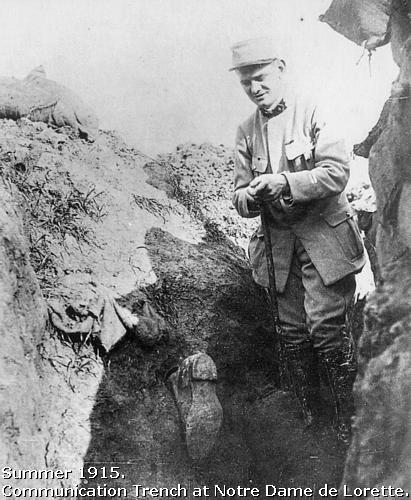
| In October 1914 the Germans drove the French to the west side of the hill. On 9 May 1915 the 21st Division and the 33rd Division attacked the south side of the hill . Maistre’s XXI Army Corps attacked from the north . Algerian Zouaves and Moroccan units played an important and heroic role . The Divisions made some progress , but the area around the Basilica, on the cemetery on the top, was not yet fully conquered . |
The French 1st line.
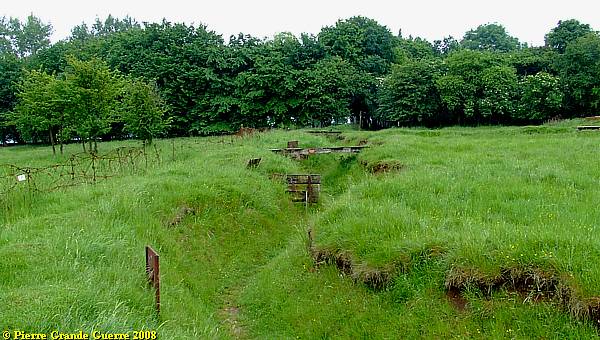
View from the French 1st line to the German 1st line.
View southward.
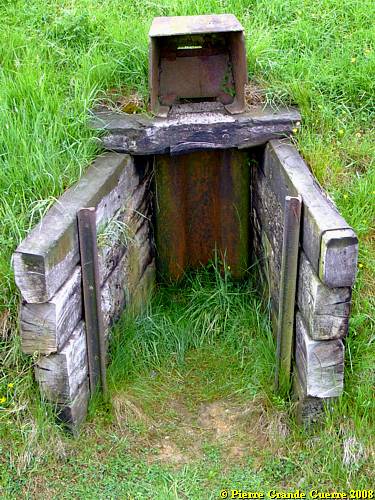
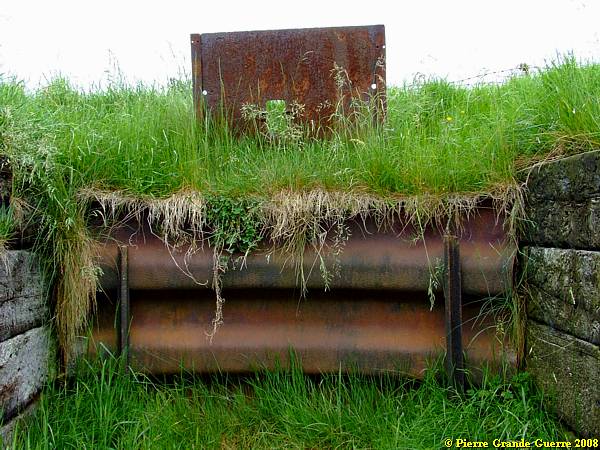
Another rifleman's armour plate.
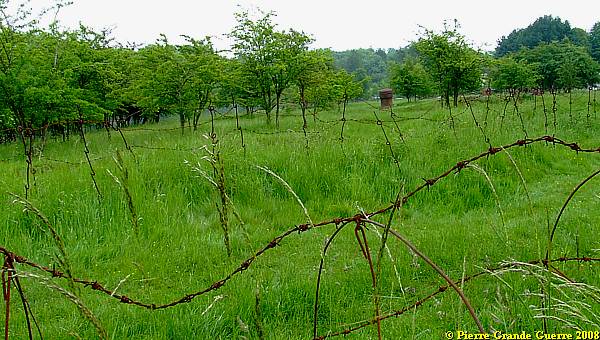
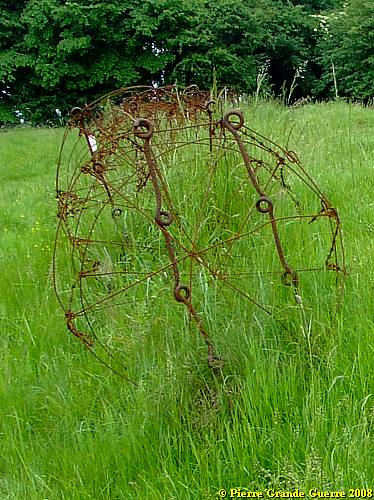
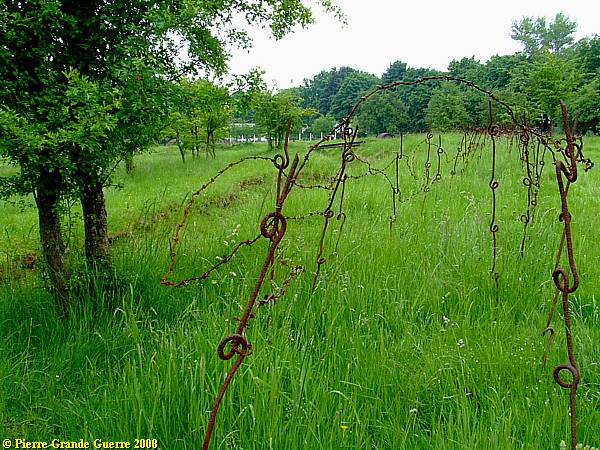
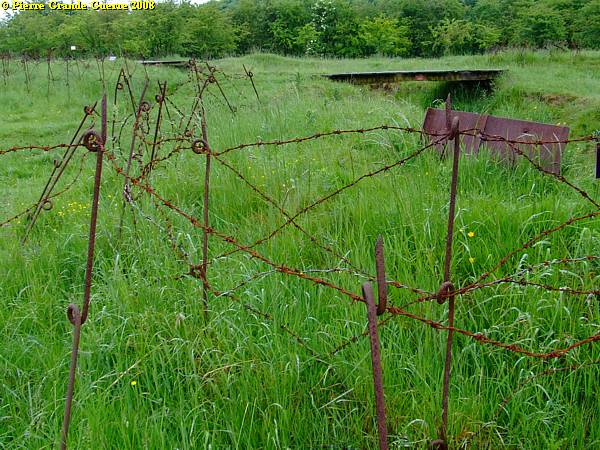
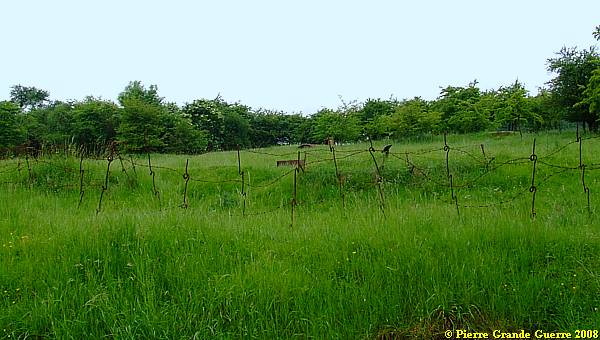
French barbed wire obstacle.
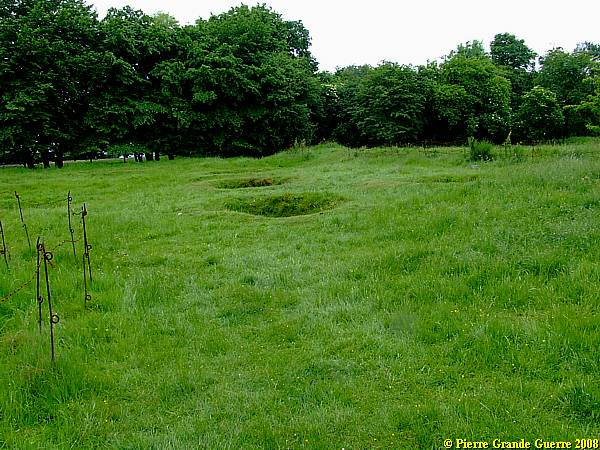
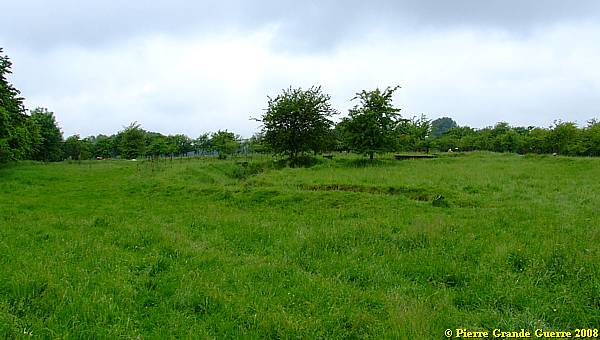
No Man's Land. Note the shell holes. Left the German positions, right the French.
The German 1st line.
Twin armoured rifle plates for sentries.
View from the German 1st line to the French lines.
View southward.
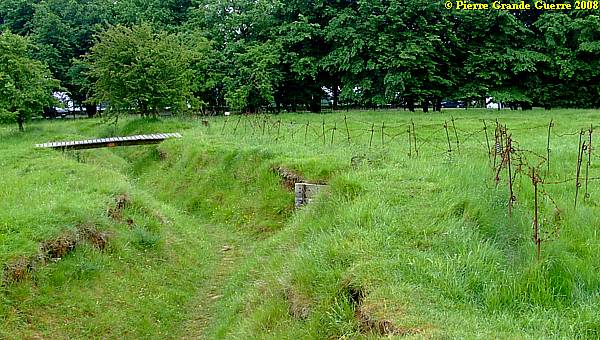
View eastward.
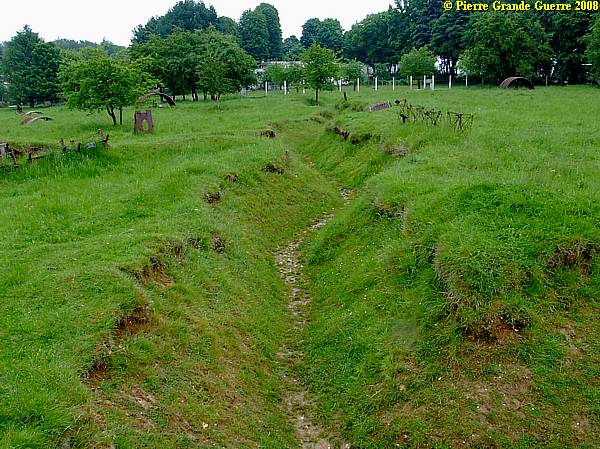
Junction with communication trench.
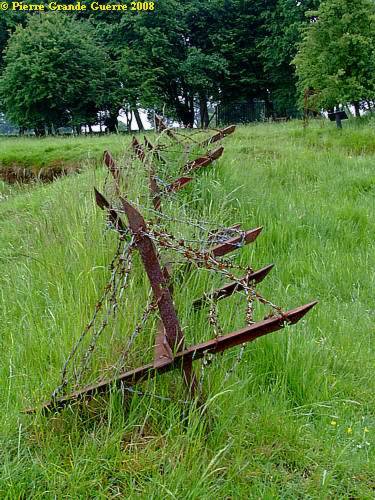
German barbed wire obstacles , " Frisian horses ".
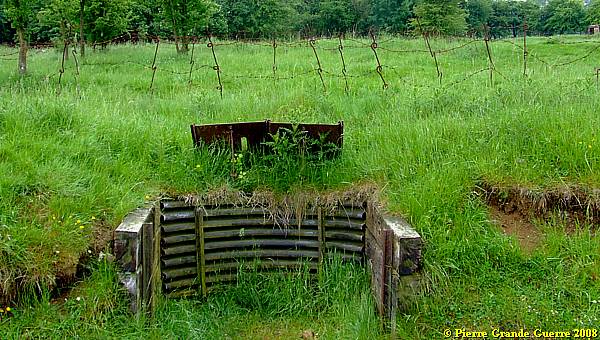
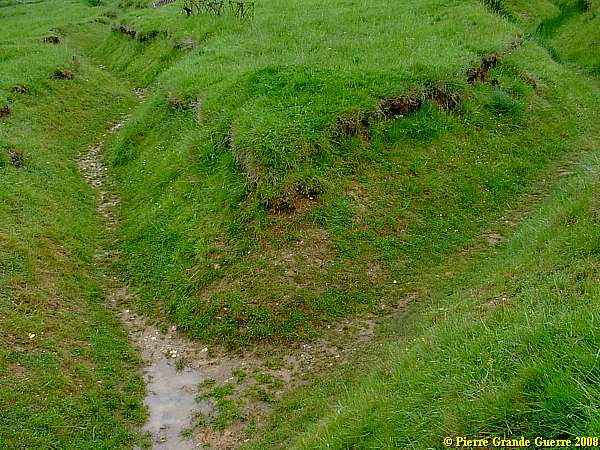
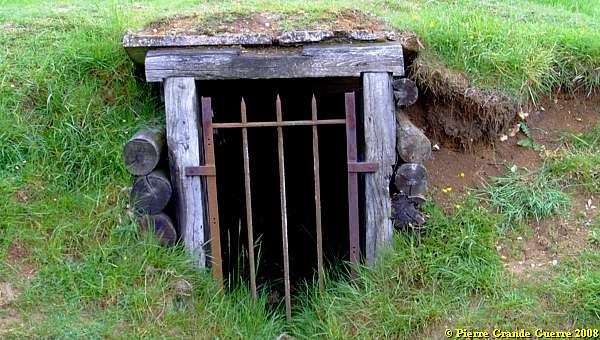
Dug-out entrance.
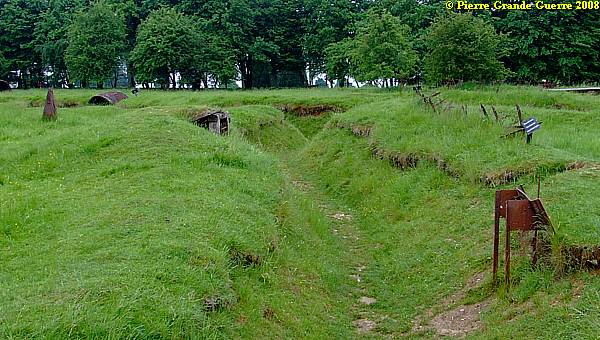
Northern side of the field, view at the French lines.
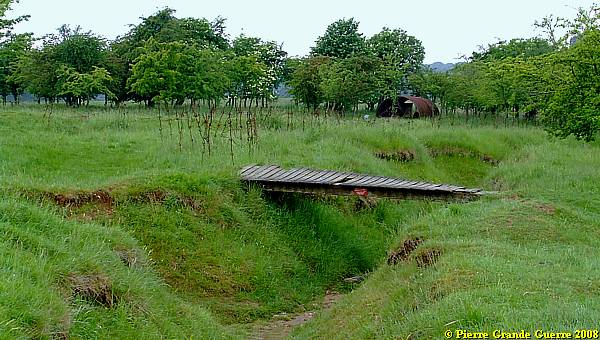
The German 2nd line.
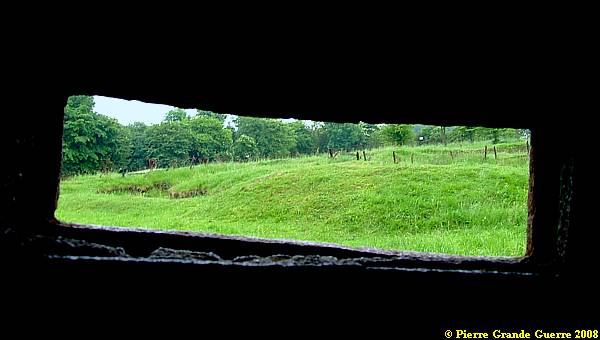
An armoured observation post.
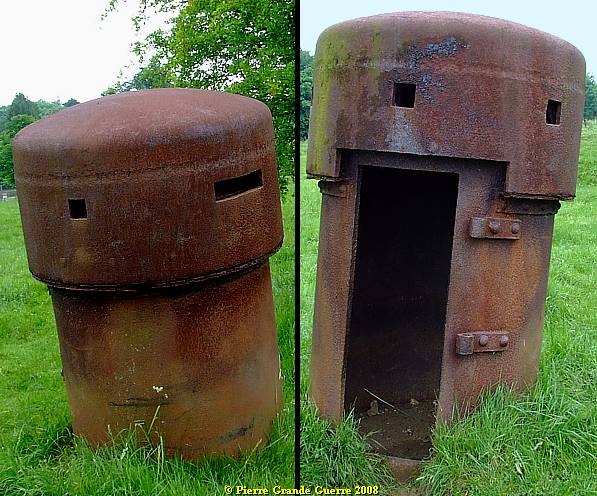
View eastward from within the observation post.
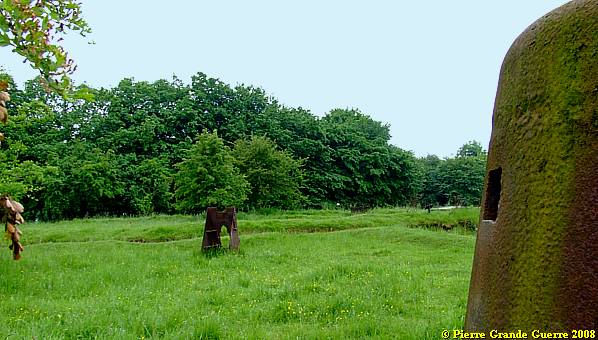
View southward.
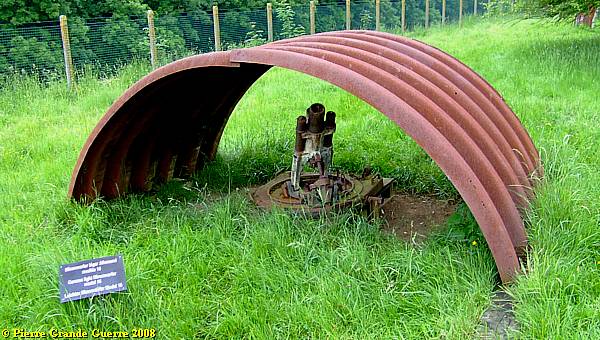
A German M15 light " Minenwerfer " trench mortar.
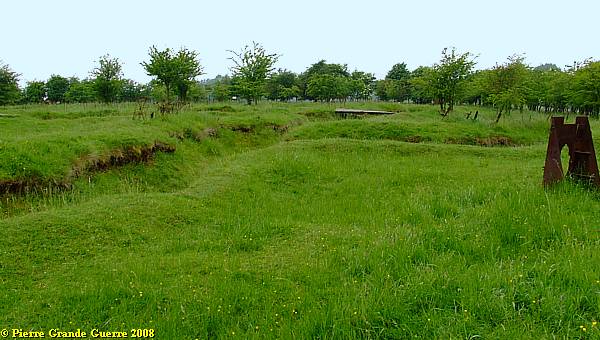
View eastward.
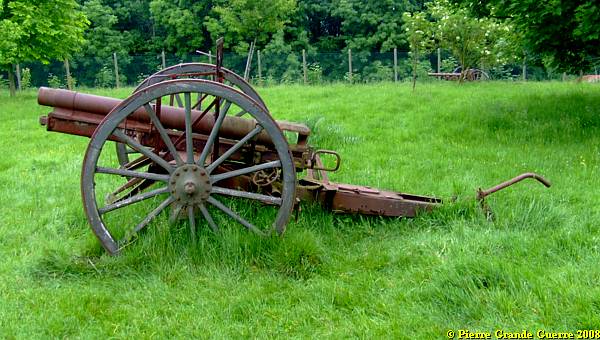
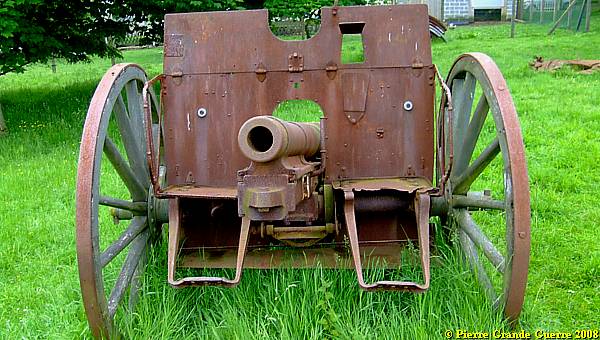
German field artillery gun.
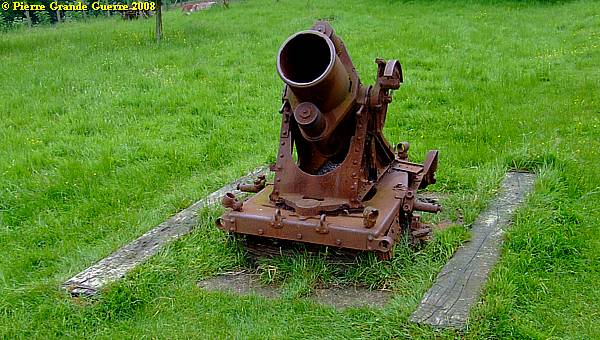
245 mm. Minenwerfer.
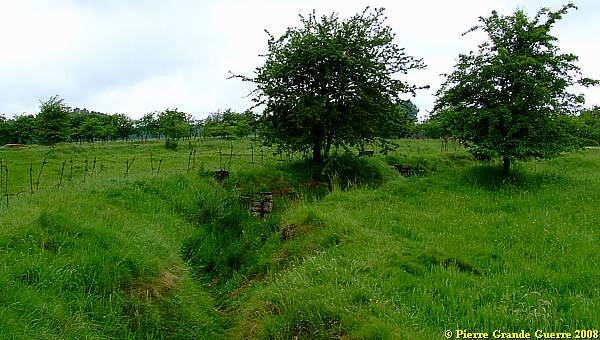
A last view west- east from the trenches.
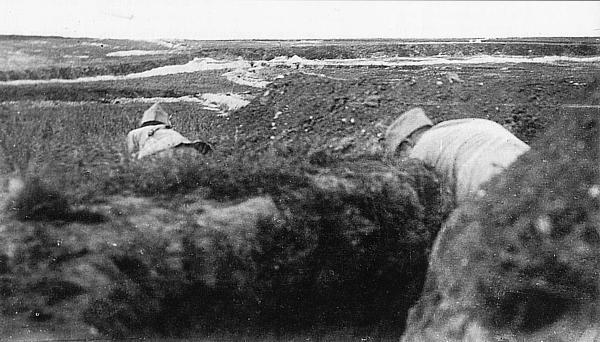
On 16 June the 21st and 33rd Divisions attacked again, but the Germans drove the French back again with a series of counterattacks.
On 18 June the French succeeded to reach and occupy the summit.
The Germans continued to occupy Souchez and the Douai Plain until 25 September 1915.
The French 13th and 70th Infantry Divisions captured Souchez that day, and the 77th Infantry Division cleared the area around Souchez and Cabaret Rouge.
According to estimates , both belligerent parties had 140,000 casualties at the end of the Second Battle of Artois.
After the trenches we will now visit the " Cimétière Nationale de Lorette Ablain-St-Nazaire ".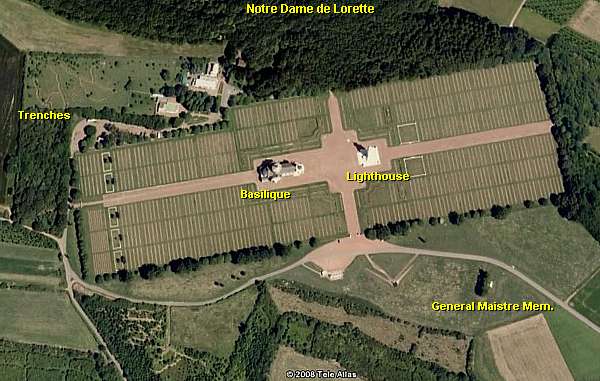
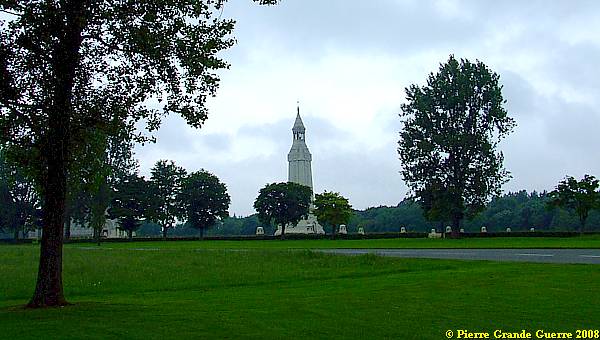
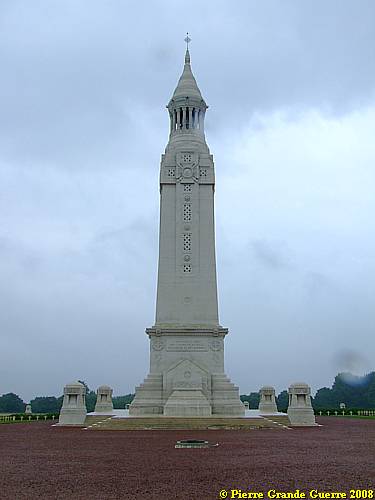
In this impressive war cemetery stand an impressive Basilica and a Memorial Lantern Tower.
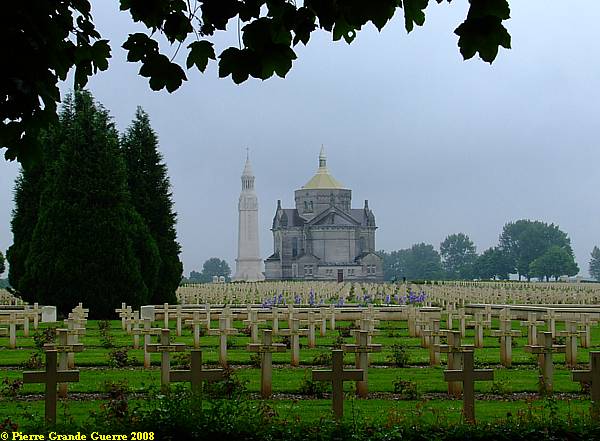
The national cemetery was built on 13 hectares comprising 20,000 individual graves.
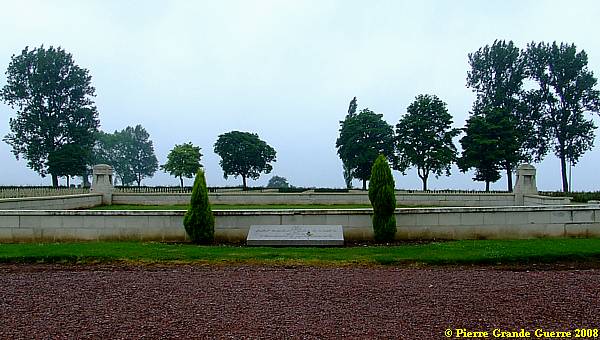
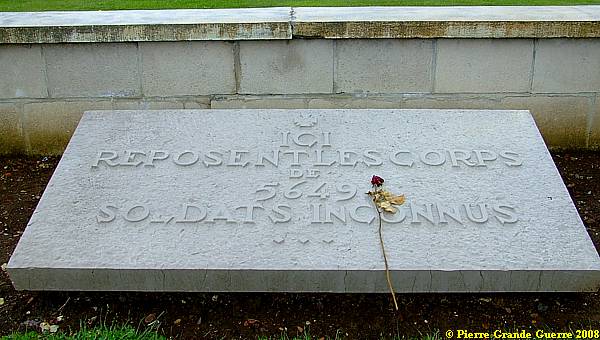
22,970 Unknown soldiers are buried in eight mass graves. One collective grave is situated under the main base of the Lantern Tower.
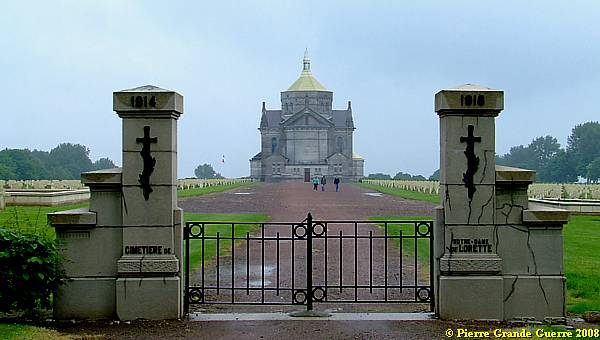
Right from the northern entrance: a portion of the cemetery has been reserved for Muslim soldiers...
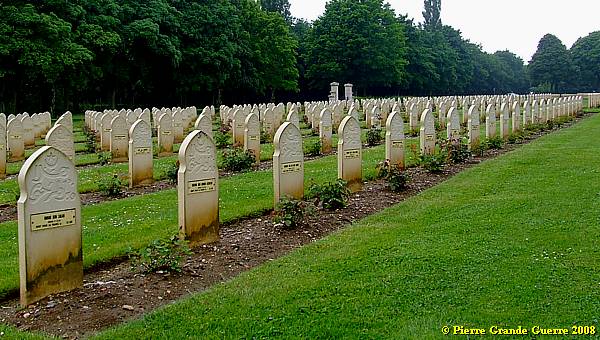
... of the Algerian and Moroccan Regiments.
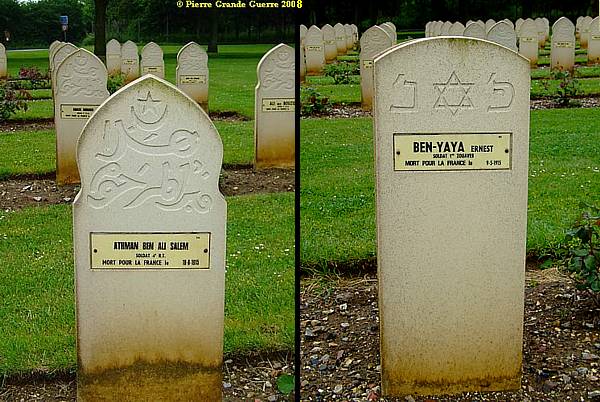
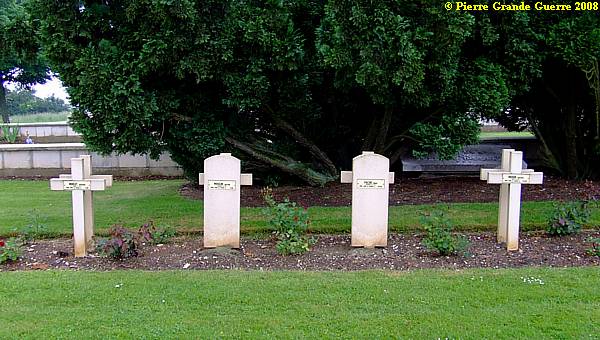
Besides Muslim headstones, Jews and soldiers without a religion have their own tombstones instead of the traditional Christian crosses.
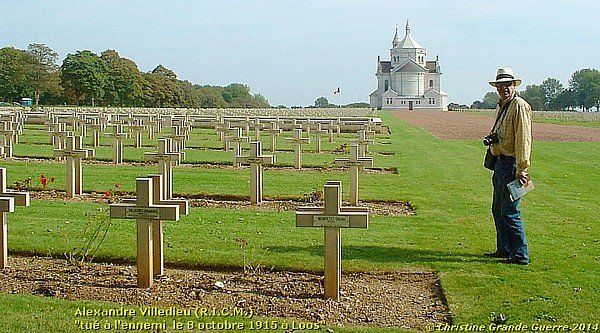
On that hot September day in 2014, I found the grave of Alexandre Villedieu at the first row near the west gate. Villedieu was a soldier of the Régiment d'Infanterie Coloniale du Maroc , killed on 8 October during the Battle of Loos. In Loos-en- Gohelle an interesting museum has been named after this R.I.C.M. soldier.
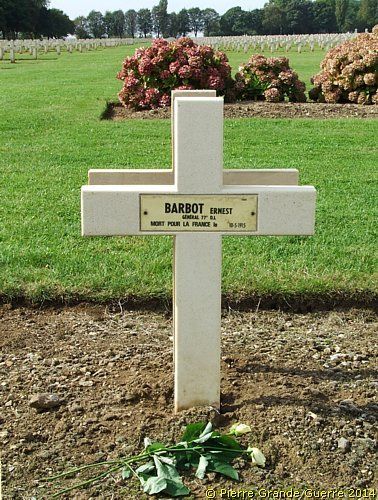
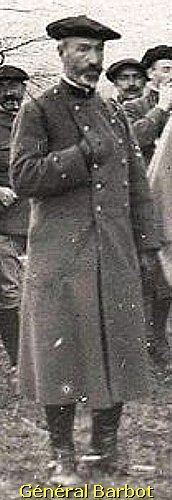
In the first row near the south gate lies the grave of Général Ernest Barbot. Barbot was killed on 10 May 1915 in Souchez.
( For more details about the circumstances of death, visit the frame concerned in my previous photo impression about Souchez . )
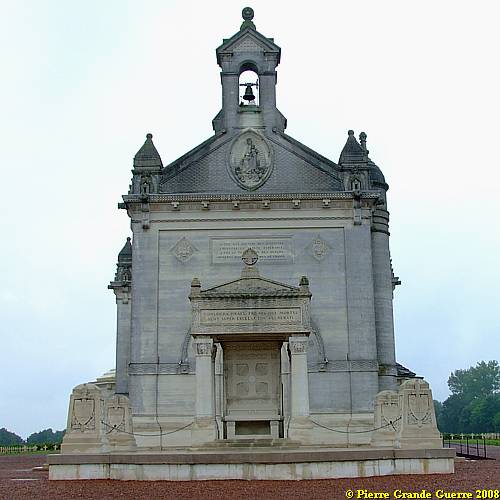
The Basilica is built on the spot of a former chapel of 1727, and a later church of 1870, destroyed in 1914.
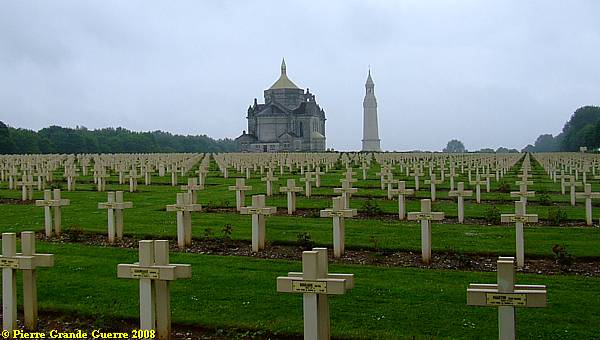
This location has been the centre point of this battlefield.
We visit the interior of the Basilique de Notre Dame de Lorette.
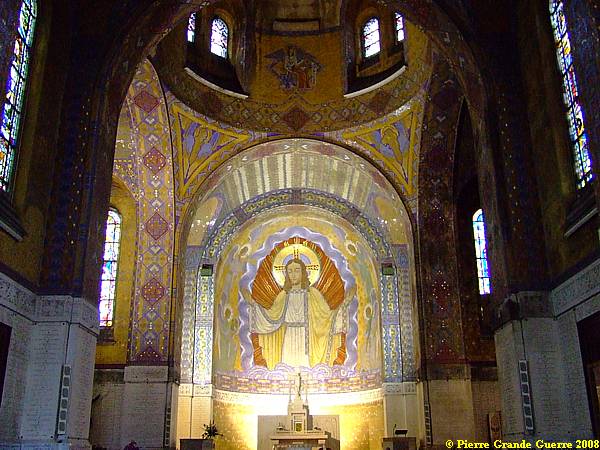
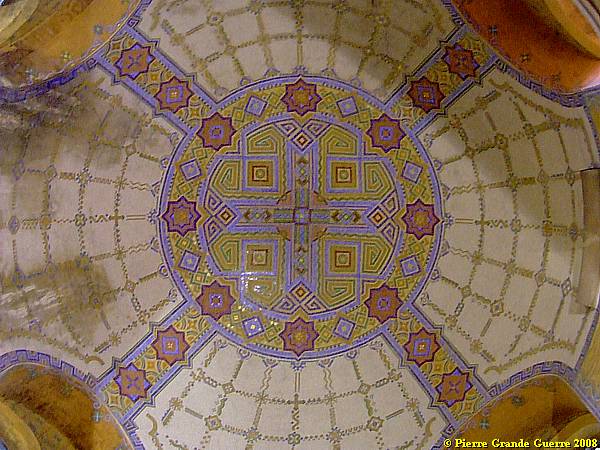
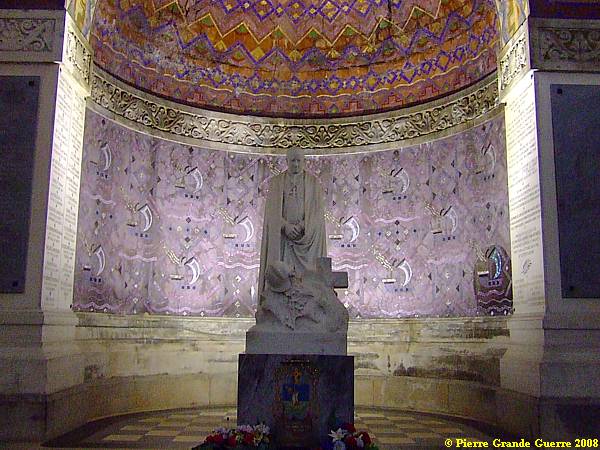
The church walls are covered with private and national memorial plaques. The cupola ceiling.
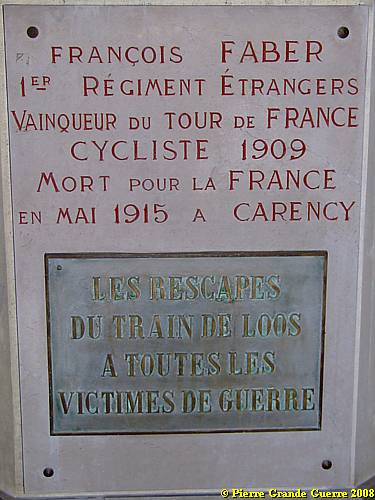
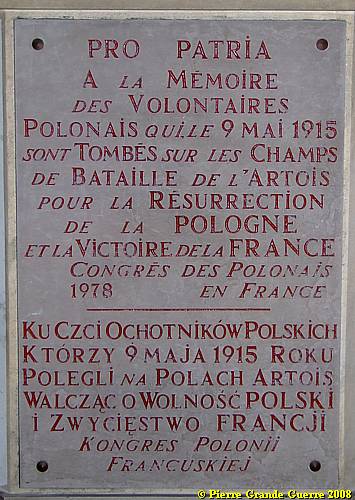
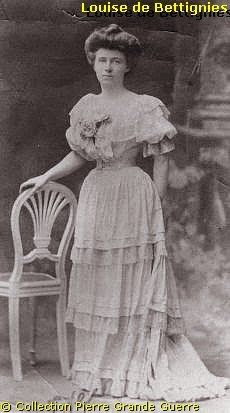
This glass showcase commemorates Louise de Bettignies.
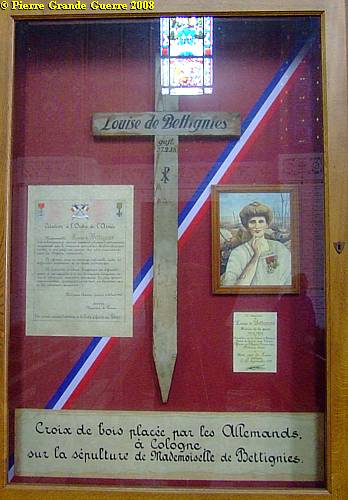
Mademoiselle Louise de Bettignies - 15 July 1880, Saint-Amand-les-Eaux - 27 February 1918, Cologne (Köln)

Louise de Bettignies was under the pseudonym , Alice Dubois, a French secret agent for the British Army during World War I. She decided to engage in espionage and resistance against the German invasion of her residence since 1903, the city of Lille, in October 1914.
Able to speak French, English, German and Italian , she ran from her home in Lille a vast intelligence network in northern France, on behalf of the British Army and the Intelligence Service, under the pseudonym Alice Dubois. The network provided the British important information via occupied Belgium and the " neutral " Netherlands. It is estimated , that she has saved the lives of over a thousand British soldiers during the 9 months of her most active period ( January to September 1915).
Bettignies ’ network consisted of a hundred people , and it was so effective that she was nicknamed by her superiors the Queen of English Spies.
One of her last messages was to announce the preparation of a massive German offensive on Verdun in February 1916. This information was relayed to the French "Grand Quartier Génerale" (GHQ), which refused to believe it.
In September 1915 Bettignies was arrested by the Germans , and then held captive for 3 years . She died in 1918 as a result of tuberculosis , contracted in prison, in the hospital , "Heilige Maria", in Cologne. Louise died only a few months before the Armistice . Another woman , treated by the Germans as a spy , was the British nurse Edith Cavell . Her arrest in August 1915 and execution by firing squad in September 1915 caused widespread condemnation .
Louise was of great importance to the Allies . Louise was awarded a " Croix de Guerre aux Palmes " in August 1915. The original Citation of Joffre for the " Ordre d' Armée" is also in the frame.
On 27 September 1915 Joffre called Louise a "War Heroine ", and added another high decoration : " Chevalier de la Légion d' Honneur . ( Also displayed under glass .)

We return outside to the cemetery; o ne of the eight mass graves.
The "Garde d’Honneur de Lorette " guards the "Tour Lanterne ", the Lantern Tower.
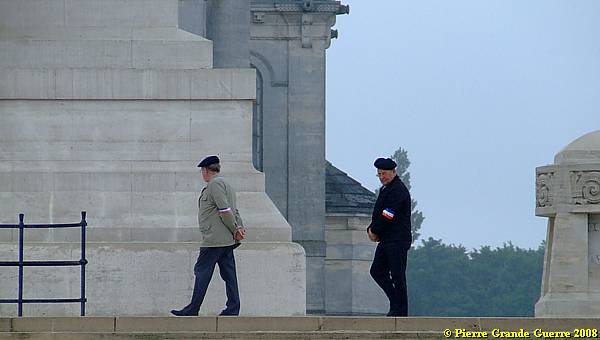
The Honour Guard's goal is to keep alive the memory of the "Dead of France". It's 3,000 members represent the families of war victims. Each day, from 15 March to 11 November, several of its members mount a permanent silent guard to the ossuary. Outside the tower the guards are willing to answer questions of visitors .
The entrance to the tower. Inside the tower there is a " Chapelle Ardente ".
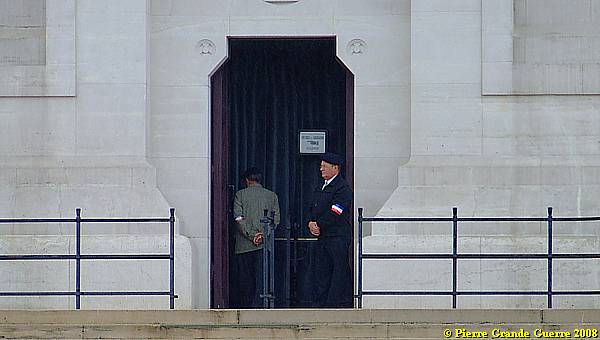
The Chapelle Ardente contains 32 coffins of the Great War. It also includes one coffin containing the relics of an unknown soldier from 1939-1945, a second coffin with the body of an unknown soldier of North Africa , a third coffin of an unknown soldier of the French Indochina War. A small reliquary contains ashes of a prisoner of a concentration camp. Under the floor of the tower rest another 6,000 bodies of unknown soldiers .
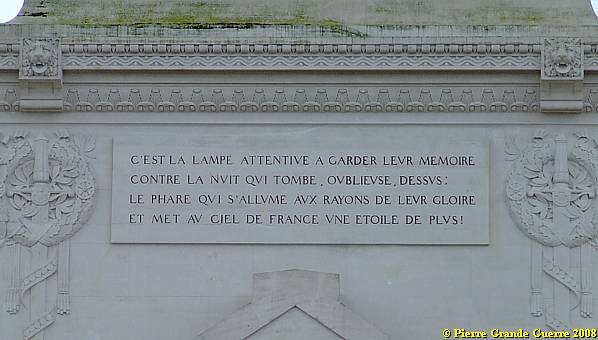
La Tour Lanterne is 52 m. high (200 steps). At the top is a 3,000 candle power light, that rotates 5 times per minute.
Continue to the next chapter:" Loos ".
Dutch Readers, Lees elders hier meer details over " Louise de Bettignies - Queen of English Spies ".