ALSACE VOSGES - Moosch Nécropole Nationale
Year of visit: 2010
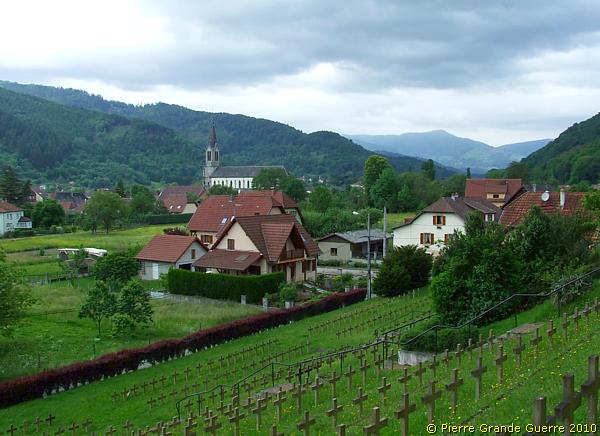
A visit to the Moosch Nécropole Nationale, especially to the graves of Général Serret, his nurse Soeur Ignace and the American volunteer ambulance driver, Richard Hall. In between we visit
the site of the mortal Injury of Gen. Serret, commander of the 66e Division d' Infanterie
at the Hartmannswillerkopf.
We depart from the Hirzstein and we cross the frontline. Via the Col du Silberloch we continue northward until the Col Amic. Next we continue south-westward to the village of Moosch. At Moosch we visit the interesting French National Military Cemetery of Moosch, which contains the graves of mostly Chasseurs and some Infantrists fallen in the Hartmannswillerkopf front sector.
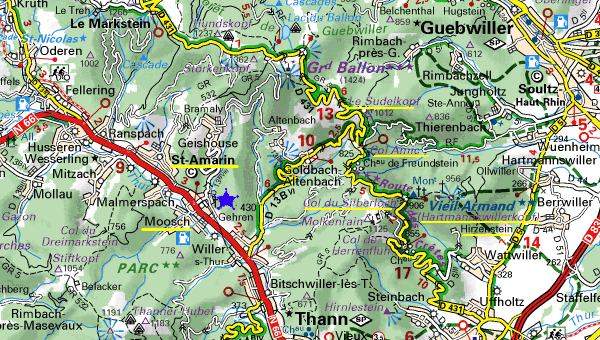
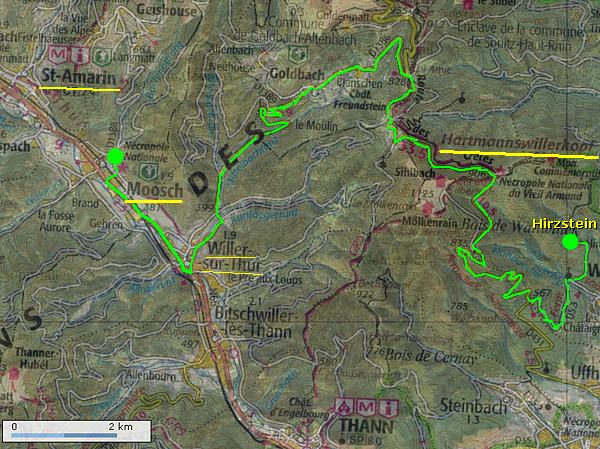
We depart from the Hirzstein via the D 5 bis, and we join the D 431, the Route des Crêtes, northward.
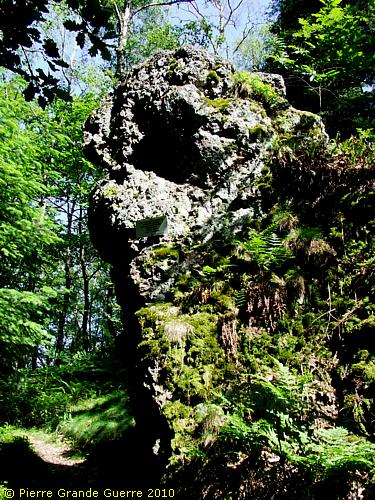
From the Crypt of the Col du Silberloch at the foot of the Hartmannswillerkopf, ...
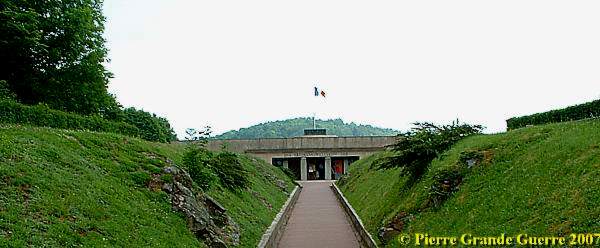
... we follow the route of the period of the ambulance cars ...
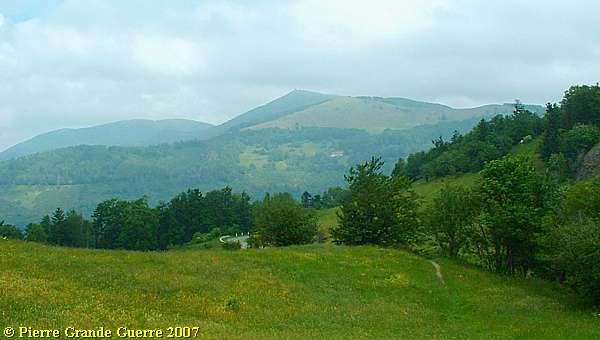
... to the Col Amic. At the Col Amic we go left, and south-westward.
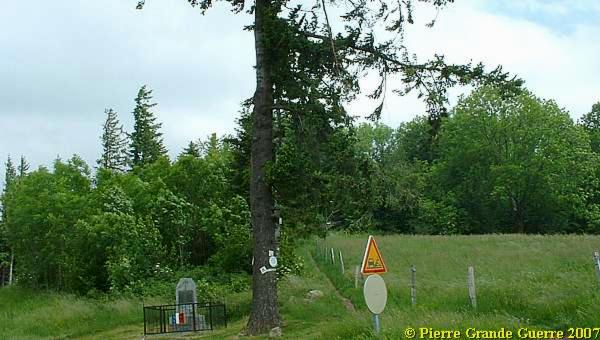
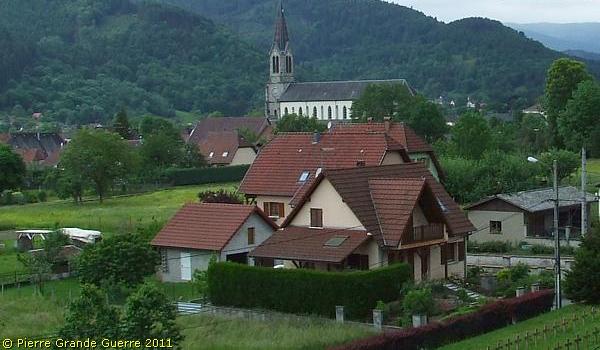
Via the D 13 bVI, the "Willer" road, and Willer-sur-Thur we drive to the village of Moosch.
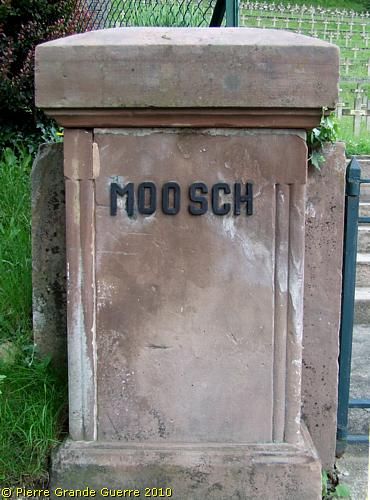
At the north-eastern outskirts of Moosch, in the Rue du Cimétière Militaire, lies the Moosch Nécropole Nationale. Two 3D satellite views; first the village of Moosch, next a zoom-in view at the Cemetery.
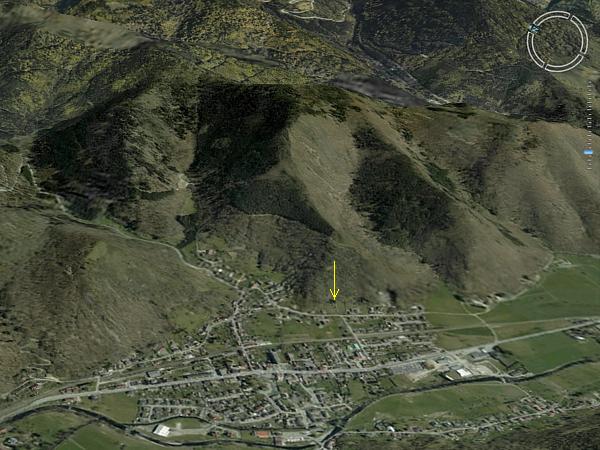
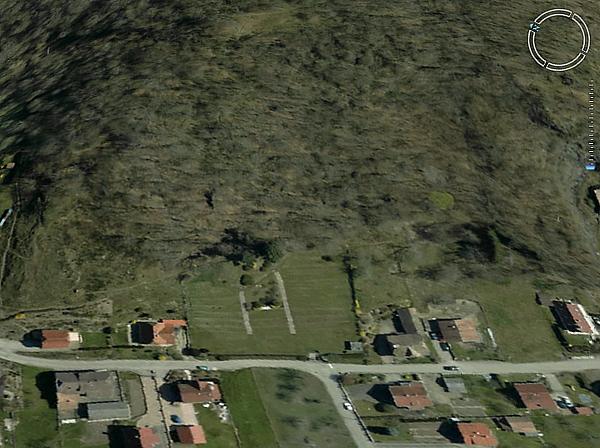
Moosch Nécropole Nationale
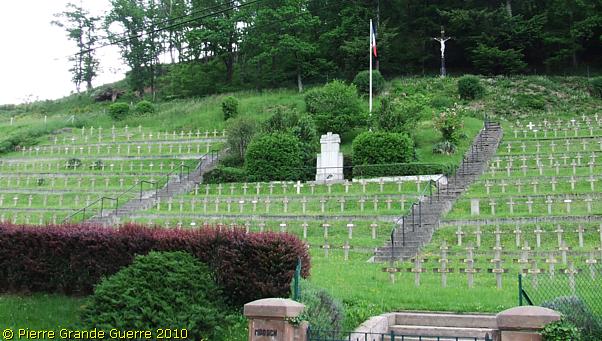
The Moosch Nécropole Nationale contains 594 graves, mainly of “Blue Devils” of the Chasseurs Alpins, and some Infantrists like “Red Devils” of the 152e R.I.. There are also some graves of Chasseurs à Pied. The cemetery also contains the grave of an American ambulance car driver and a French nurse .
Rather remarkable; in contrary to other French war cemeteries this cemetery knows no “ossuaire” or mass grave.
The number of officers, buried here, is relatively high. All these officers and soldiers have been killed in 1915 and 1916, nearby on heights along the front between Metzeral in the north and Thann in the south, like the Hilsenfirst, the Sudelkopf, and the Hartmannswillerkopf.
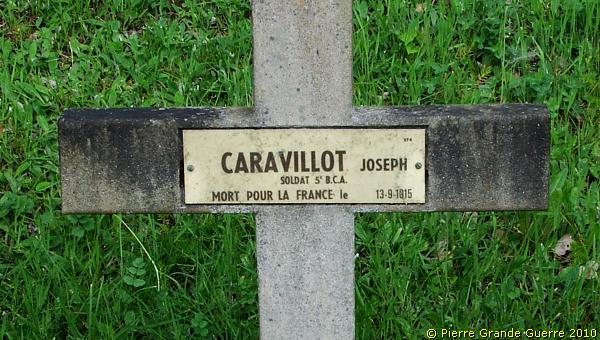
A grave of a Chasseur Alpin of the 5e B.C.A., fallen on 13 September 1915.
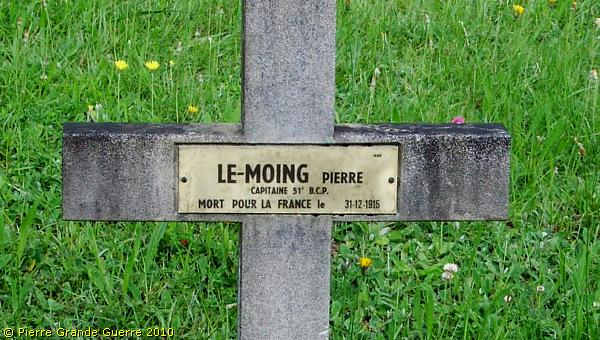
The grave of a Captain of the 51e Bataillon Chasseurs à Pied, killed during the 1915 Christmas Battles in the Hartmannswillerkopf front sector.
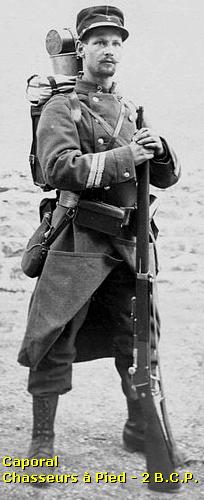
The difference: Chasseur Alpin or Chasseur à Pied
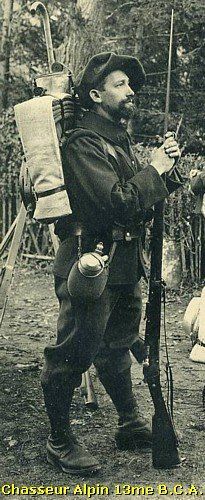
These Chasseurs on these two period photo’s are wearing different unit numbers than in the ones engraved here on the graves. I show you these period samples just to explain the difference in outfits; above a Chasseur Alpin and below a Chasseur à Pied.
Two graves, next to each other, both of Captains of the 15e Bataillon Chasseurs à Pied.
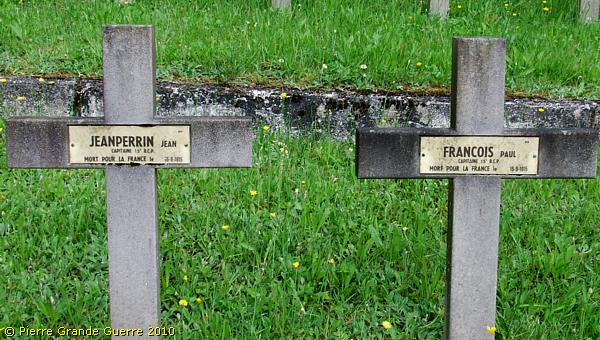
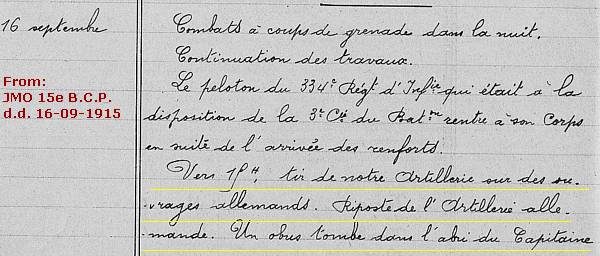
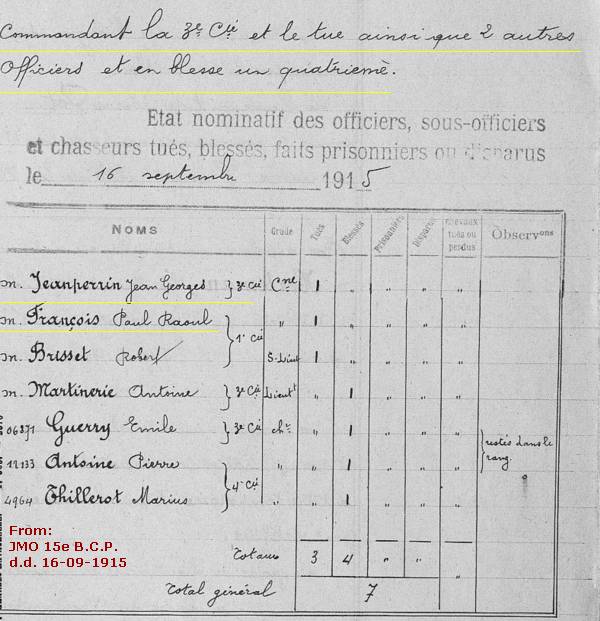
On 16 September 1915 both Captains died instantly, when "a grenade fell into the bunker of the Capitaine ( Jeanperrin ), Commander of the 3rd Coy, killing simultaneously 2 other officers and injuring a fourth" .
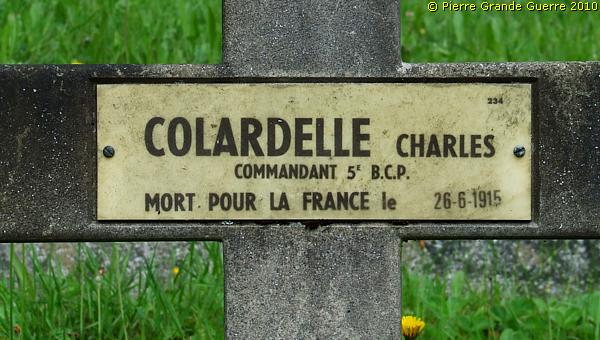
The next grave is of the "Commandant", Major, of the 5e B.C.P., Commandant Charles Colardelle.
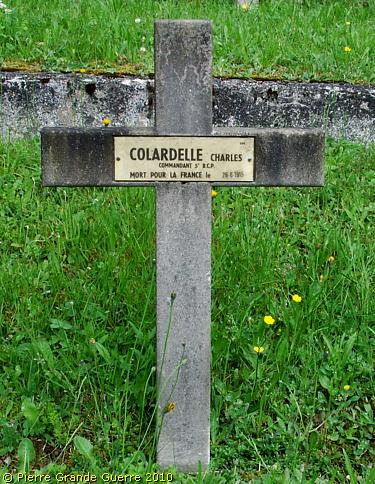
Commandant Charles Colardelle
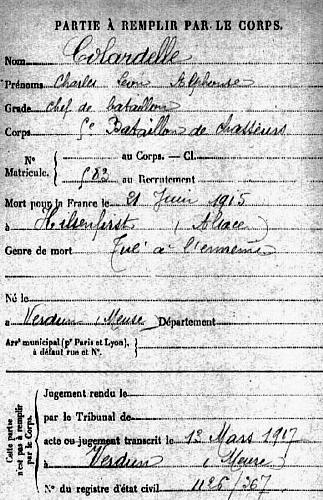
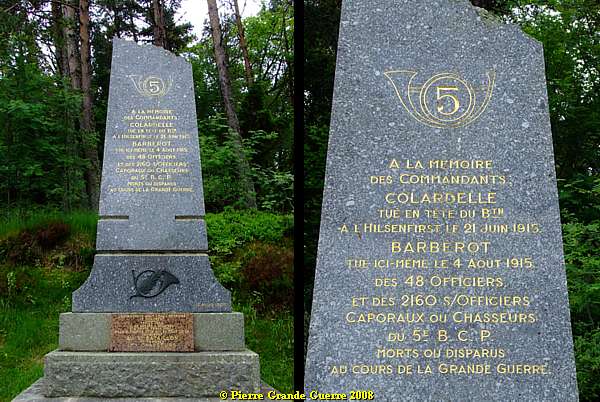
Commandant Charles Colardelle was killed "at the head of his battalion" at 21 June 1915 at the Hilsenfirst .
His name is mentioned first at the 5me B.C.P. Memorial at the Collet de Linge at the foot of the Schratzmännele .
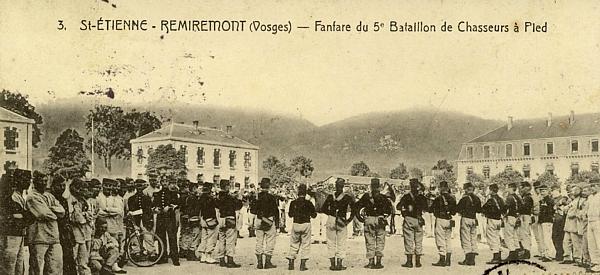
A period photo of the brass band of the 5e B.C.P. at St. Etienne-lés-Rémiremont, Vosges, some 18 km. north-west of Moosch.
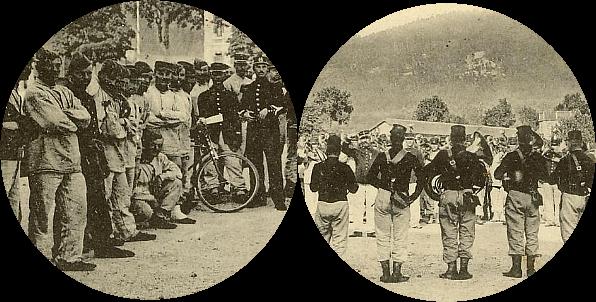
Two zoom-ins.
The grave of another high officer, the commander of the 6e Brigade de Chasseurs Alpins, Lieutenant Colonel Joseph Boussat, fallen on 17 December 1915.
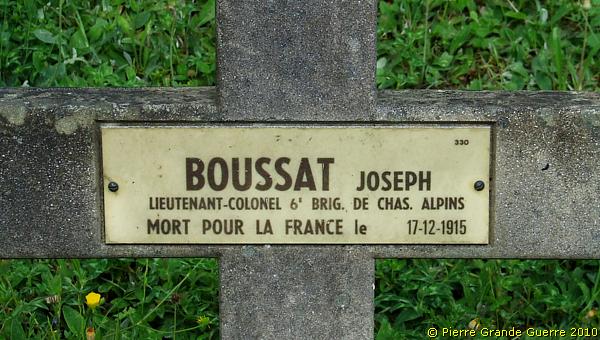
Lieutenant Colonel Joseph Boussat
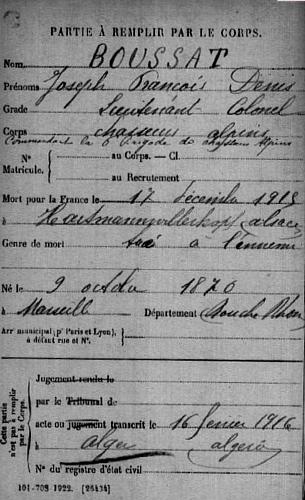
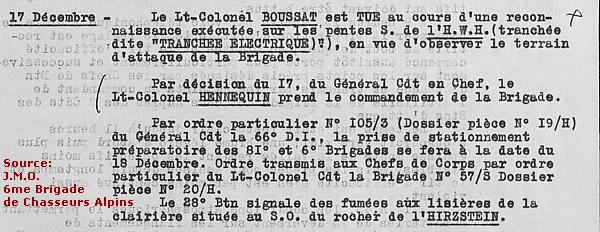
During the preparations for the offensive of 21 December 1915, the Christmas Battles for the possession of the summit of the Hartmannswillerkopf , the 6e Brigade de Chasseurs Alpins lost their commander, Lt. Col. Boussat , on 17 december 1915.
While he was on a reconnaissance mission, Lt. Col. Boussat was hit "on the southern slopes of the Hartmannswillerkopf (trench called "Electric Trench"), observing the terrain of the attack of the Brigade".
The grave of the Capitaine of the 15e B.C. à Pied, Paul Amic, killed on the first day of the Christmas Battles.
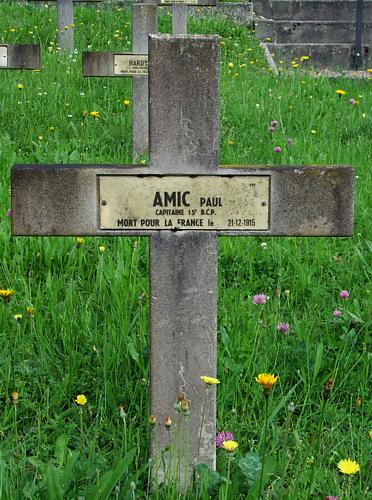
Capitaine Paul Amic
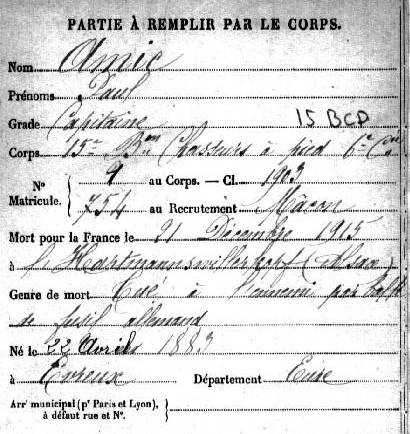
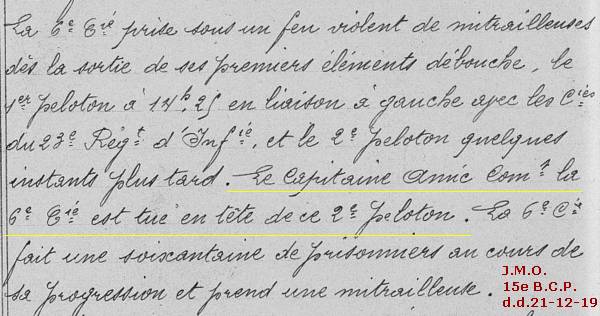
Capitaine Paul Amic was killed on the first day of the Christmas Battles, on 21 December 1915, during an attack at the Rehfelsen and the Sandgrubenkopf near the Hartmannswillerkopf "at the head of his second platoon".
On the Col Amic , at the foot of the Kohlschlag, stands a memorial for Capt. Paul Amic, which we passed on our way to Moosch.
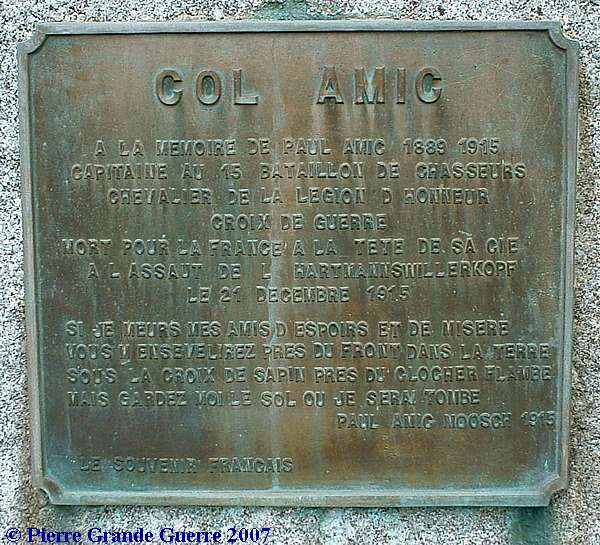
"COL AMIC
IN MEMORY OF PAUL AMIC 1889 - 1915
CAPTAIN OF THE 15th BATALLION OF CHASSEURS
KNIGHT IN THE LEGION OF HONOUR
CROSS OF WAR
DIED FOR FRANCE AT THE HEAD OF HIS COMPANY
DURING THE ATTACK AT THE HARTMANNSWILLERKOPF
OF 21 DECEMBER 1915
WHEN I DIE MY FRIENDS OF HOPE AND MISERY
YOU WILL BURY ME NEAR THE FRONT IN THE SOIL
UNDER THE CROSS OF FIR WOOD NEAR THE BURNED CHURCH TOWER
BUT GUARD ME AND THE SOIL WHERE I WILL BE FALLEN
PAUL AMIC MOOSCH 1915"
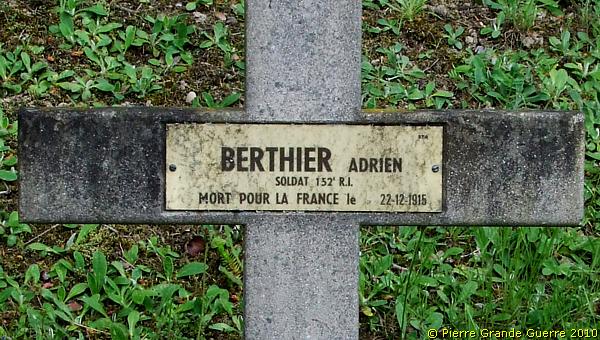
This Red Devil private of the 152e R.I. was killed on the second day of the Christmas Battles for the Hartmannswillerkopf.
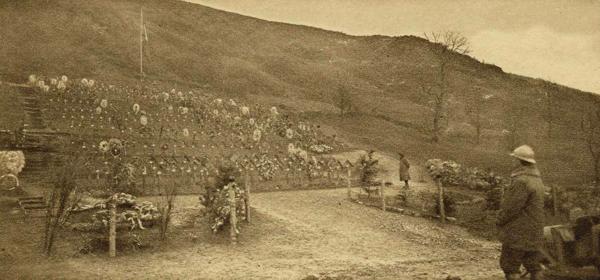
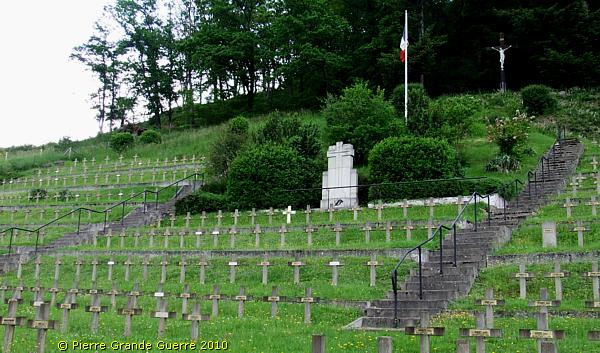
We climb the stairs on the right until the second row, left of the staircase to grave 485.
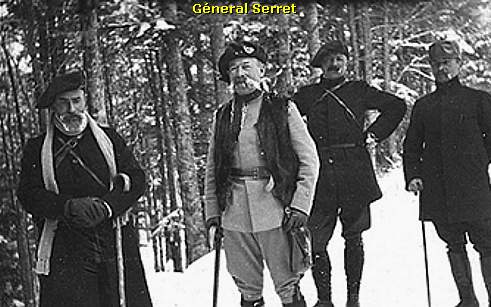
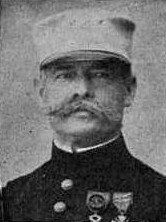
Here we find the grave of Général Marcel Serret , Commander of the 66e Division 'd Infanterie.
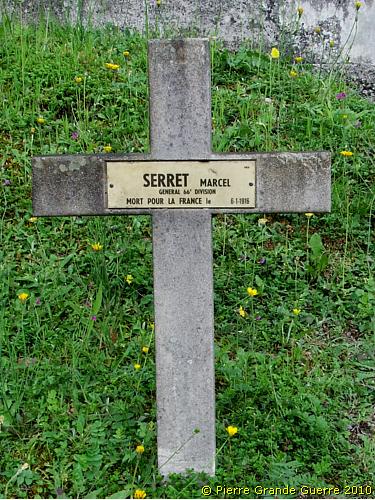
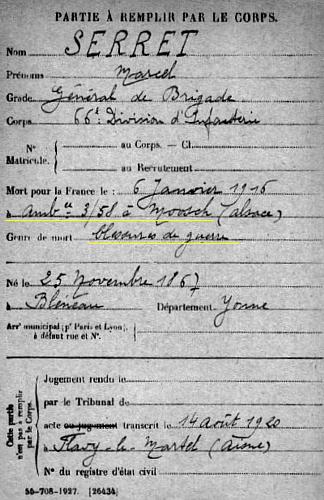
General Serret died at 6 January 1916, but before this event happened, he was severely wounded on 29 December 1915.
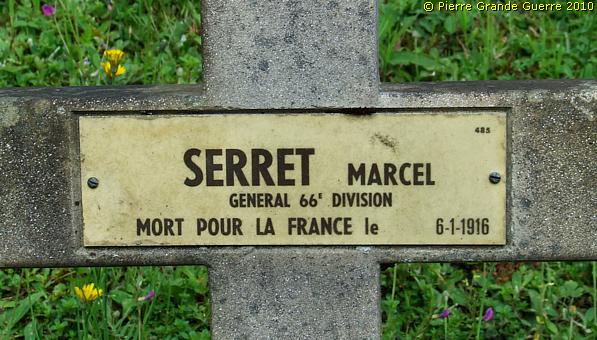
General Marcel Serret (1867-1916)
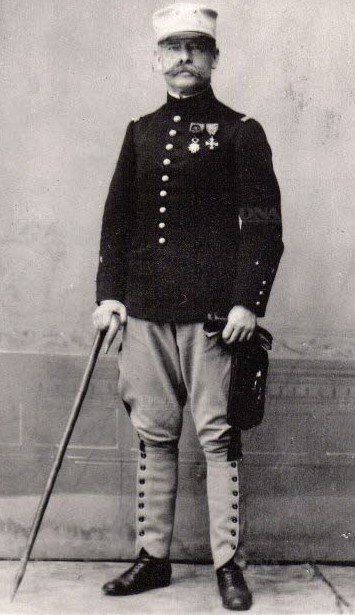
General Marcel Serret was born on 25 November 1867 at Bléneau in the Département Yonne. On 31 October 1885 he left the “École spéciale militaire de Saint-Cyr”, the prestigious Military Academy, for active service. In 1906 he entered the 17e Bataillon Chasseurs Alpins.
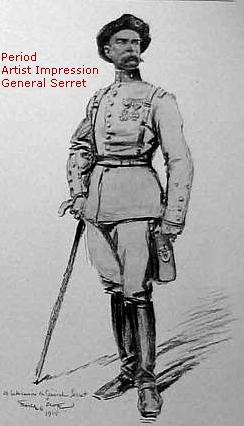
After a long career in the military service Marcel Serret was appointed on 5 January 1915 to commander of the 5e B.C.A., and next, on 1 February 1915, Serret was promoted to Commander of the 66e Division d’ Infanterie.

Though having a reputation for being tough on discipline the General was rather popular with his troops for his frequent presence amongst them, not only for his presence behind the front, but even more for being with his men in the combat zone.
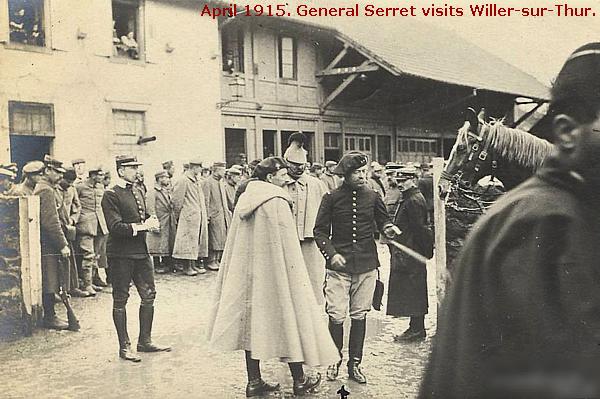
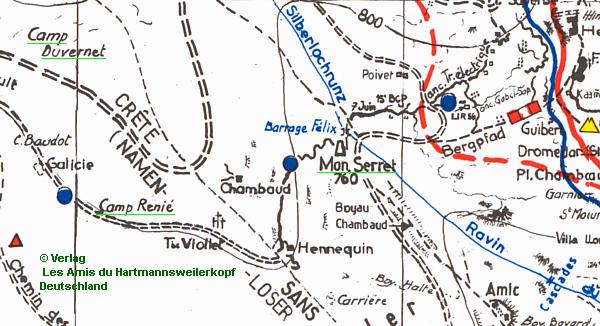
On 29 December 1915 General Serret inspected his troops in the combat sector at a southern slope of the Hartmannswillerkopf. In the afternoon he visited by car Camp Duvernet and Camp Renié. From Camp Renié the General walked the distance to the Command Post of Col. Goybet of the 81me B.I. near the brook of the Silberlochrunz.
During his walk the Germans bombarded this area "with 50 shells per minute".
After his conversation with Col. Goybet General Serret left the Command Post under polite protests of his officers requesting him to wait for a while, until the bombardment eased down.
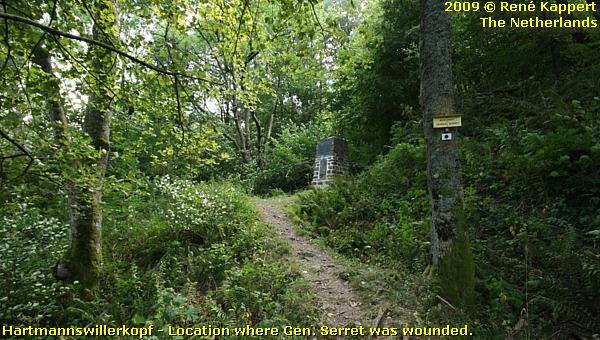
General Serret refused this offer to stay any longer and left the Command Post of Col. Goybet. A few moments later, while walking his way back to his car at Camp Renié, General Serret was hit by a German shell fragment in his right leg.
This is a contemporary photo of the location at the southern slope of the Hartmannswillerkopf, where the General was wounded. Further on this page, in another frame, I will give some more details about this location.
The American ambulance driver of Section 3 of the American Ambulance Field Service, Curley, transported the General, still alive, via the same route as we arrived here today, "the Willer road", to the Moosch Military Hospital.
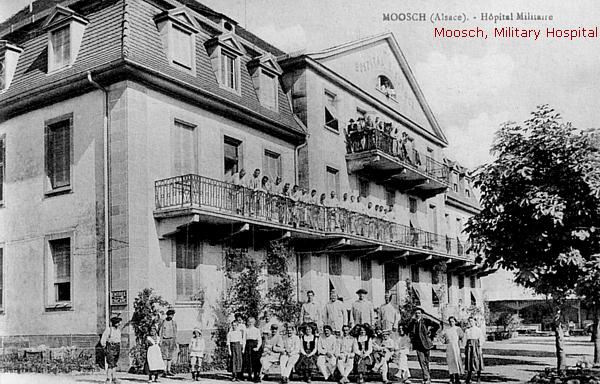
At 20.00 hrs. the General arrived at the "Ambulance 3/58", the French term for a temporary military hospital.
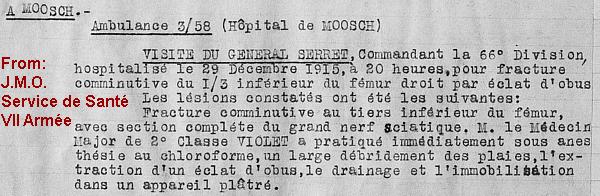
During the night the right leg of the General developed a serious infection.
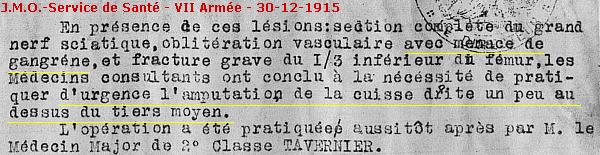
The next day a military surgeon, 2nd. Major Tavernier, amputated 2/3 of the upper half of the General’s right leg.
Soeur Ignace and Général Serret
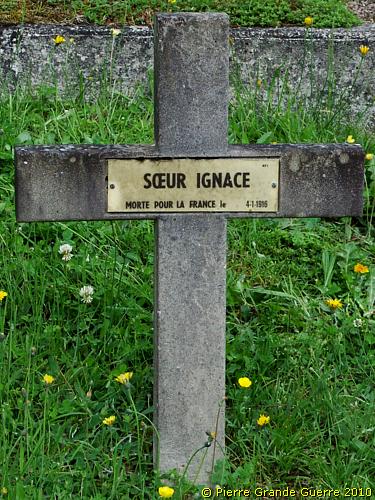
During his stay at the Moosch Military Hospital the General developed a friendship for a religious nun, Soeur Ignace . This nurse seems to have been in high esteem with all soldiers and officers. Soeur Ignace, born as Madame Roech, was known for "her limitless dedication, and her imperturbable cold-bloodedness" , and she had "earned the admiration of all".

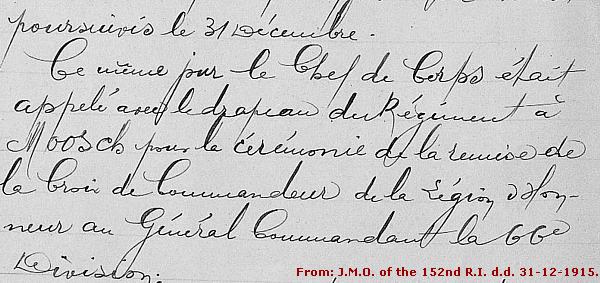
On 31 December 1915 General Serret received in the hospital the military decoration of the "Croix de Commandeur de Légion d' Honneur".
In spite of the operation, and though initially the prospects for revalidation looked promising, the infection still progressed. While the gangrene in the General’s leg progressed, the Germans intensified their bombardments on the French lines near the Hartmannswillerkopf and even bombarded the village of Moosch and the surroundings of the Hospital.

On 4 January 1916, Soeur Ignace accompanied a wounded teacher nun on her way back to her school. At 15.00 hrs. Soeur Ignace was hit by artillery fire just outside the hospital building, near the village church, and died on the spot.
After the amputation of his leg the condition of General Serret had been deteriorating seriously. The surgeon even meditated a second operation, but it was already too late.

On 6 January 1916 at 07.45 hrs. the General died at the Moosch Military Hospital by an embolism.
Almost two hours later, at 9.30 hrs., the funeral service started for Soeur Ignace , attended by the highest officers, and even the commander of the VII Armée, General de Villaret.

During the funeral service Soeur Ignace had been posthumously decorated with the "Croix de Guerre avec Palme".
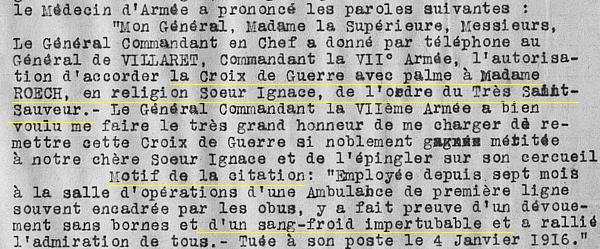
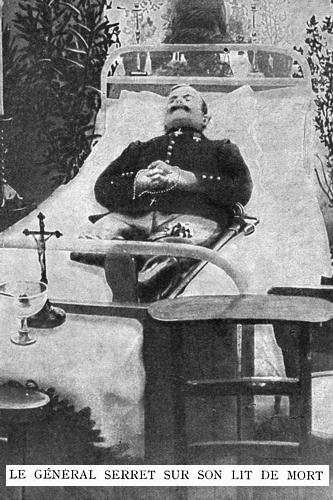
On 8 January 1916 General Serret was buried in attendance of high officers and five Generals, amongst them the commander of the VII Armée, General de Villaret.
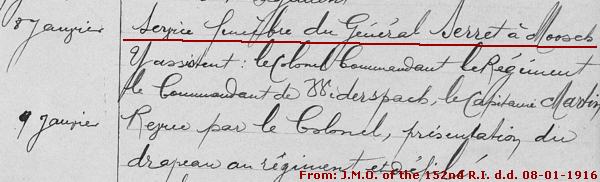
The General was buried here at the Moosch Military Cemetery next to his favourite nurse, Soeur Ignace.
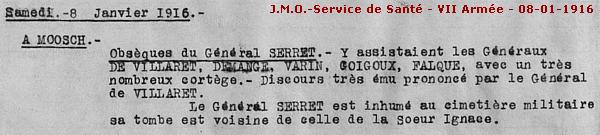
General Serret is one of the 41 French Generals, who died, instantly or after being wounded, in combats at the front. General Nollet succeeded Serret as Division General of the 66e D.I.
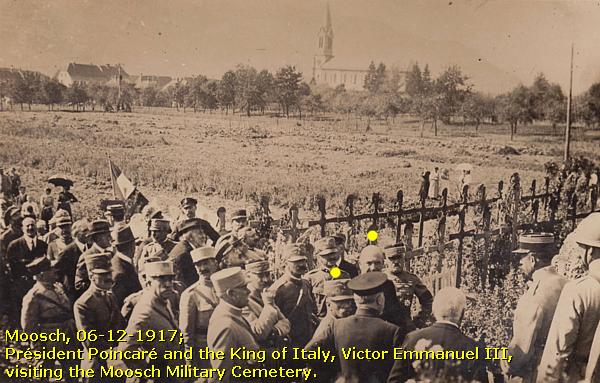
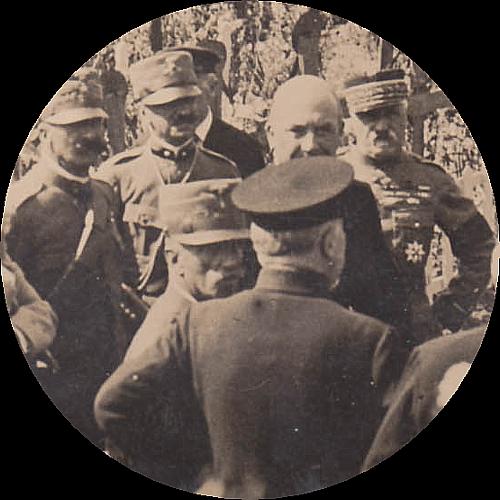
Already in 1917 the grave of the rather famous General Serret was visited by high officials like Président Poincaré and the Italian King Victor Emmanuel III.
In the village next to and north of Moosch, at St. Amarin, is a Museum dedicated to General Serret, called the "Musée Serret".
As I promised earlier; some more details about the Site of Injury.
The Site of the Injury of General Serret
To explain you more about the site, where General Serret was wounded, I asked for the assistance of my Dutch friend, René Kappert , who already helped me out before with some locations in the Vosges.
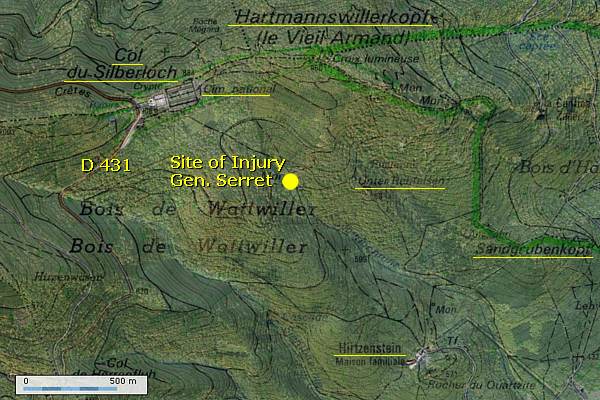
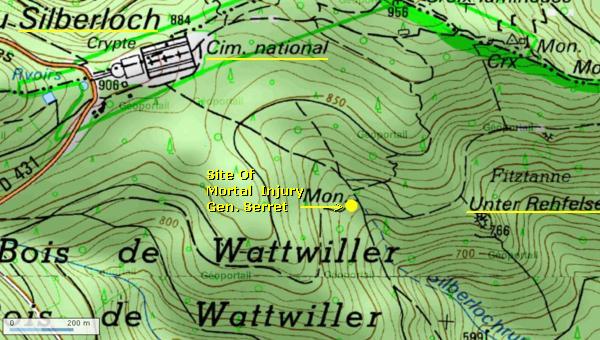
In 2009 René Kappert visited the site at a southern slope of the Hartmannswiilerkopf and René made these photo's of the spot.
During the afternoon of 29 December the General visited by car Camp Duvernet and Camp Renié.
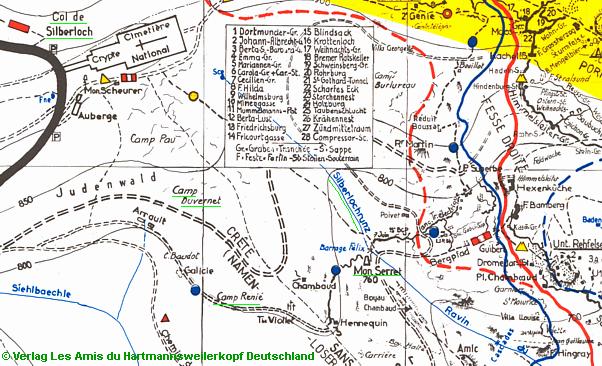
From Camp Renié the General and his company went by foot to the Command Post of Col. Goybet. After leaving the Command Post, a few moments later, the General was hit by a shell fragment and severely wounded.
Two Inscriptions - Two Different Dates
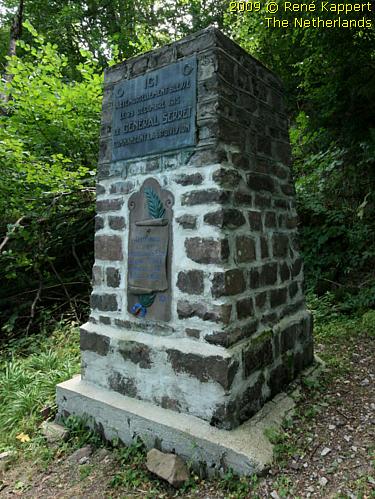
The memorial at the spot wears two different dates, mentioning this event; 28 December and 29 December.
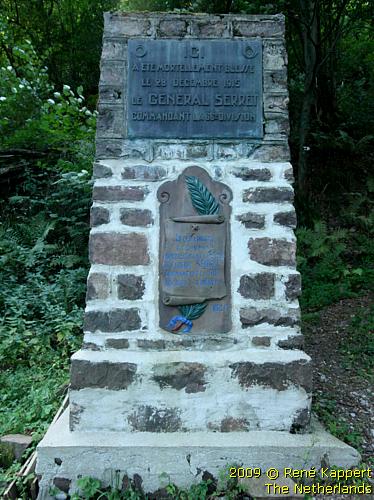
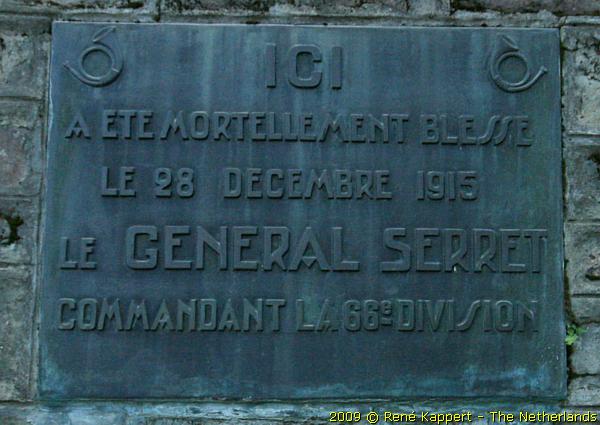
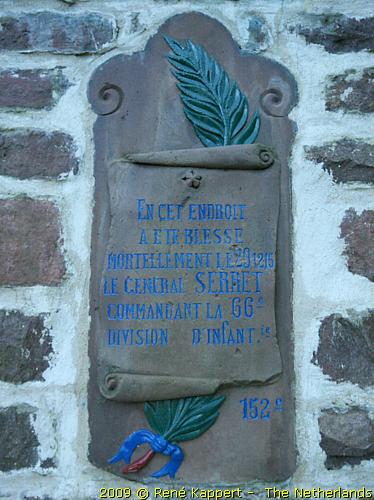
In various sources there exists a rather confusing controversy about the date of this incident. Many sources and the top inscription at Serret’s Memorial mention 28 December 1915. I found an official and reliable confirmation for the date of 29 December 1915 being the right date in the "Journal des Marches et Opérations" of the "Service de Santé" of the VII Army.

Photo's in this frame: Courtesy of 2009 © René Kappert - The Netherlands. Thanks, René! - Maps in this frame: Courtesy of © Verlag Les Amis du Hartmannsweilerkopf Deutschland.
At Moosch the General is buried next to his favourite nurse, Soeur Ignace.
We climb the stairs further upward.
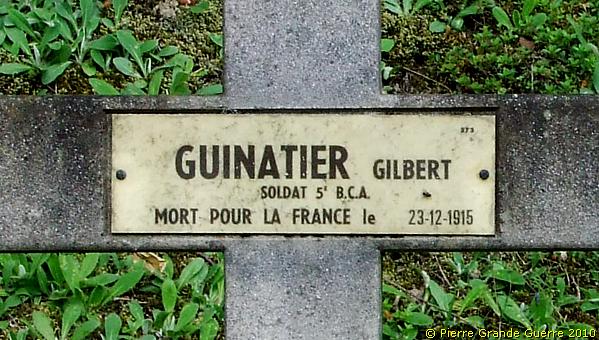
We pass the grave of a Chasseur Alpin of the 5e B.C.A., fallen on 23 December 1915
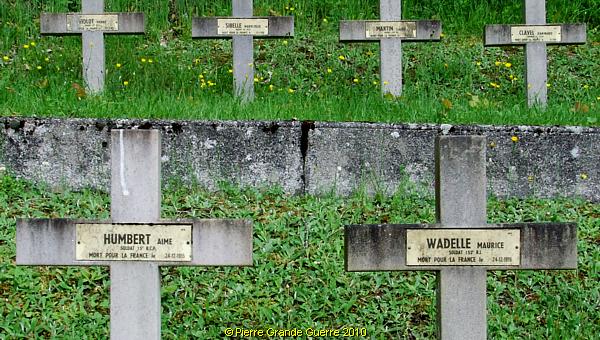
This Chasseur of the 15e B.C. à Pied and this soldier of the 152e R.I. were killed at 24 December 1915.
A sober memorial for the Chasseurs with their typical hunting horn emblem.
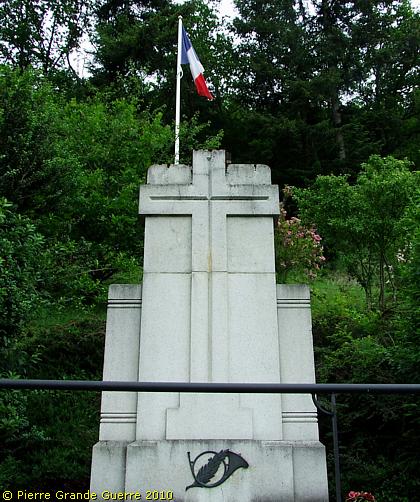
From this memorial a view north-westward over the village of Moosch.
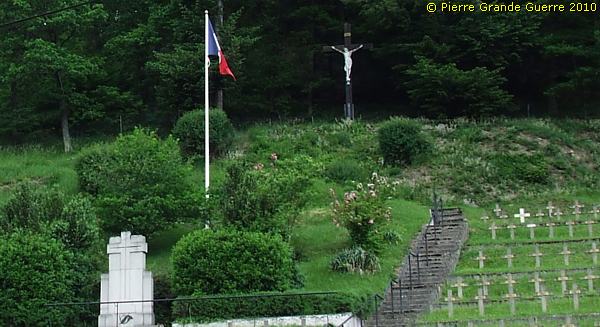
Teleview at a remarkable grave, marked by two different flags. We descend to this grave for a better view.
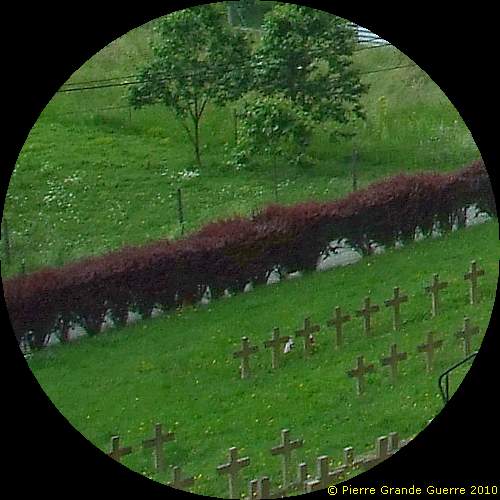
It is the only grave here of a foreigner, the remarkable grave of the American ambulance driver, ...
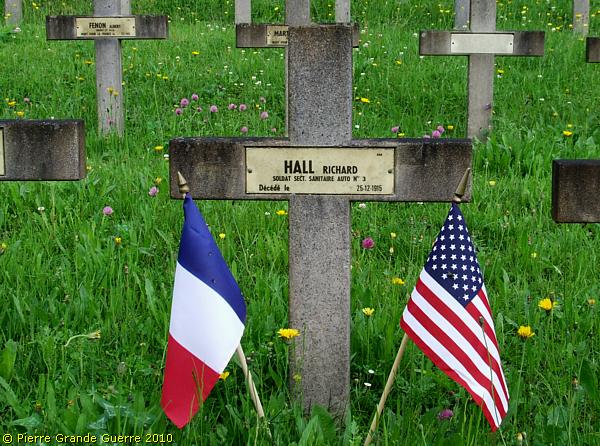
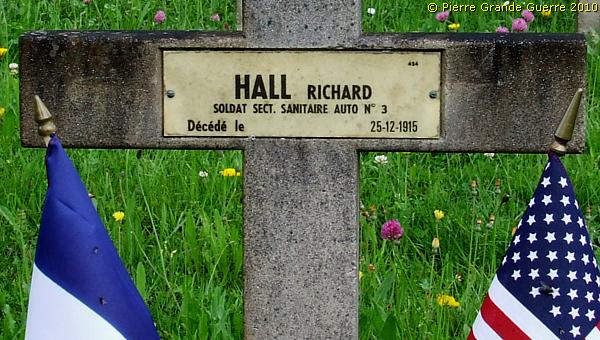
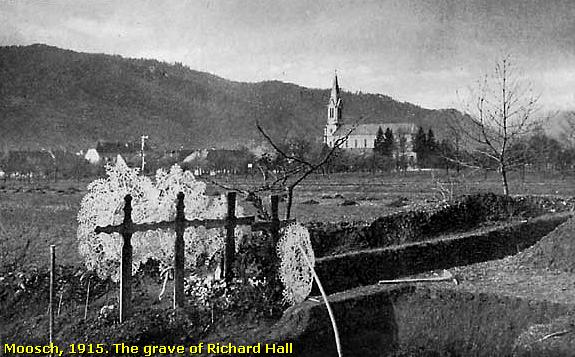
... Richard "Dick" Nelville Hall, killed on 25 December 1915.
The American Ambulance Field Service
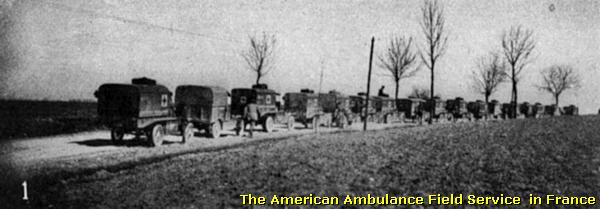
The American Field Service was founded in 1915 by A. Piatt Andrew, an economics professor at Harvard University and a former U.S. Assistant Secretary of the Treasury. Begun as a service of volunteer ambulance drivers in 1914, nowadays the AFS has evolved into an international youth exchange organization.
When the war broke out in 1914, and when the United States of America were still neutral, the American Colony of Paris organized an "ambulance", again; the French term for a temporary military hospital. The "American Ambulance" of 1914 took over the premises of the unfinished Lycée Pasteur in the suburb of Neuilly-sur-Seine, and it was run by the nearby American Hospital of Paris.
In the fall of 1914, when the war front moved away from Paris, the American Ambulance set up an outpost in Juilly and sent out detached units of volunteer drivers to serve informally with the British and Belgian armies in the north.
The volunteer drivers of 1914 found themselves behind the wheels of motorized, and not horse-driven, vehicles: Ford Model-Ts, purchased from the nearby Ford plant in Levallois-Perret.
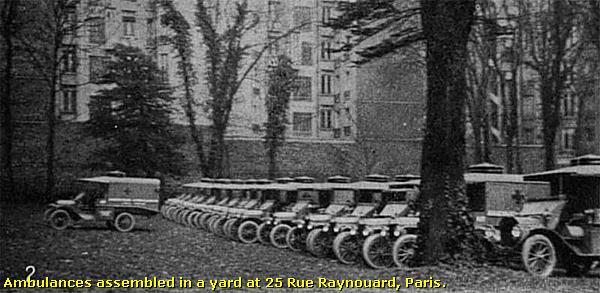
In early 1915,
one of those drivers, the AFS-founder, A. Piatt Andrew, was appointed
“Inspector of Ambulances” by the head of the American Ambulance. In
April 1915, Andrew succeeded in soliciting an agreement from the French
High Command authorizing "foreign sanitary sections" to work
at the front as part of the French Army Automobile Service. This marked
the formal beginning of the
American Ambulance Field Service
,
composed of three units, which would made their mark during battles in
northern France, the Champagne, Verdun and the Vosges.
Section Sanitaire Americaine No. 3 American Ambulance Field Service in France
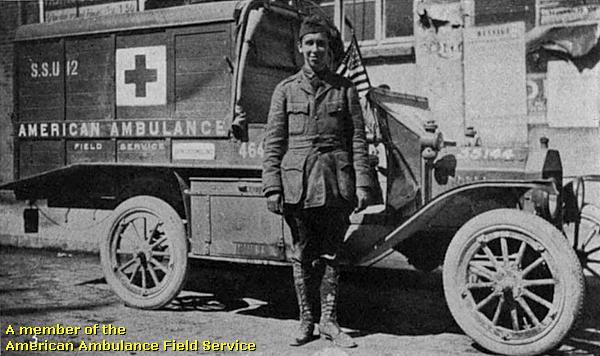
Section 3 of
the American Ambulance Field Service was organised in Paris in April
1915. It was first send for a trial to the VII Armée, where it was
assigned to duty "in re-conquered France". The section was
quartered at Saint- Maurice-sur-Moselle, Mollau and Moosch. The section
served 25 km. of front between Metzeral and Thann, including the sector
of the Hartmannswillerkopf.
Sources:
“ History of the American Field
Service 1914-1917
” and Wikipedia.
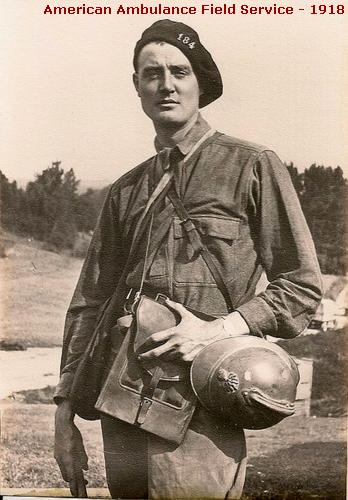
After this intermezzo about the American Ambulance Field Service, I explain some more about the fate of Richard Hall.
Richard Nelville Hall (1894 -1915)
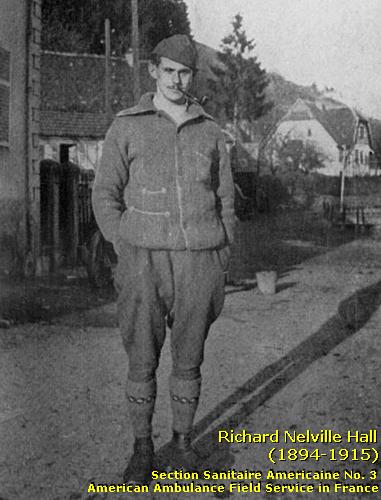
Richard “Dick” Nelville Hall from Ann Arbor, Michigan, joined Section 3 of the American Ambulance Field Service in May 1915 as an ambulance driver. Many men admired Richard Hall for his relentless and tireless dedication to always drive again up and down to the Hartmannswillerkopf over roads, filled with soldiers and animals. At Christmas eve 1915, around midnight, the by many admired Richard Hall left Moosch for a two hours long(!) drive to a dressing station, named Thomannsplatz, at the Hartmannswillerkopf to collect a new load of wounded soldiers.
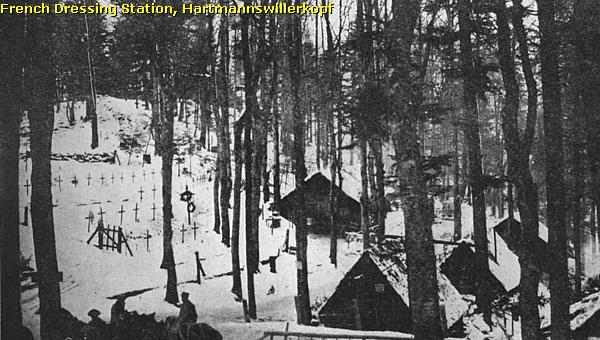
The next American Ambulance driver to pass, found him by the roadside halfway up the mountain: “His face was calm and his hands still in position to grasp the wheel. A shell had struck his car and killed him instantly, painlessly. A chance shell in a thousand had struck him at his post, in the morning of his youth.”
During his funeral service Richard Hall was posthumously decorated with the “Croix de Guerre”.
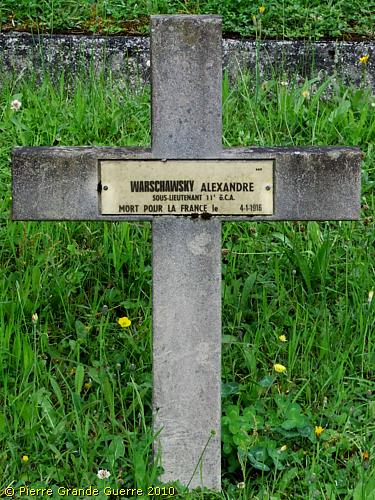
Passing other graves of Chasseurs à Pied and Chasseurs Alpins, ...
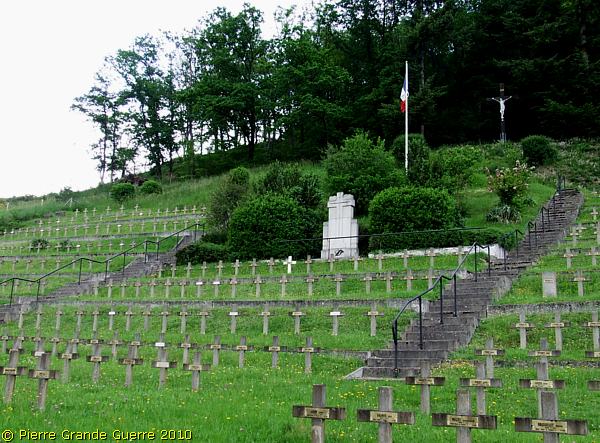
... we leave in silence this cemetery.
Continue to: " ALSACE SUNDGAU - Zillisheim - Illfurth - Largitzen - Pfetterhouse "