LORRAINE - Avricourt - Leintrey - Reillon - Domèvre - Parux
Year of visit: 2010
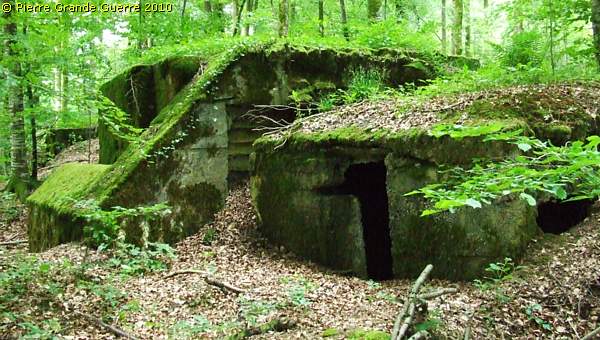
Though we depart from Badonviller in the Northern Vosges , we make a jump northward to the east of Lunéville and Manonviller. We start at Avricourt on the border of Alsace and Lorraine. From the Avricourt Deutscher Soldatenfriedhof we explore the southern Lorraine battlefields ; the mine craters of Leintrey , the Franco- German war cemetery and Côte 303 at Reillon , and some German bunkers near Gondrexon , Montreux , and Parux.
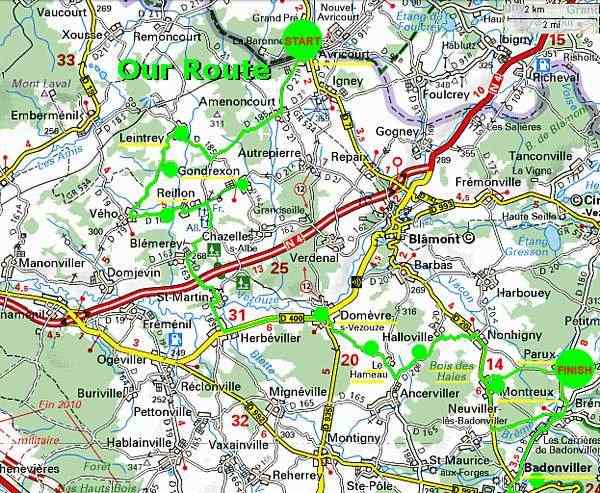
From Badonviller in the Northern Vosges we make ...
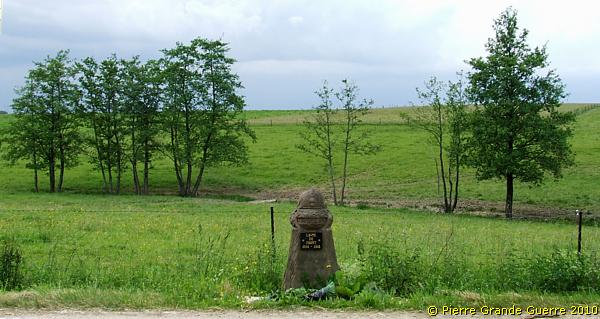
... a huge jump northward to our point of departure at Avricourt , on the border of Alsace - Lorraine.
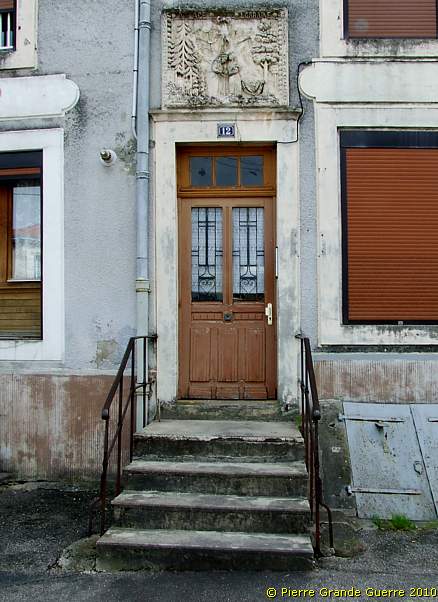
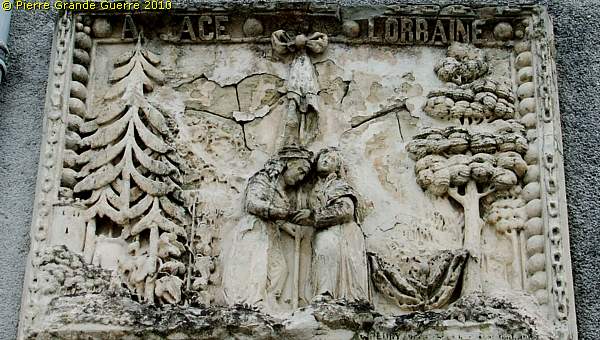
This bas- relief above a door in the Rue de la Gare reminds us of the time that the border of Alsace - Lorraine ran through the village of Avricourt ( German : "Elfringen" ).
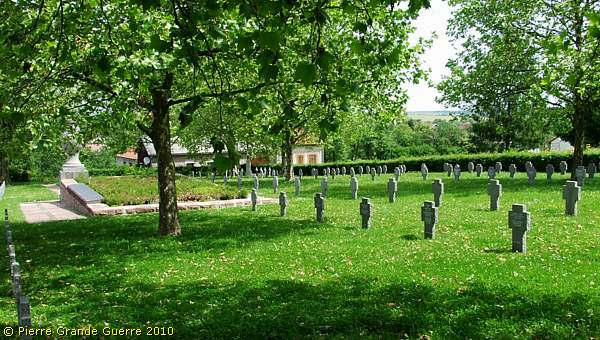
At the east of the village we visit first the Avricourt Deutscher Soldatenfriedhof .
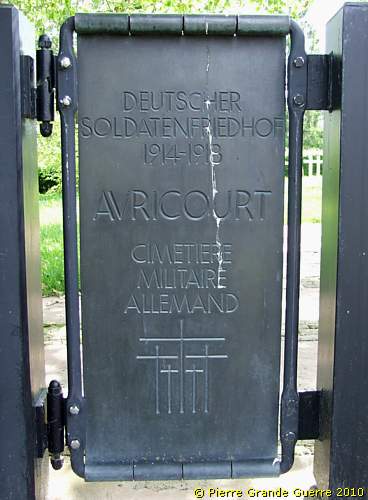
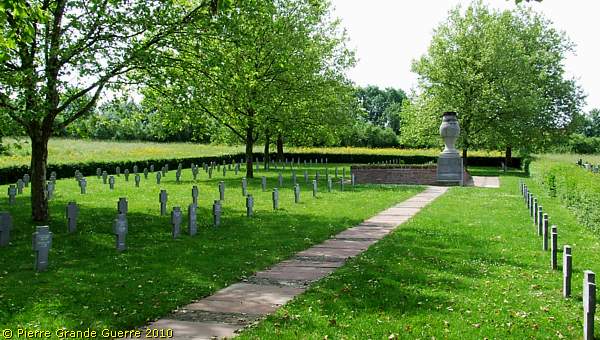
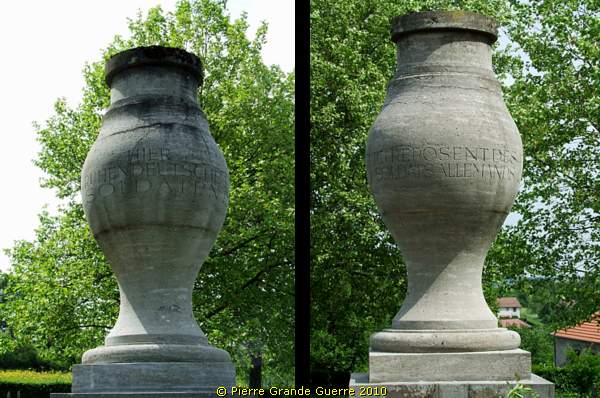
The Deutscher Soldatenfriedhof Avricourt was created in September 1914 by German troops . Shortly after the outbreak of war advance guards of both armies along the border between the former German Empire and France tried to explore advantageous positions and to take possession . Already early in August 1914 there were on both sides of the border at the region around Avricourt heavy fights with heavy losses on both sides. From this period are the first burials in this cemetery . More casualties came after the several August-September 1914 Border Battles of Lorraine and from the times of trench warfare of 1915-1918. These soldiers , resting here, were members of military units, their home garrisons in Baden, Bavaria, Württemberg , Alsace , Lorraine, Hesse, Saxony , Brandenburg, Silesia and the Rhineland . 302 Soldiers rest in individual graves, 257 in a common grave. Two deaths remained unknown .
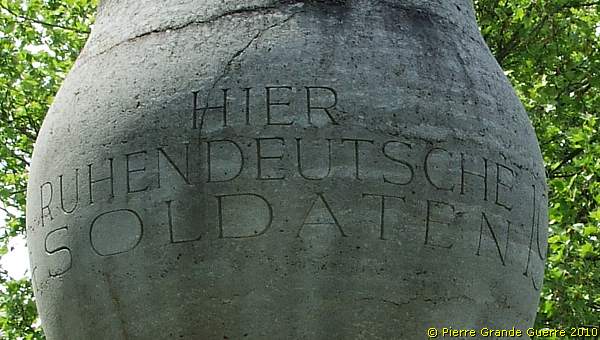
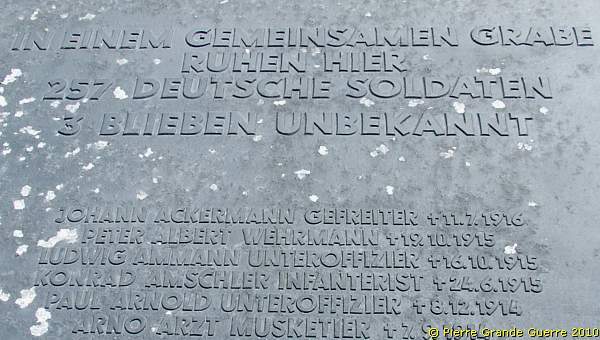
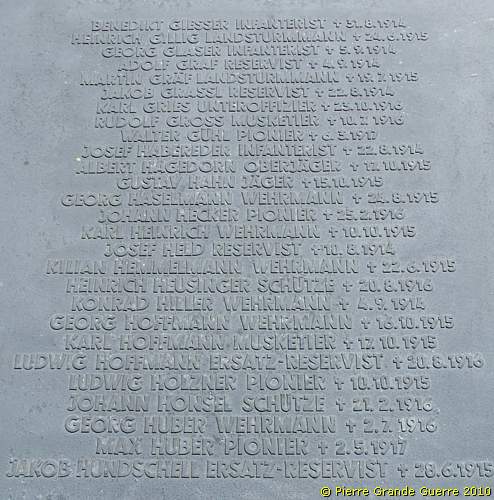
Five bronze plaques mention a list of 257 names.
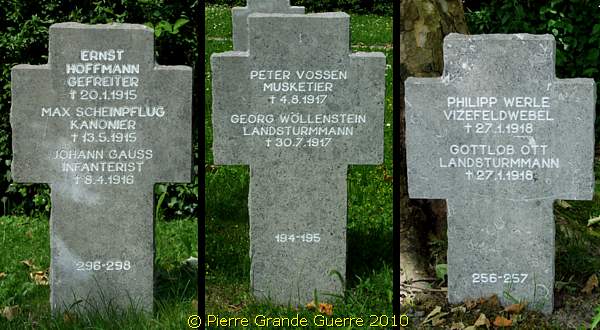
In the south-east corner there is a forgotten , French plot of 6 French graves and 3 Russian graves.
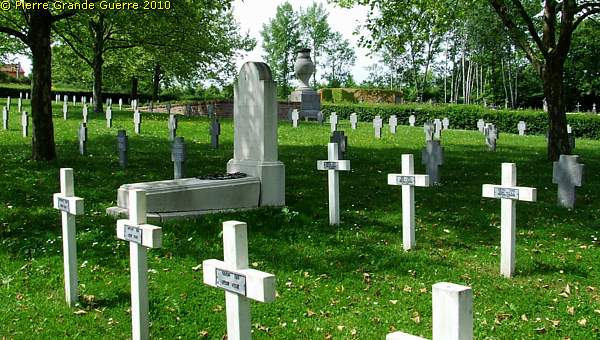
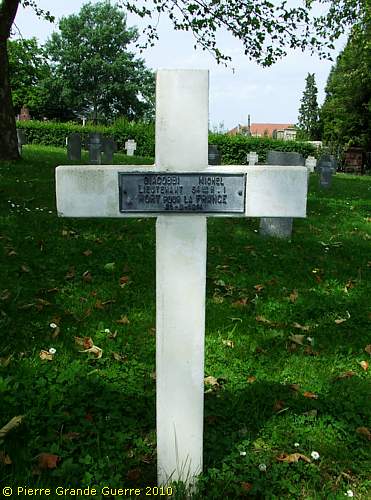
The grave of Lt. Michel Giaccobi of the 54e R.I., fallen at 21 August 1914.
The plot also knows three graves of Russian soldiers.
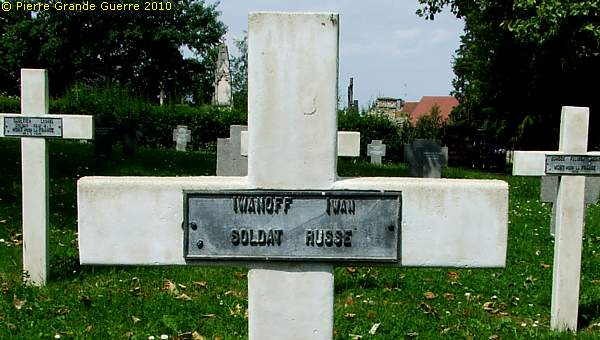
For an explanation about the presence of Russian troops on the Western Front, visit my Champagne Photo Impression about St. Hilaire-le-Grand .
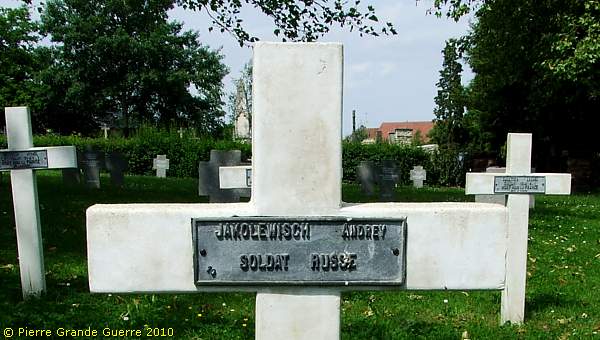
At the French plot there is also a rather remarkable grave.
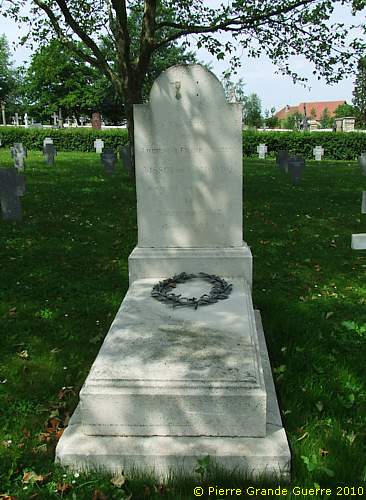
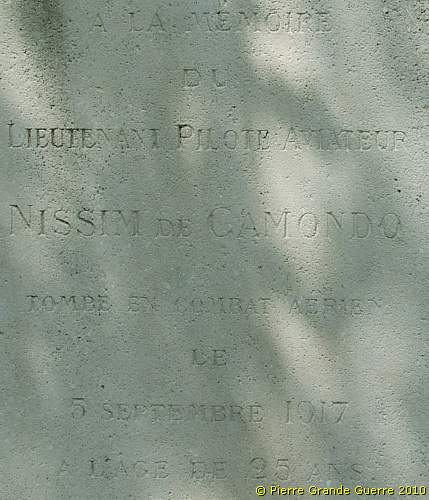
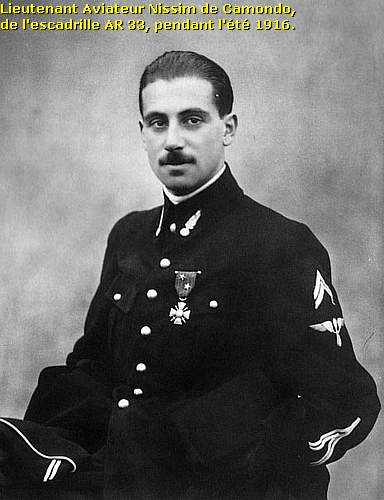
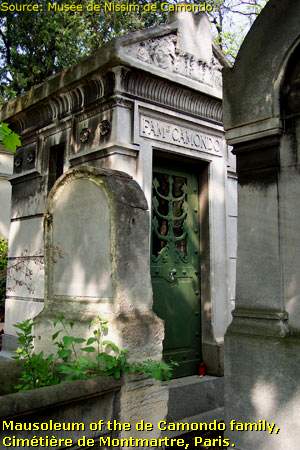
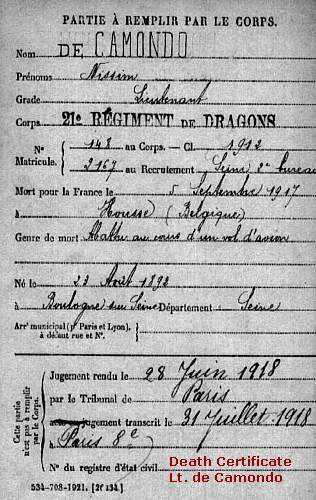
Nowadays the human remains of Lt. de Camondo are interred in the Mausoleum of the de Camondo family at de Cimétière de Montmartre in Paris. Later on this page follows a concise biography of Lt. de Camondo.
From Alsace we enter Lorraine. From Avricourt we drive south-westward via Amenoncourt to Leintrey.
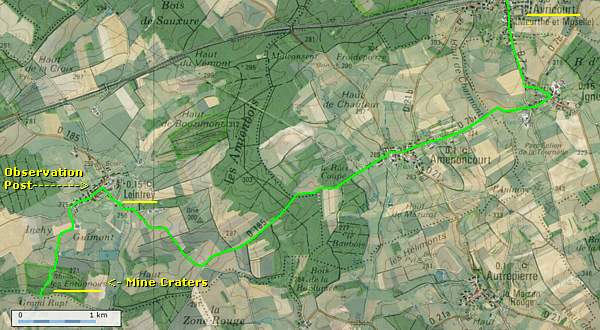
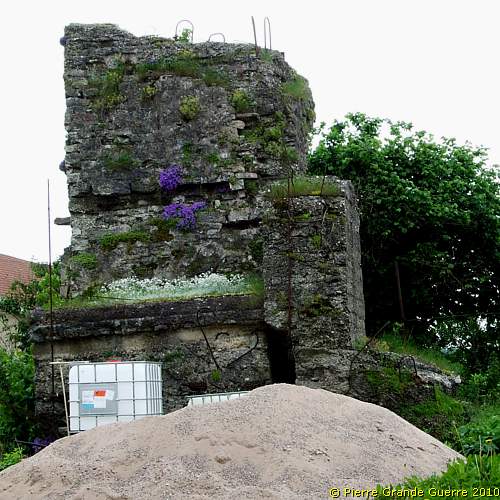
In the centre of the village of Leintrey , in a private garden, behind a fence, stood this German observation bunker. Unfortunately the landowners demolished the bunker a few years after out visit!
Some concise background information about the battlefields around Leintrey.
September 1914 - German Retreat
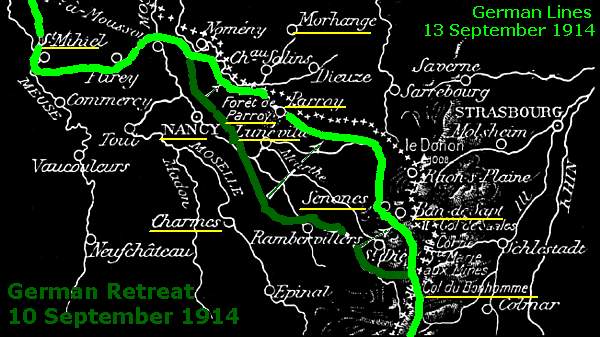
After the Battles of the Haute Meurthe – Mortagne and the Grand Couronné of August and September 1914, the Germans retreated on 10 September 1914 eastward to install their positions at 13 September 1914 roughly along the Franco- German border.
1915 -1916 - Bavarian 1. Landwehr Division
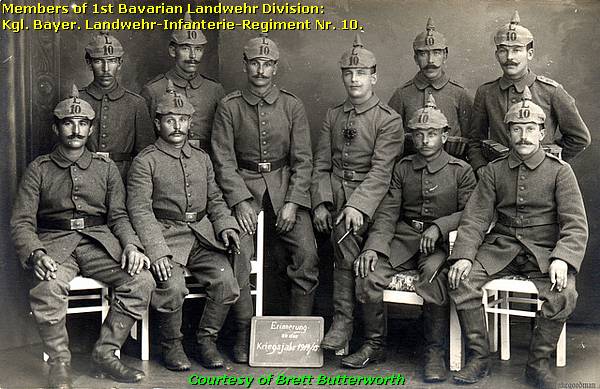
The 1st
Bavarian
Landwehr
Division
was
formed
as a
two
-brigade
square
division
,
and
received
a
third
brigade in
September 1914. The order of
battle
of
the
division
was:
13. Bayerische
Landwehr
-Infanterie-Brigade
consisting
of
the
Kgl
. Bayer.
Landwehr
-
Infanterie-Regiment
Nr. 8
and
Kgl
. Bayer.
Landwehr
-
Infanterie-Regiment
Nr. 10. 14.
Landwehr
-Infanterie-Brigade
consisting
of
Kgl
.
Württemb
.
Landwehr
-
Infanterie-Regiment
Nr. 122
and
Kgl
. Bayer.
Landwehr
-
Infanterie-Regiment
Nr. 15. 60.
Landwehr
-Infanterie-Brigade
composed
of
the
Landwehr
-
Infanterie-Regiment
Nr. 60
and
the
Thüringisches
Landwehr
-
Infanterie-Regiment
Nr. 71.
Other
units:
Kavallerie
-Ersatz-
Abteilung
/2.Garde-Ulanen-Regiment,
1.
Landwehr
-Eskadron/II.
Bayerisches
Armeekorps, Ersatz-
Abteilung
/2.
Westfälisches
Feldartillerie
-Regiment
Nr. 22, Ersatz-
Abteilung
/
Straßburger
Feldartillerie
-Regiment Nr. 84,
Kgl
. Bayerische
Landsturm-Batterie
Landau,
and
the
1.
Landwehr
-Pionier-
Kompanie
/II.
Bayerisches
Armeekorps.
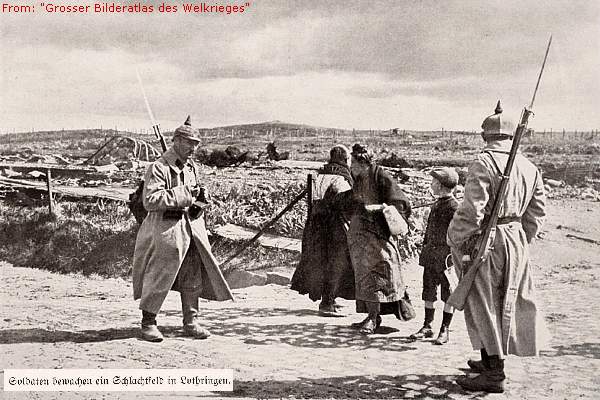
In 1915 and 1916 units of the 1. Bayerische Landwehr Division were positioned along the front of Lorraine.
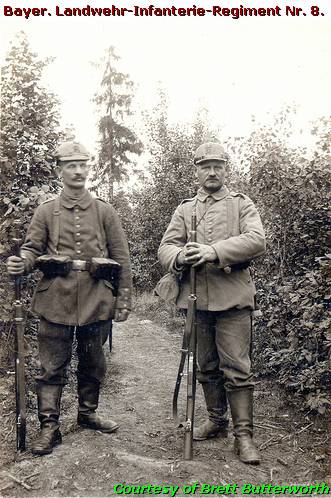
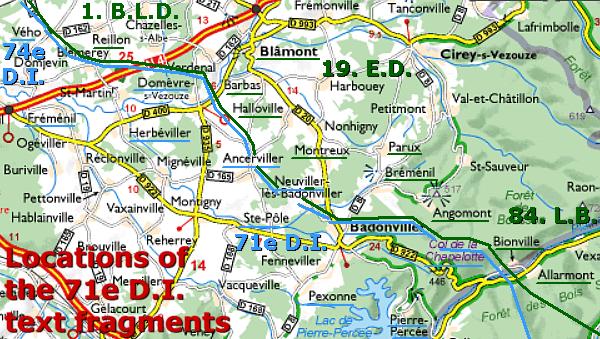
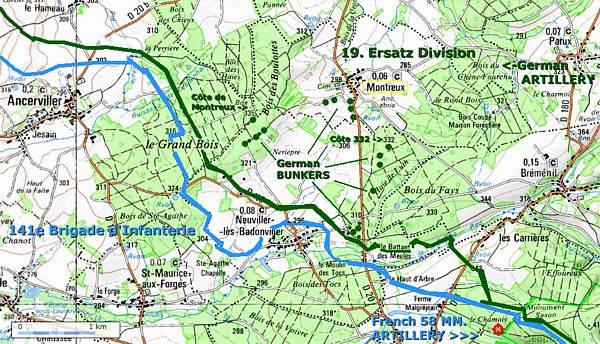
In 1915 the Bavarian 1. Landwehr Division guarded a front line, running from Parroy in the north further southward to Emberménil , Leintrey , Gondrexon , Verdenal , Domèvre , Le Hameau d'Ancerviller until Montreux .
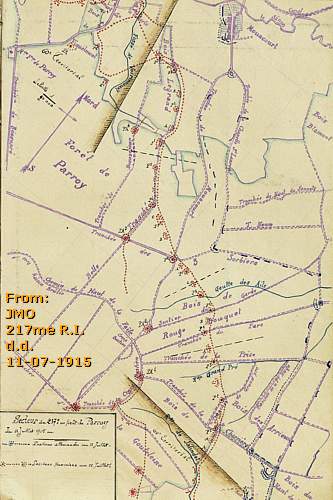
74e Divison d' Infanterie - 71e Divison d' Infanterie
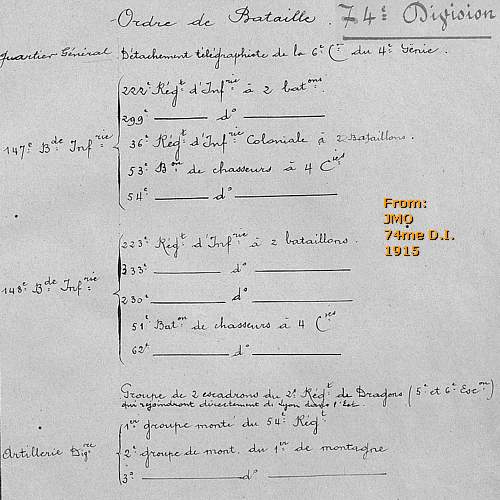
In 1915 and 1916 units of the French 71e and 74e Divisons d' Infanterie, both components of the Armée de Lorraine (VI Armée), occupied their front line facing the Bavarians .
The 71e D.I. was stationed more to the south at Badonviller and at the Col de Chapelotte , covering the right flank of the 74e D.I., but it often assisted the 74e D.I. deploying artillery support or infantry actions.
Parroy - Leintrey - Reillon
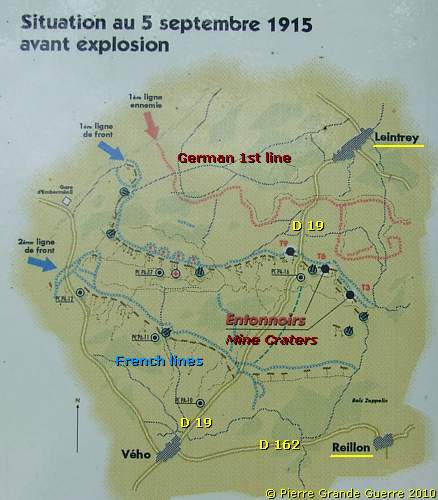
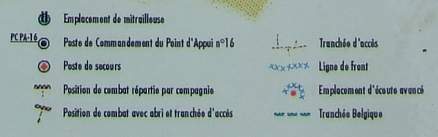
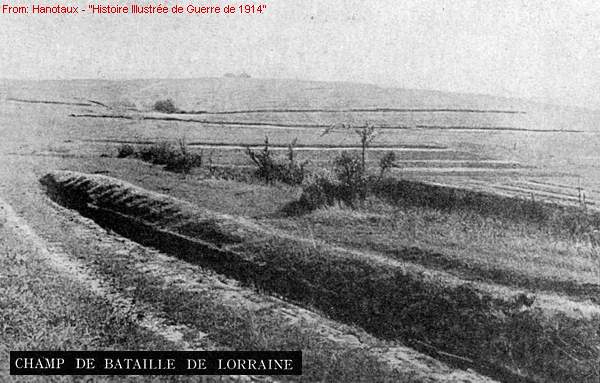
Though both belligerent parties considered this front sector as a rather " calm " front sector, there were daily still all kinds of actions: mining warfare , air reconnaissance sorties, dog fights above the trenches , artillery bombardments , night patrols , attacks on a minor scale , night raids to get prisoners and to collect intelligence, etc.. During the summers of 1915 and 1916 the fighting for the Bois de Parroy , west of Leintrey , for the road Vého-Leintrey , and for the Bois Zeppelin near Reillon and Gondrexon culminated in genuine battles .
From Leintrey we follow the D19 - Leintrey-Vého road southward , crossing the former No Man's Land into the French lines ...
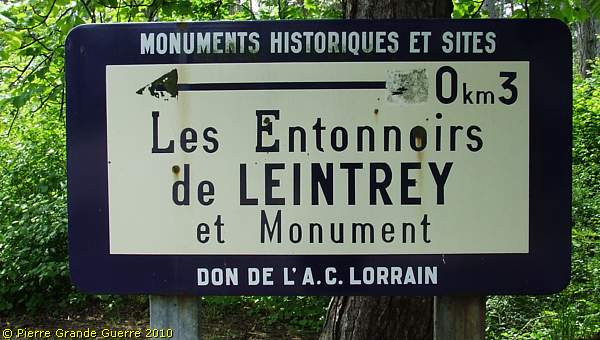
... for a visit to the Leintrey Mine Craters and the memorials.
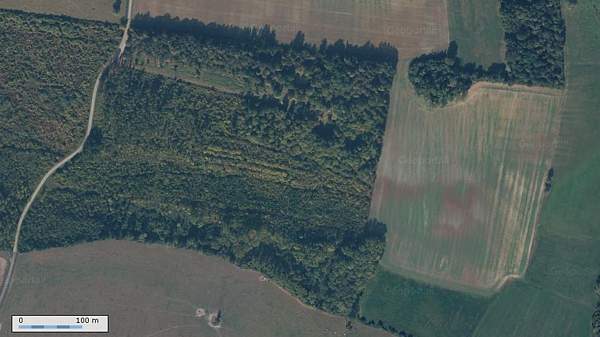
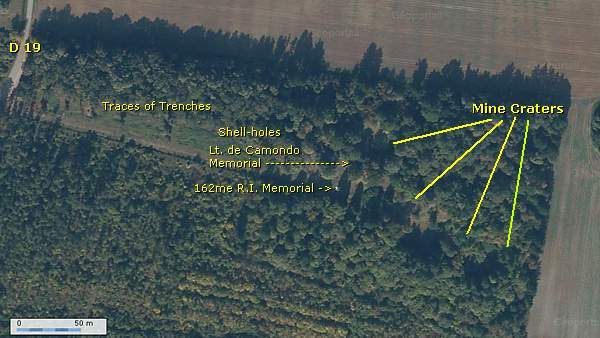
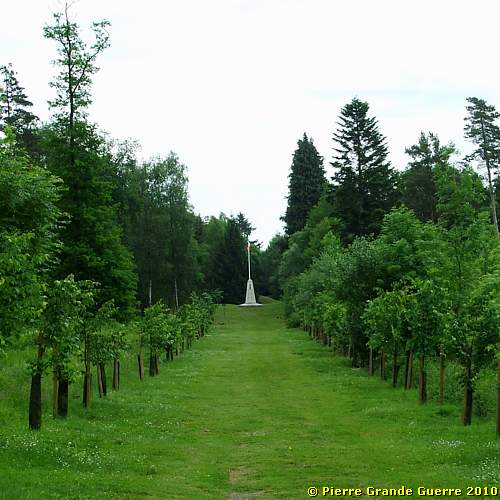
As we approach the memorial, we see on our left hand ...
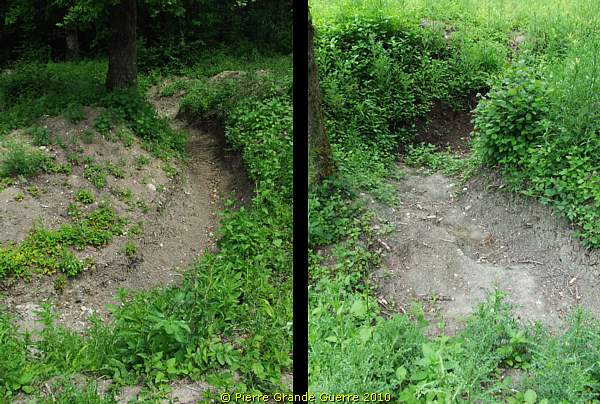
... a zigzagging ditch ; traces of a trench.
Further on we detect a lot of shell holes.
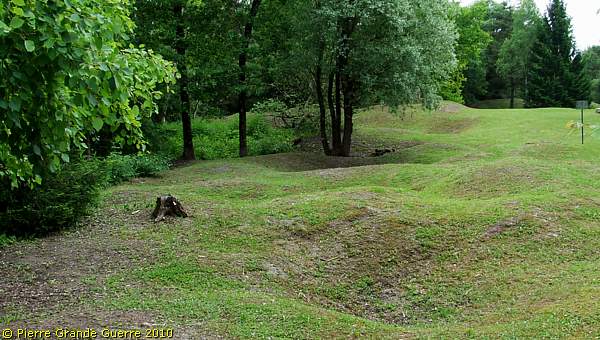
The mine explosions of 11 July 1916
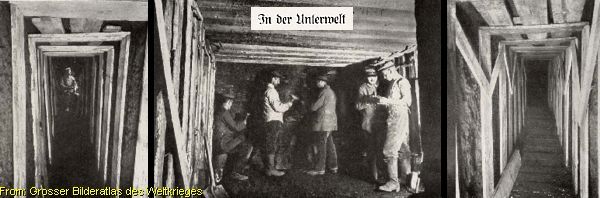
On both sides of the front line the troops were tunnelling , mining and countermining. The power of these explosions was relatively limited compared to the mine explosions of 1 July 1916.
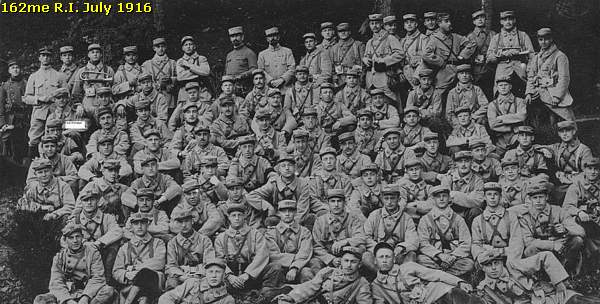
The 162e R.I.
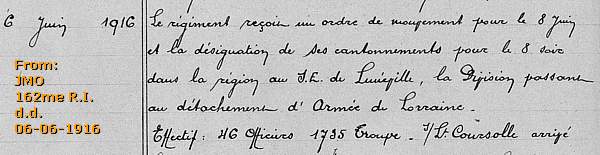
On 8 June 1916 the 162e R.I. occupied the front sector "S.E. of Lunéville ", as a component of the Armée de Lorraine.
The Explosions of German Mines
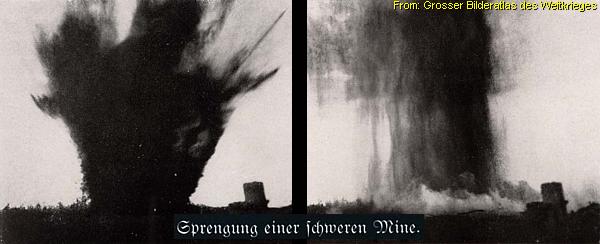
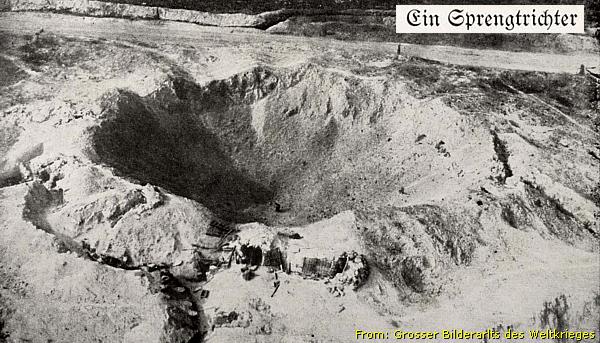
After a nightly bombardment , which stopped around 1.30 hrs , the Germans exploded in the early morning of 11 July 1916 four mines at once . The explosions destroyed the first French line of the 6th and 3rd Company, 4 machine- guns , and killed at least half of the 3rd Company.
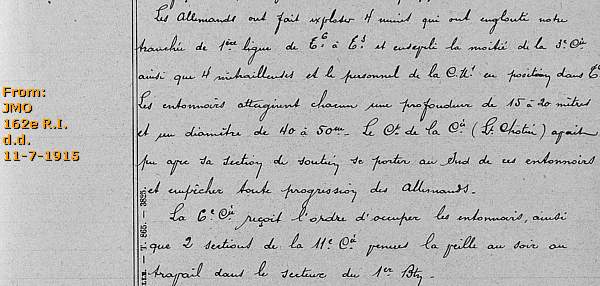
According to the estimations in the war diary of the 162e R.I. the four mine craters had a depth of 15 to 20 meter. The regimental journalist estimated the diameter of the 4 craters at 40 to 50 m.
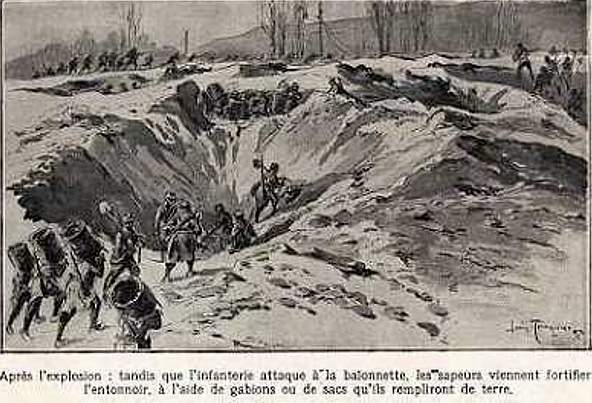
The company commander , Lt. Chotin , immediately organised his section at the southern side of the craters to halt any German progress . The 6th Company occupied the craters together with 2 sections of the 11th. They started to deploy shell hole defence positions .
All day long the Germans would go on to bombard the French positions in the craters . Rather remarkable : though the 6th Company counted many losses , they managed to finish at midnight their fortifications of the craters and the reconstruction of the trench . The next day the 6th handed over this sector to the first Battalion, which continued to hold this position .
We arrive at the 162e R.I. Memorial.
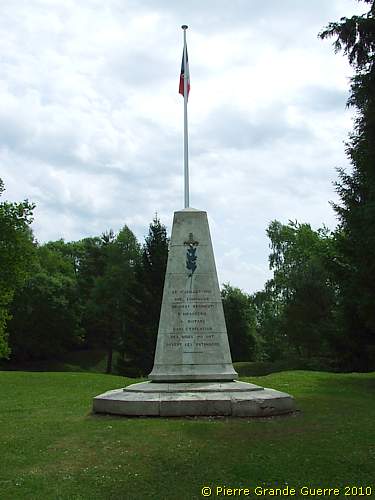
It stands on the crater lips of the two northern craters.
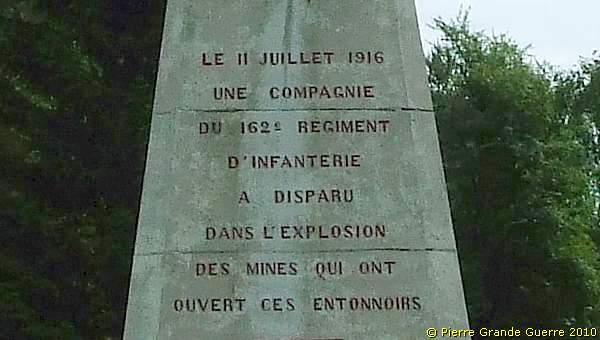
At the rear side: a plaque with the names of 71 missing soldiers, whose human remains are left, scattered in these craters.
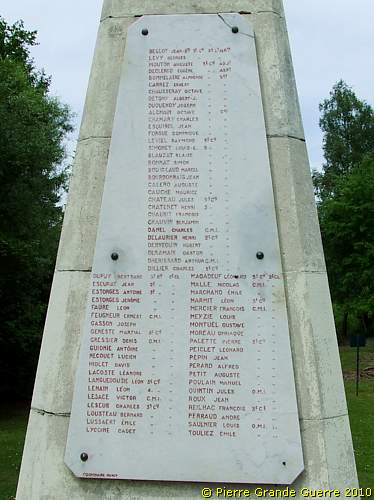
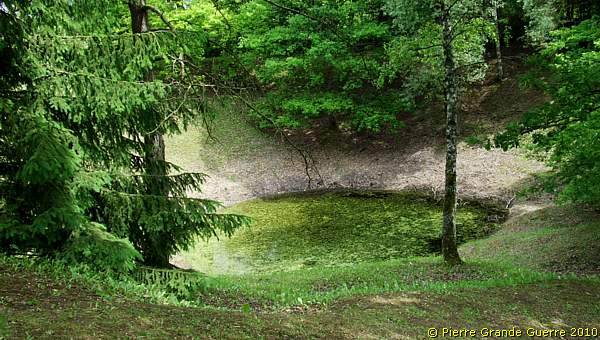
I show you the two northern craters. This one is vegetated.
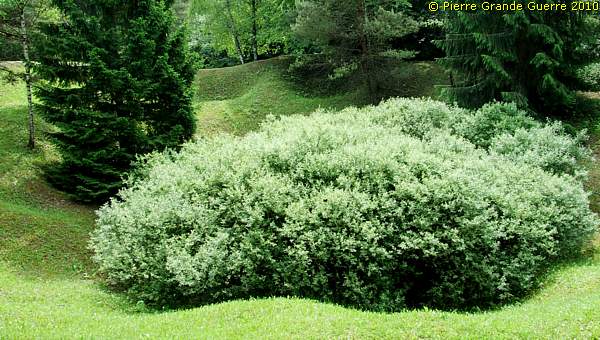
The four craters form together an official Nécropole Nationale.
At the crater lip of this most northern crater stands a small Memorial Stone , commemorating. Lt. de Camondo.
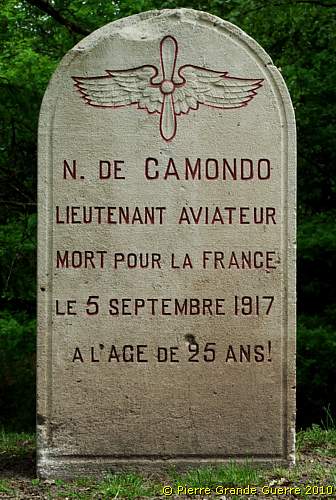
A concise biography of Lt. de Camondo:
Lt. Nissim de Camondo - Observer and pilot - Escadrille MF 33 - F 33 - AR 33
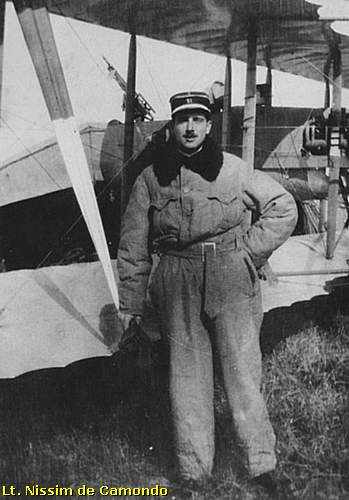
Nissim de Camondo was born 23 August 1892 in Boulogne- sur -Seine. He was the son of the prominent and wealthy banker , Moïse de Camondo . As the only son of two children , Nissim de Camondo was expected to take over the family business. However , immediately upon the outbreak of the war, he enlisted again to join the French Army .
De Camondo – Cavalrist
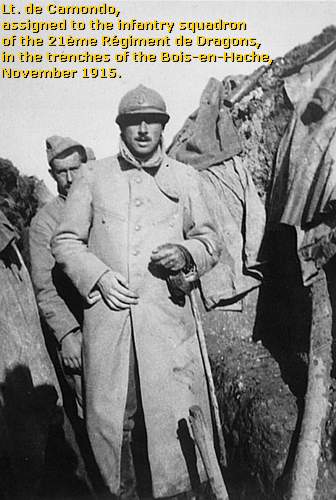
On 11
October
1911 de
Camondo
enlisted
and
was
assigned
to
the
2ème Régiment de
Hussards
, as a
cavalrist
of
the
2nd class. On 13
February
1912, he was
appointed
Brigadier. On 16 September
he was
assigned
to
the
3ème Régiment de
Hussards
.
On 4 November 1913,
after
having
completed
his tour, he was
placed
in
the
reserve. On 3 August 1914 he was
recalled
to
serve in
the
3ème Régiment de
Hussards
.
On 13
March
1915 he was
appointed
Lieutenant
of
the
Reserve.
At
the
start of 1915 part of
the
cavalry
troops
were
transformed
into
infantry
. On 15
September 1915 de
Camondo
is
assigned
to
the
squadron of 21ème
Régiment de Dragons.
De Camondo – Observer and Pilot
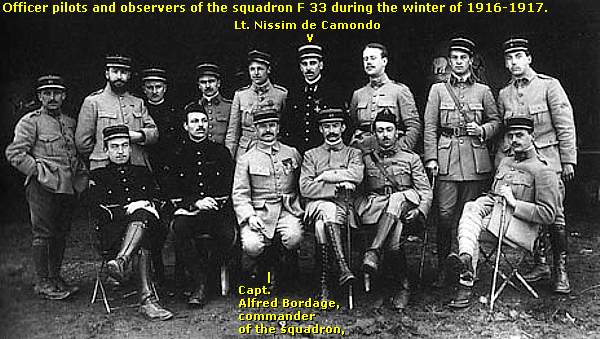
After an attack of appendicitis on 8 November 1915 de Camondo was transported to a hospital for operation . He was forced to stay for a long period in a convalescence centre at Deauville . Frustrated by being no part of the fighting action, de Camondo volunteered on 15 January 1916. He was assigned as an observer to the Escadrille FM 33 (“Squadron”). He participated in the Battles of Verdun and of the Somme. On 23 May 1916 de Camondo is appointed to the rank of Lieutenant . On 16 November 1916 he obtained his military pilot’s license , No. 5300. He switched directly to the squadron of Farman F 40 airplanes . Next he did spend his time as a pilot in the Escadrille AR 33.
Killed in action
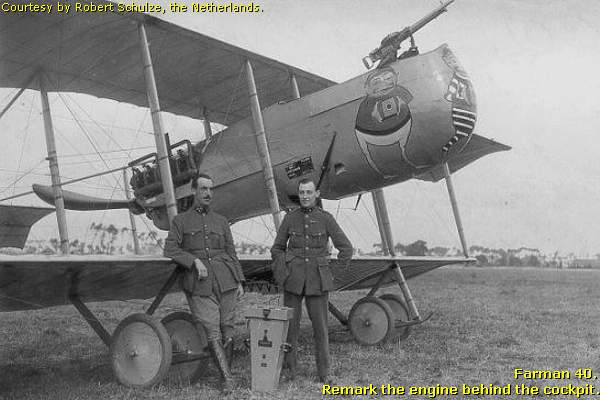
Together with his observer , Lt. Louis des Essarts , de Camondo was killed in action on 5 September 1917. The two adversaries had approached each other at a distance of 50 meters, and immediately used their machine guns . " After hitting his opponent's tank, which instantly caught fire ", Lt. des Essarts was killed . The French Farman F 40 was also hit, and it engaged in an uncontrolled spiral movement downward . Though Lt. de Camondo had a head injury , he still attempted an emergency landing. Alas he could not prevent that his plane crashed in the German lines near Leintrey . This after -war memorial has been removed from the original crash site to this location .
On the day of his death Lieutenant Nissim de Camondo held two citations of the Ordre du Corps d'Armée , a citation of the Ordre de la Brigade, of the Croix de Guerre 14-18 avec deux Palmes de bronze , deux Etoiles de vermeil et une Etoile de bronze . On 31 mars 1920 de Camondo received posthumously the honorary title of Chevalier de la Légion d'Honneur .
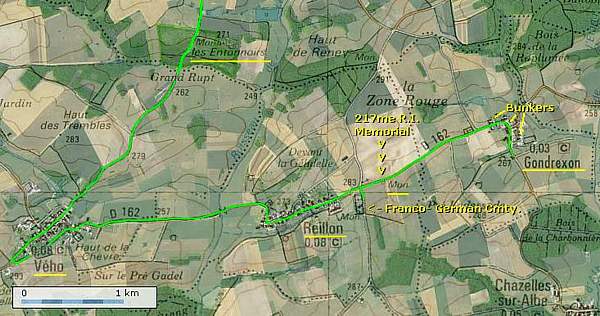
From the Leintrey Mine Craters we continue southward , passing through Vého, along the D 162 to Reillon and Gondrexon.
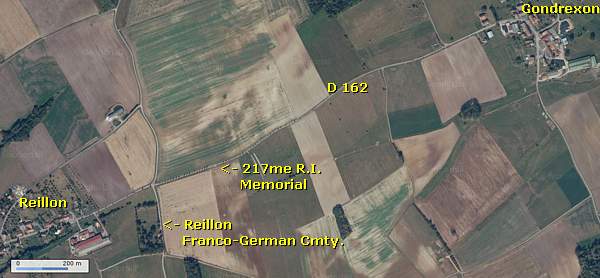
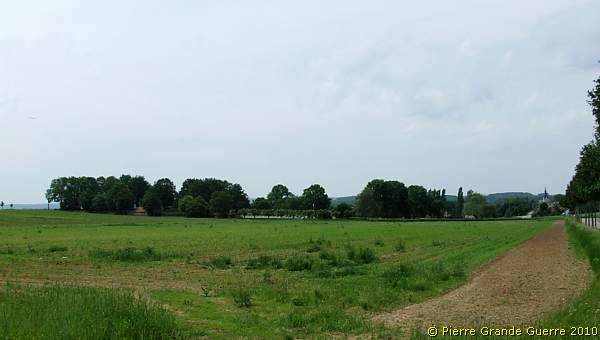
A view westward at the Franco- German war cemetery. The church tower of the village of Reillon is on the right.
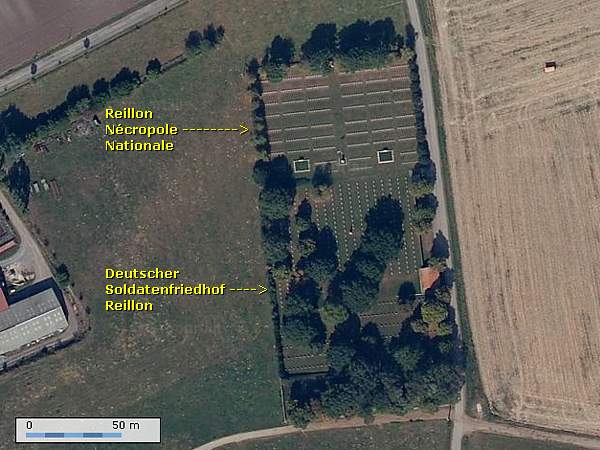
In September 1920 the French authorities created near Reillon a German and a French military cemetery, sharing together the same grounds: the “Nécropole Nationale Reillon”, and the “Reillon Deutscher Soldatenfriedhof”. These cemeteries lie in the former French first line.
We start at the
French Reillon
cemetery.
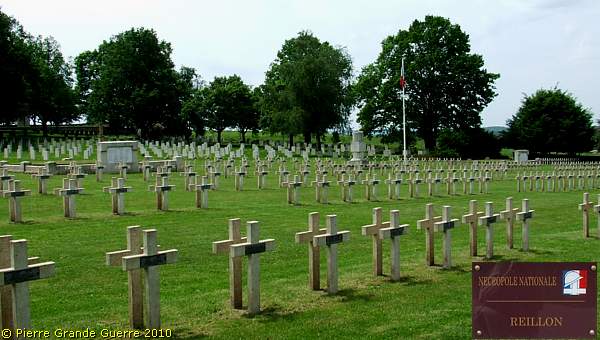
On the French side, at the
“Nécropole Nationale Reillon”,
there are 882 soldiers buried in individual graves and 367 soldiers are buried in two communal graves.
The eastern
" Ossuaire
",
or communal
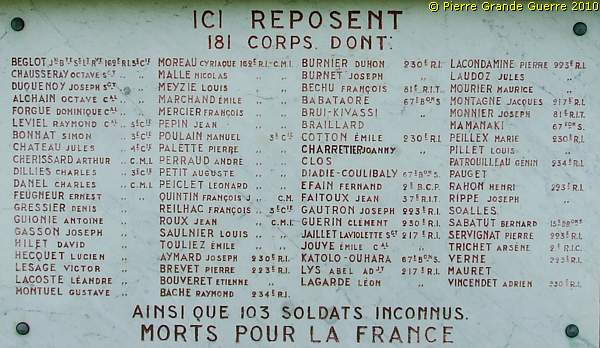
grave, contains...
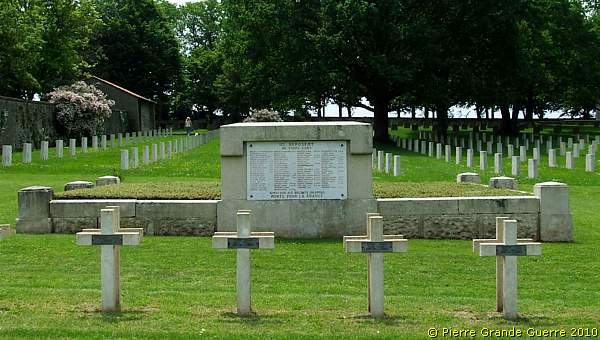
... the human remains of 181 soldiers , of whom 103 are unknown.
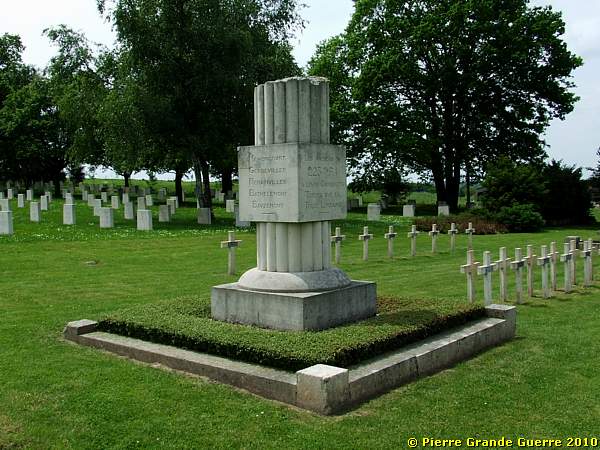
At the centre this 223e R.I. Memorial dominates the cemetery.
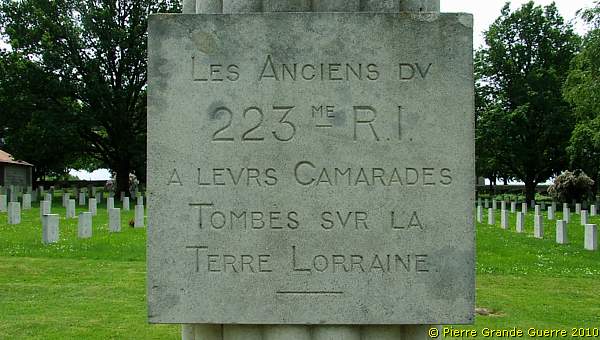
The 223e R.I. in the "Bois Zeppelin"
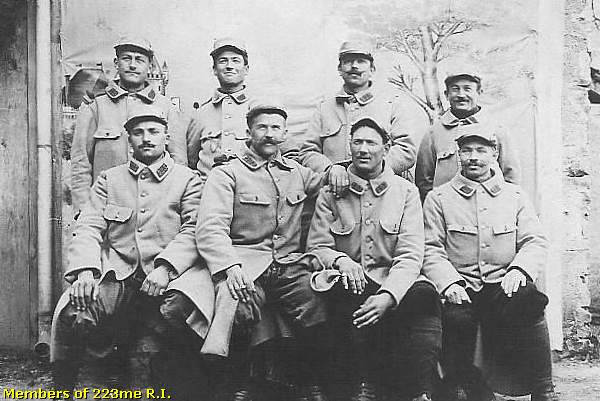
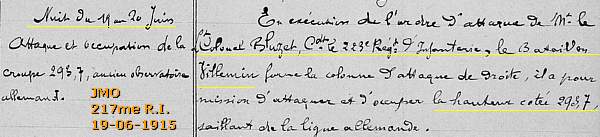
In June and July 1915 the French deployed a series of attacks at a German "Blockhaus" in the nearby "Bois Zeppelin". On 19 June 1915 the 223e R.I. together with the 217e R.I attacked Côte 303.
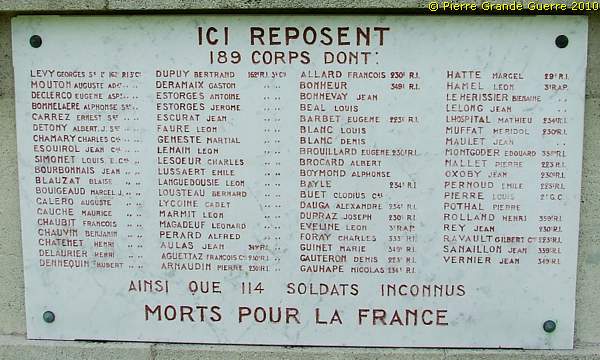
The western Ossuaire contains...
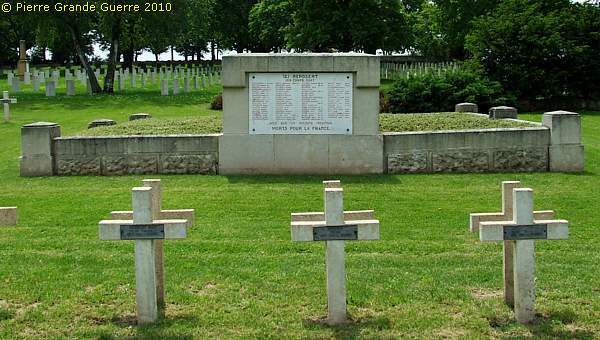
... the human remains of 189 soldiers , of whom 114 are unknown.
View in the direction of Côte 303. (Height 303)
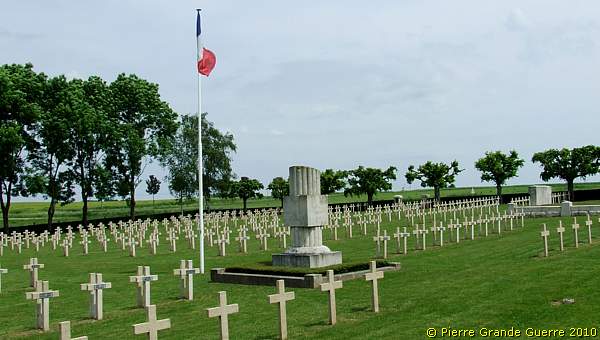
From the French cemetery we step over and , ...
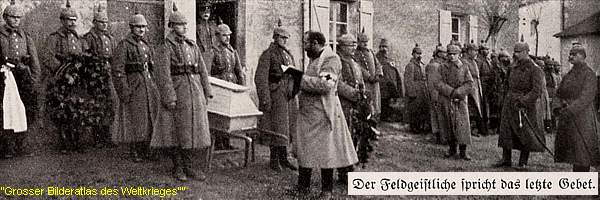
... we continue with the Deutscher Soldatenfriedhof Reillon .
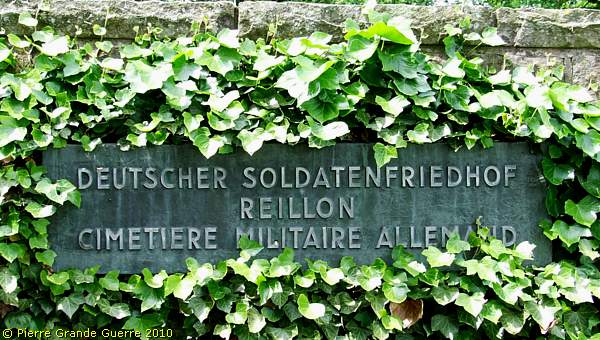
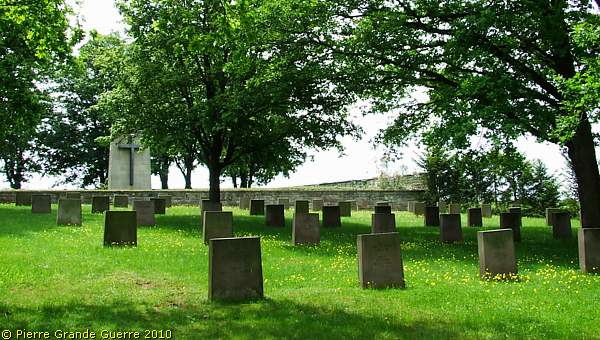
At the German section , the “ Reillon Deutscher Soldatenfriedhof ” there are 969 soldiers buried in individual graves. 1.873 Soldiers, of whom 752 are known by name, are buried in two communal graves. The German dead were reburied at first from field graves nearby Reillon , and later from smaller closed down cemeteries from Amenoncourt , Badonviller , Baccarat, Blamont , Bionville and Leintrey .
After 1945, a larger number of German victims of the Second World War are reburied at Reillon , in a special section . These soldiers were buried before on smaller cemeteries in the department of Meurthe -et-Moselle.
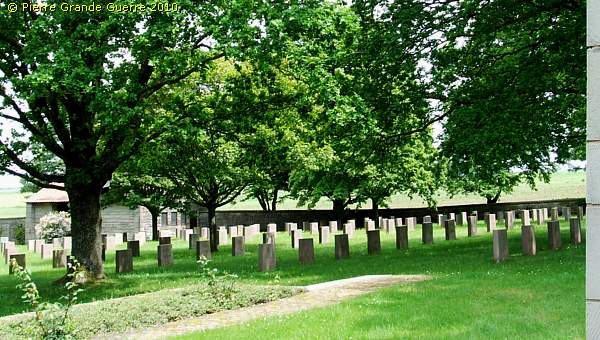
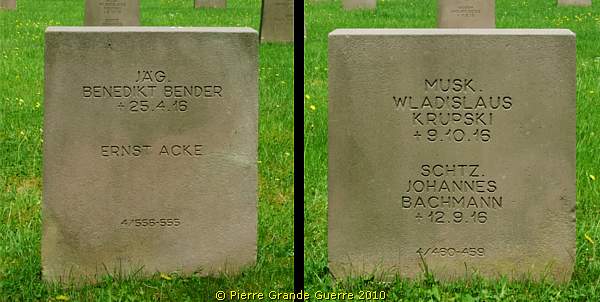
In the south -west corner of the cemetery lies a communal grave.
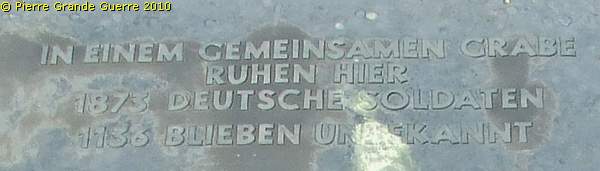
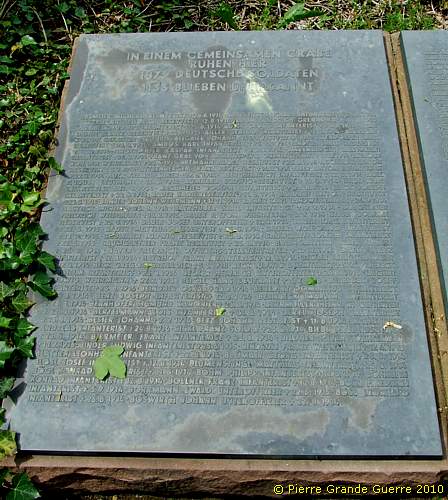
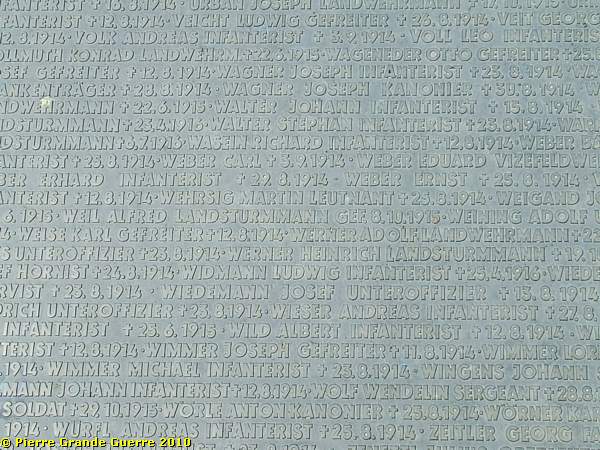
As usual ; bronze plaques with endless lists of names.
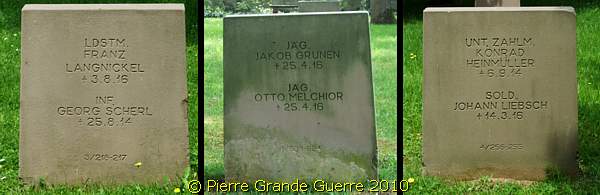
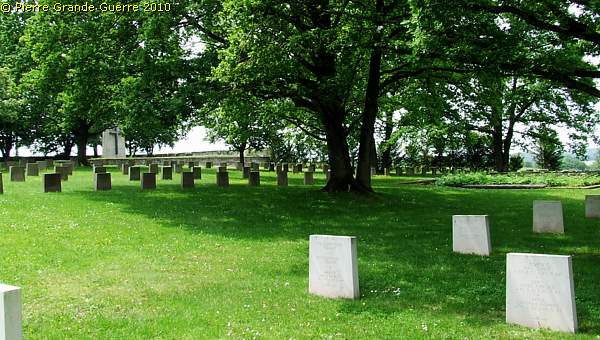
We leave via the French cemetery for...
... this panorama view outside the terrain at Côte 303, Height 303, also locally known as Bras de Chemises.
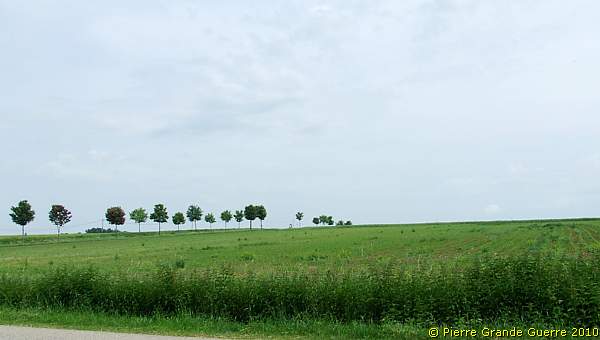
In the French war records this location is known as "Point 299,8".....
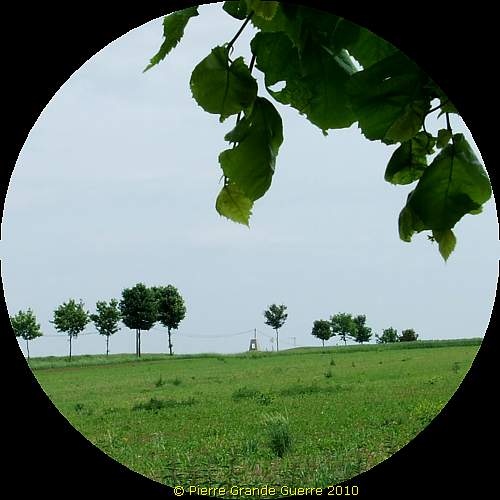
At Côte 303 stands this memorial for the 217e R.I.
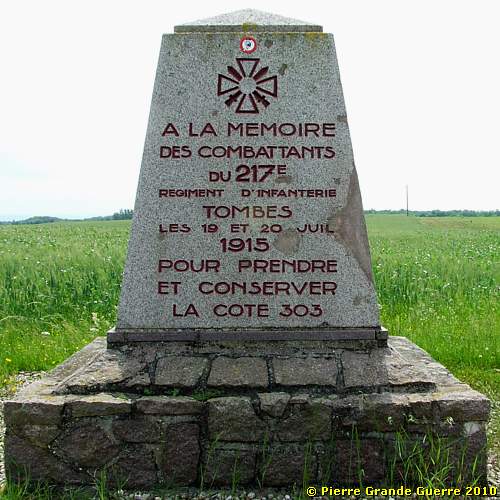
Some concise background information:
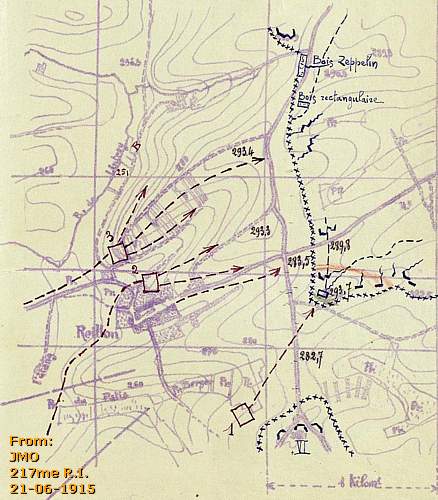
The Battle for Côte 303 - 19-20 June 1915
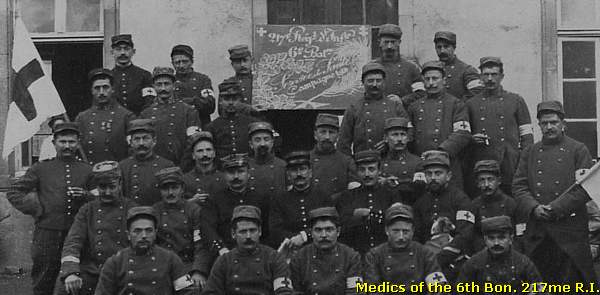
During June 1915 this blue line on the map below, west of Gondrexon , from the Bois Zeppelin southward , formed the main target of the 223e R.I. and the 217e R.I.
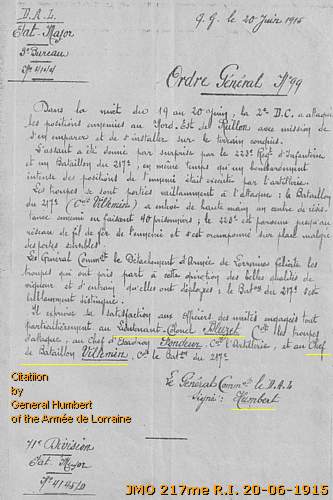
During the evening of 19 June 1915 at 22.00 hrs. Lt. Colonel Bluzet of the 22me R.I. launched the signal for a preliminary bombardment, which started at 22.20 hrs. and continued until 22.39 hrs.
At 22.45 hrs. the 217e R.I., a component of the 71e D.I., launched an attack from the village of Reillon at a German observation post at Point 293,7 at Côte 303. The attackers were shouting, "Hurray", "En Avant", and singing the national anthem, the "Marseillaise". Around 23.00 hrs. the French troops succeeded to conquer the observation post making some 50 Bavarians prisoners of war.
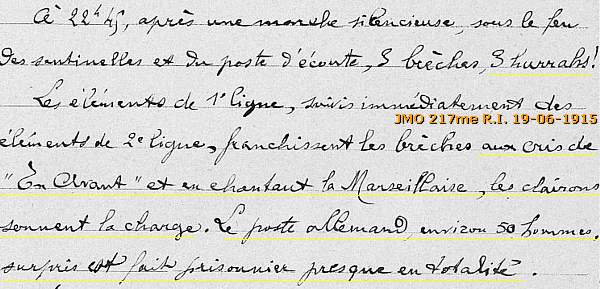
During the following night the Bavarians started an artillery bombardment at the 1st Battalion, which was still holding the just conquered Position 293,7. The bombardment started at from 2.00 hrs . and lasted until 10.00 hrs . in the morning . At 8 o’clock many small groups of Bavarians launched an infantry counter-attack from Gondrexon on the right flank of the French on Côte 303. The still continuing German artillery bombardment on Point 293,7, which would later be also directed at the left flank, prevented the 71st Division for some hours to send reinforcements . This bombardment caused many French casualties .
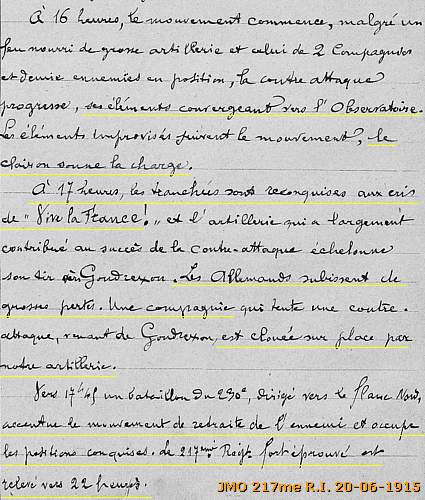
In answer to the stubborn Bavarian attacks and breaches in the new French positions the French organised a series of 3 counterattacks. Though the French were sometimes forced to withdraw , the 3rd counterattack in the late afternoon of the reinforcements of Commandant (Major) Villemin’s 127th Battalion was successful . At 17.45 hrs . a battalion of the 230e R.I. detected the Bavarian withdrawal at Gondrexon , which represented the definite conquest of Point 293,7. During these two days the Bavarians counted many losses , but the 217e R.I. had many casualties too : 41 men killed , 61 men missing in action, and 185 men wounded . At least 31 French soldiers were taken prisoner .
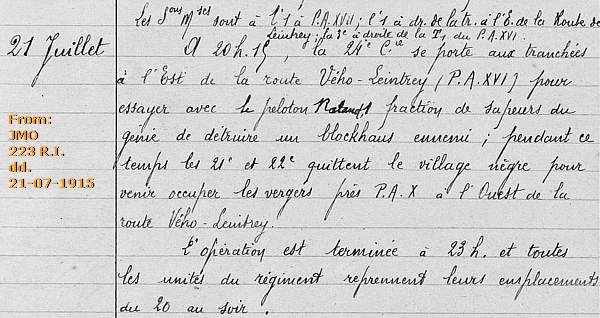
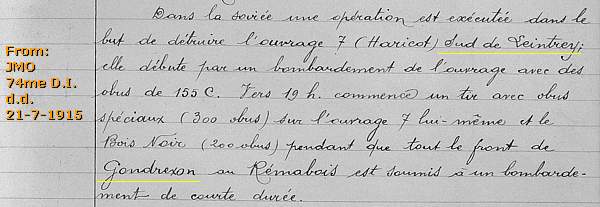
But the fighting for Bois Zeppelin and Gondrexon was not over. The fighting would continue until the end of July 1915.
From the 217e R.I. a view northward at the Bois Zeppelin.
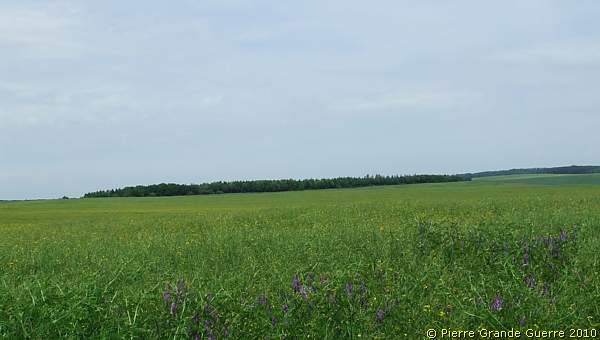
A view south-eastward.
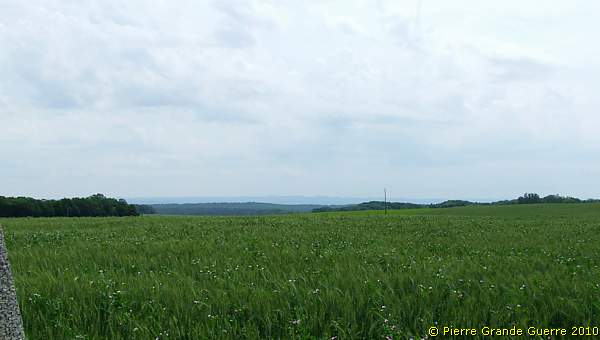
With a last view at "Point 293,7" (right) we depart , and....
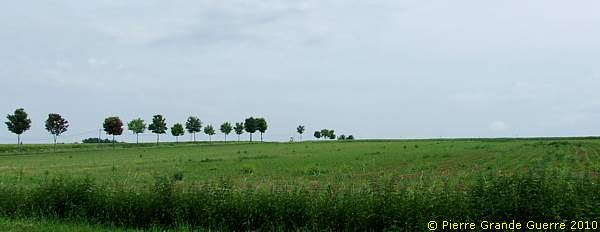
... we continue eastward to the western outskirts of Gondrexon.
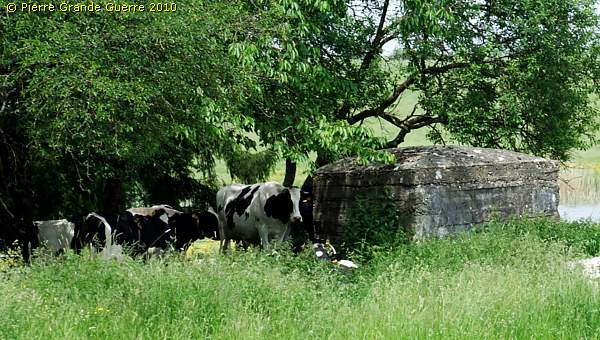
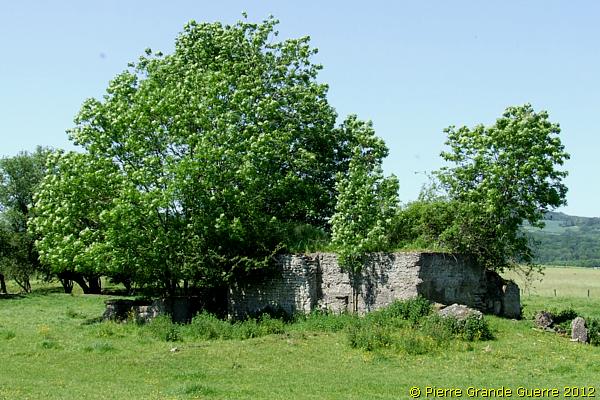
Here we find some relics of German bunkers.
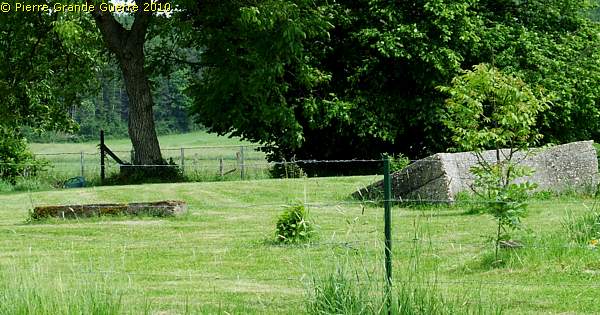
From Gondrexon we return to the Bras de Chemise memorial to continue from there south-eastward to Domèvre-sur-Vezouze.
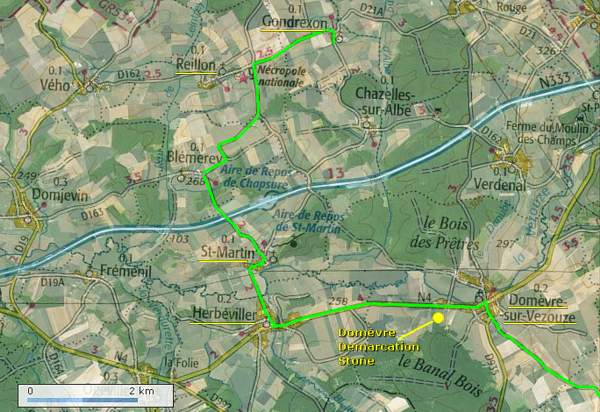
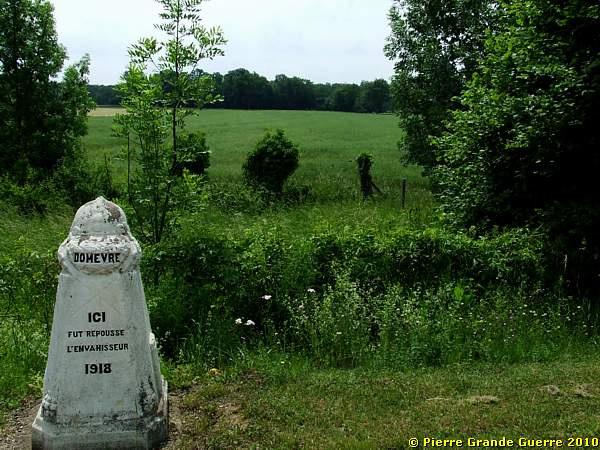
Along the N4, a few hundred meters before entering the village of Domèvre , stands this after-war demarcation stone.
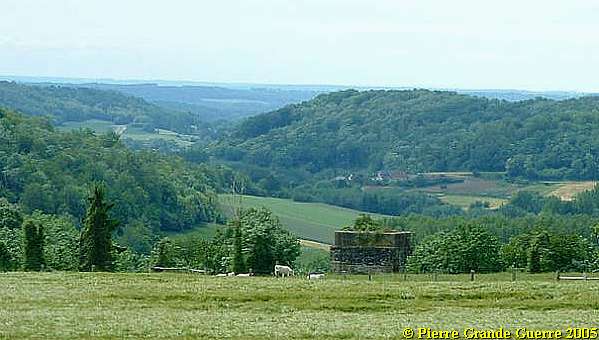
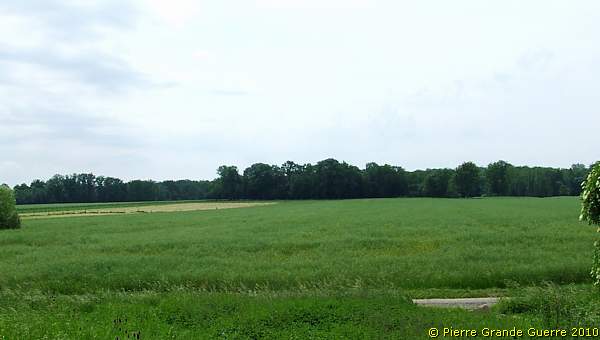
The landscape south of Domèvre.
From Domèvre we continue over a nameless road southwest to the hamlet of le Hameau. From now on we will stay on the German side of the front line. We will visit the landscapes and the relics of German bunkers.
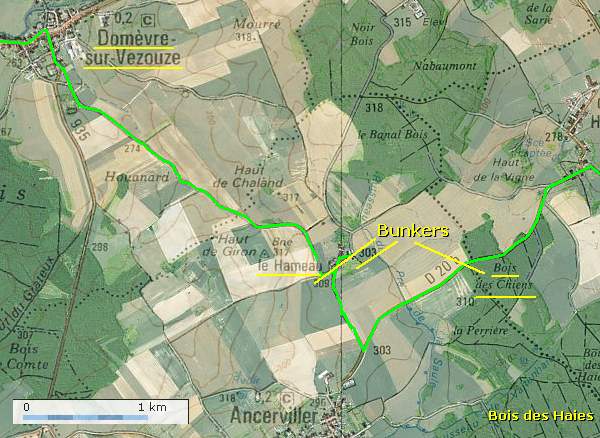
In the hamlet of le Hameau there are still two German bunkers.
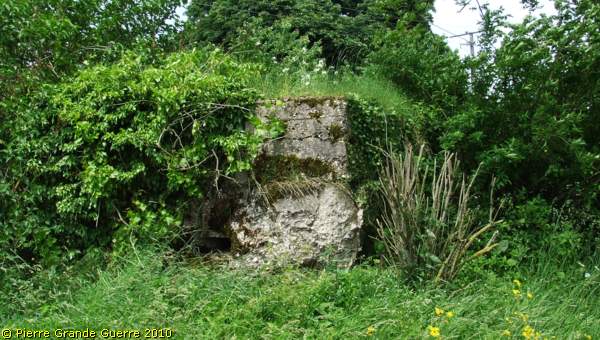
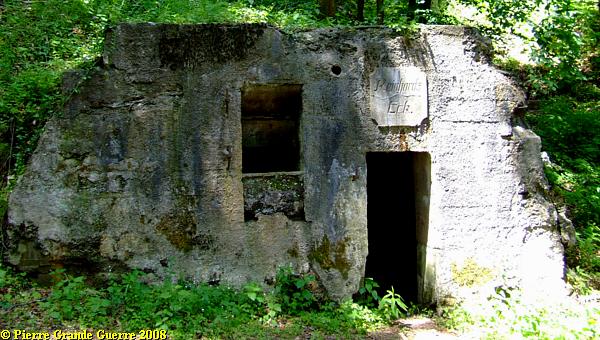
The first bunker is still accessible.
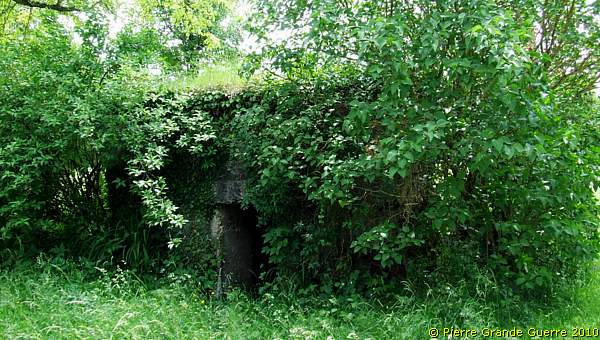
The loop holes face westward.
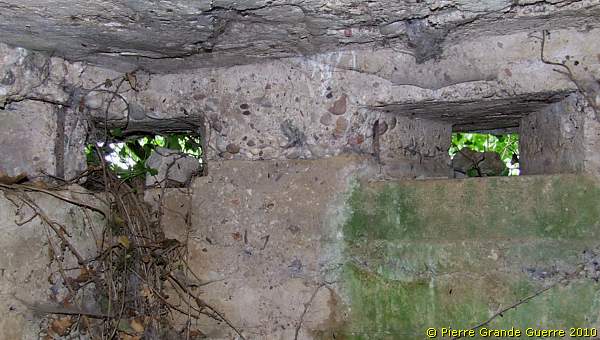
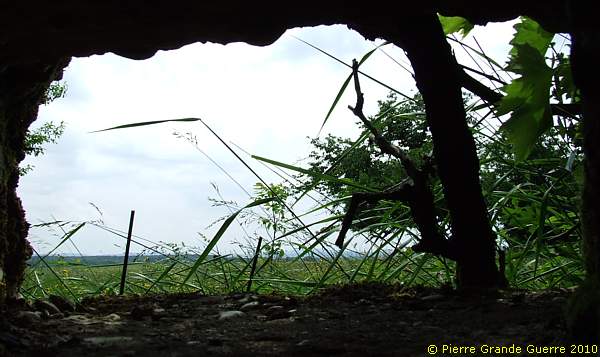
The second one , a shelter bunker some 25 meter further on, ...
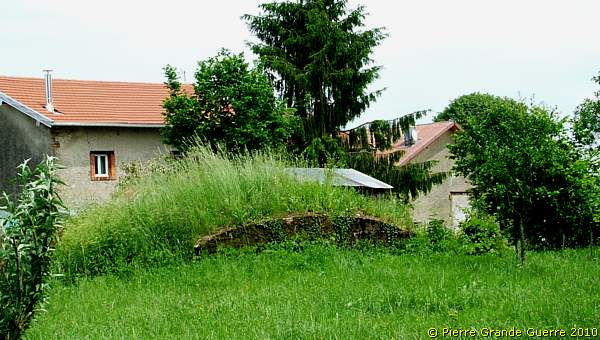
... is closed.
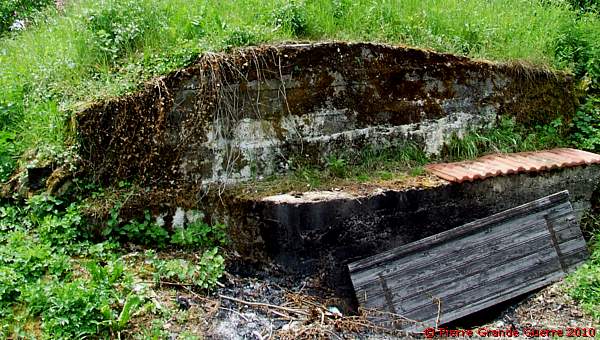
From le Hameau , right on the horizon, we continue eastward.
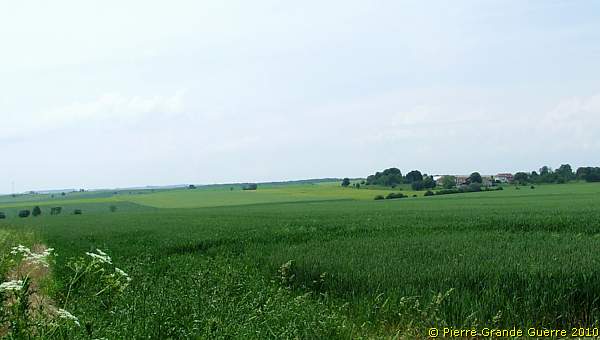
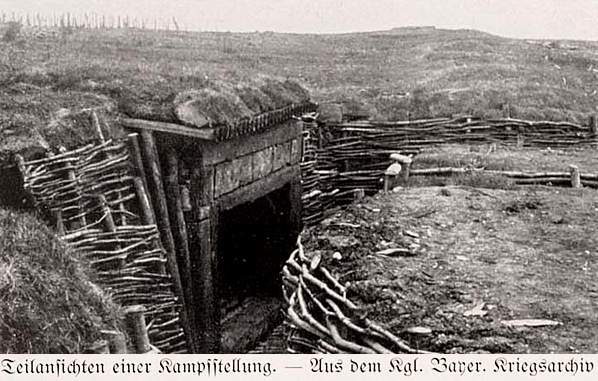
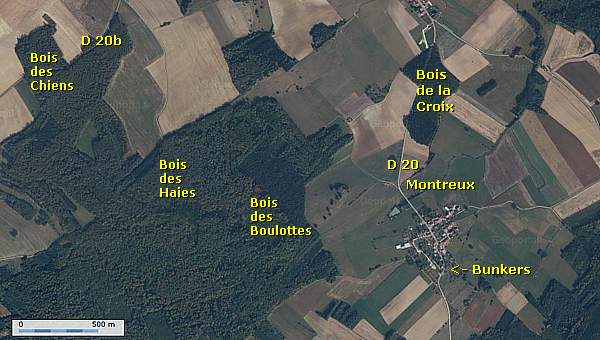
Along the D 20b we arrive at the west edge of the Bois des Chiens .
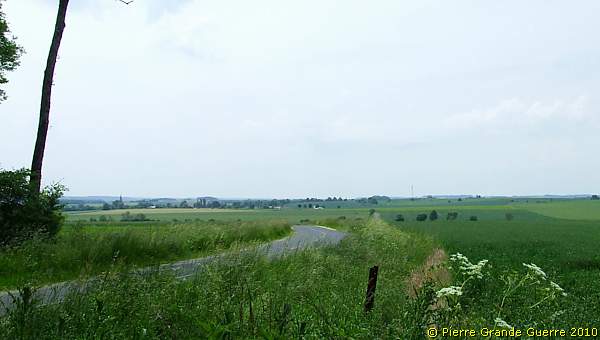
This wood has a muddy soil , and it is densely vegetated with thicket. I explore the edge at the south side of the road.
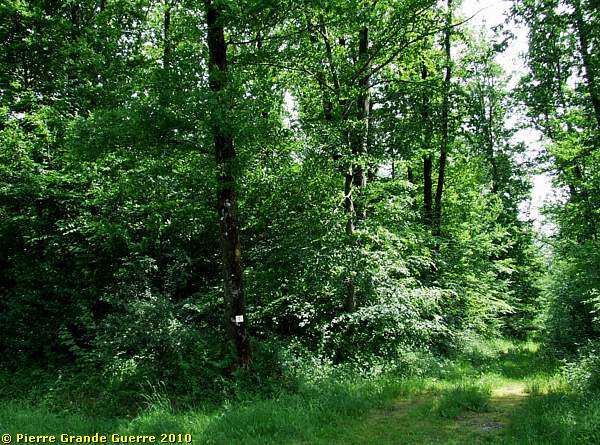
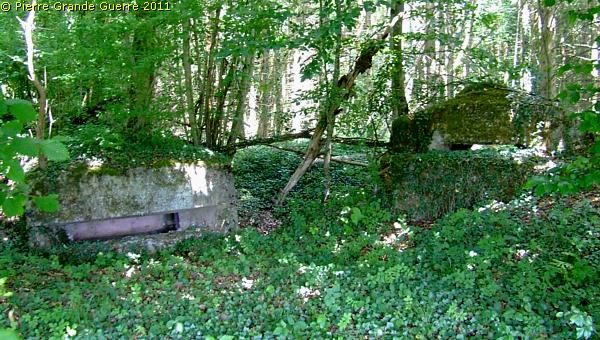
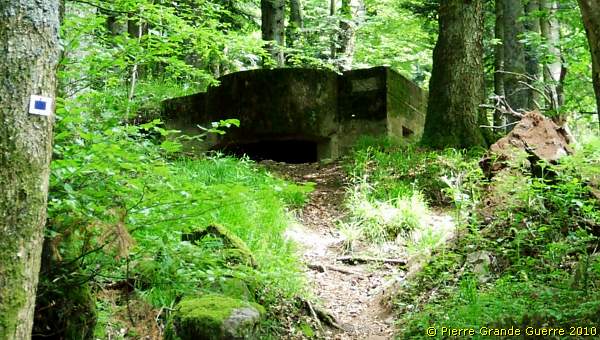
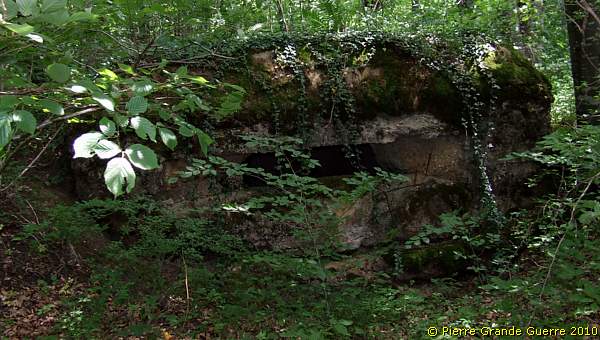
In the bush I immediately discover a machine-gun bunker, facing north-westward.
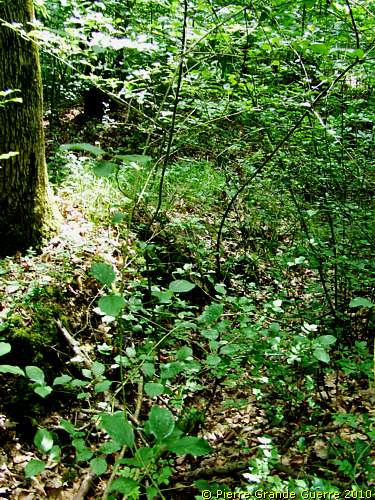
Hard to see ; overgrown traces of trenches.
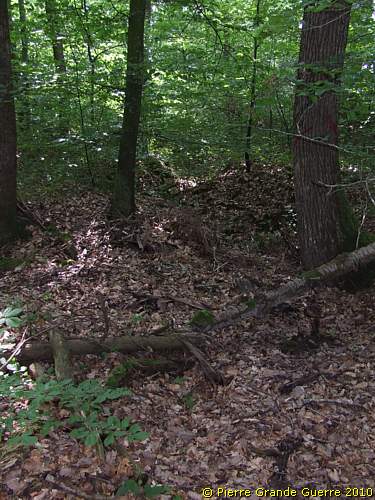
These bulges hide entrances to dug-outs.
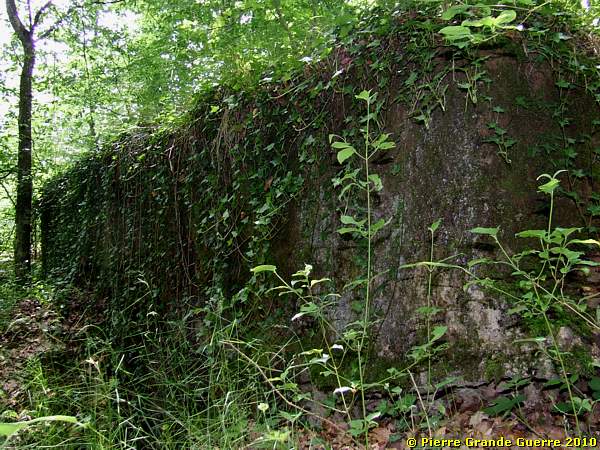
Strolling around in the dense vegetation , I detect another bunker.
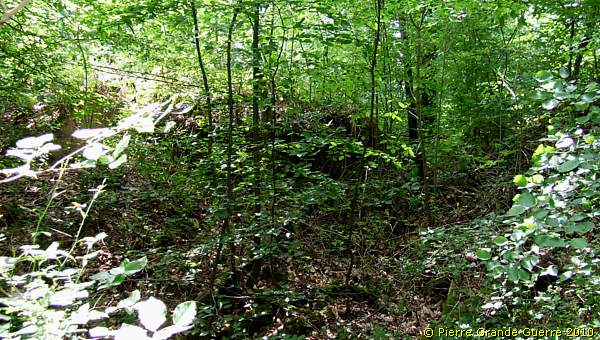
This is a rather large bunker.
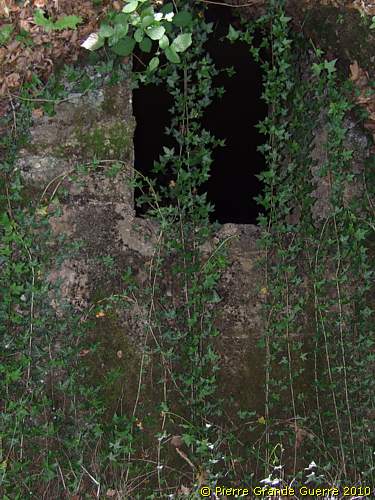
Some 30 m. further on: another large shelter bunker.
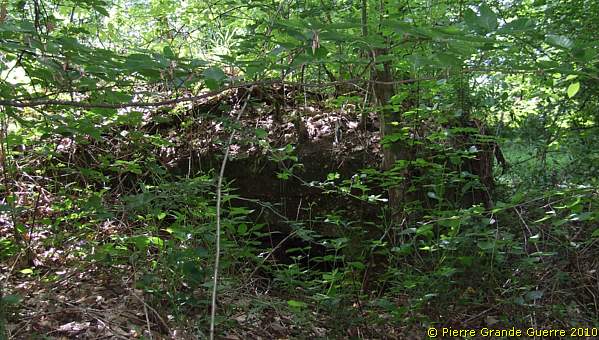
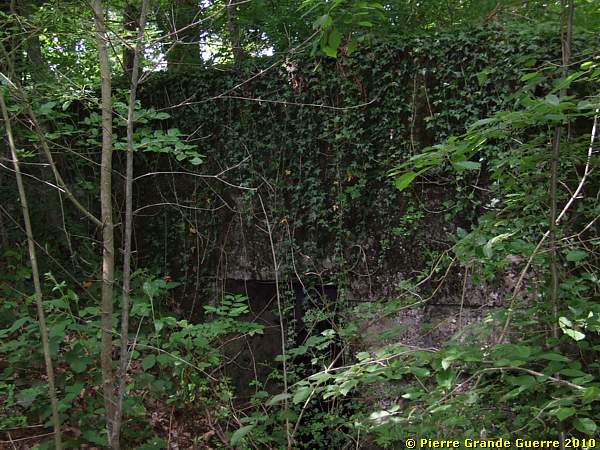
After again some 20 m.; a rather smaller bunker.
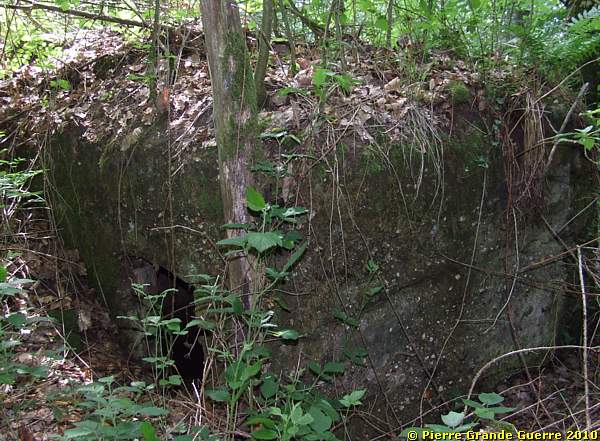
This is the top construction of a machine-gun bunker.
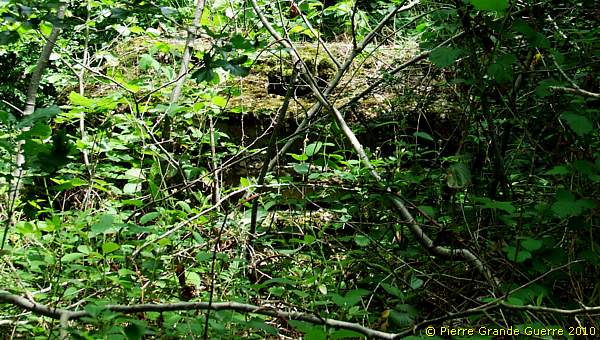
The interior of this machine-gun bunker.
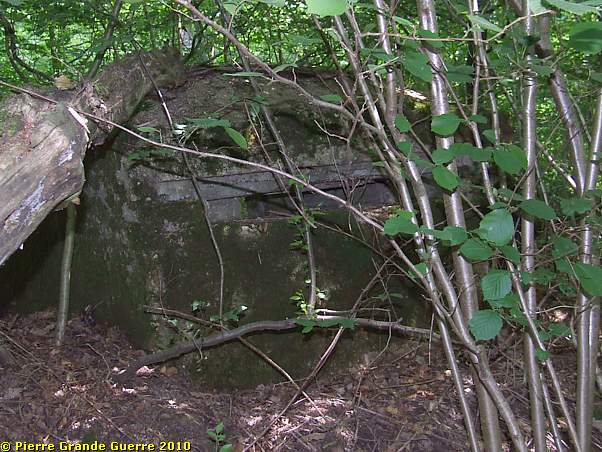
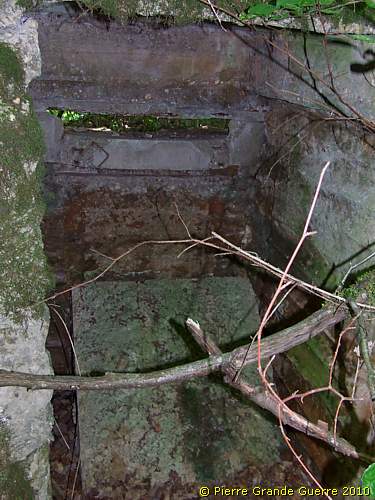
This large bunker lies more to the east , some 50 m. away from the D 20b.
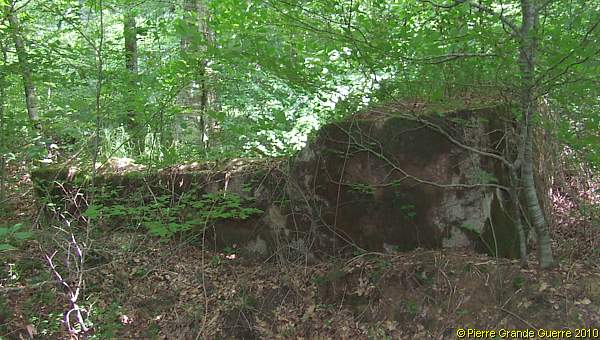
We leave the Bois des Chiens...
... with this panorama of the field of fire of these bunkers in the Bois des Chiens.
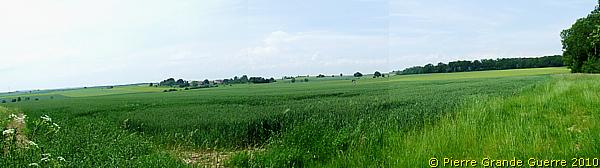
At the horizon: le Hameau.
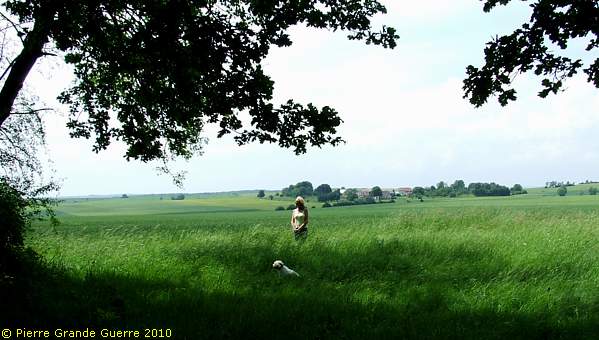
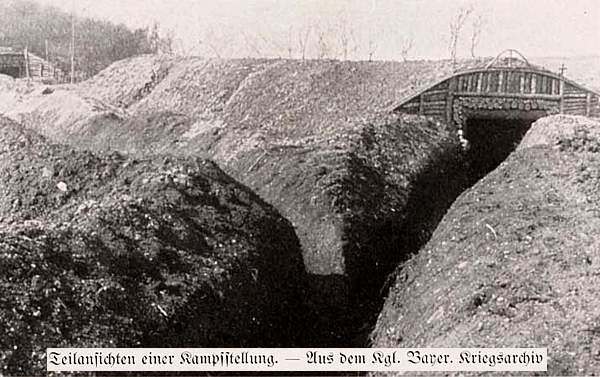
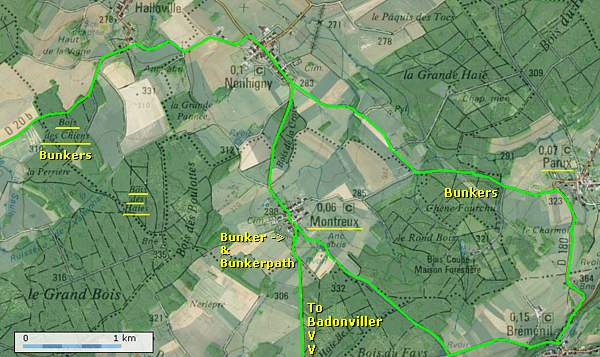
From the Bois des Chiens we continue south-eastward via the D 20 to Montreux.
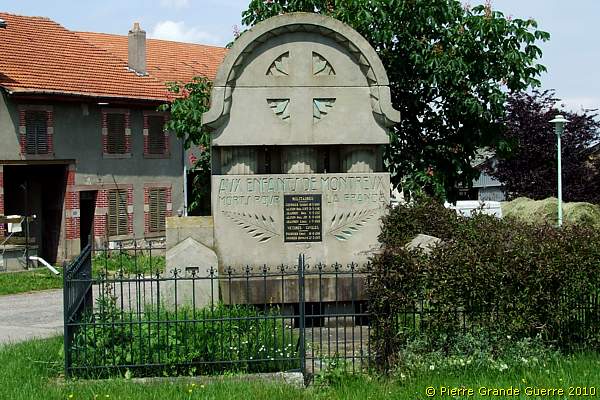
In the village of Montreux stands this memorial for it's 5 military en 2 civilian war victims.
At the southern outskirts of the village , in the west verge...
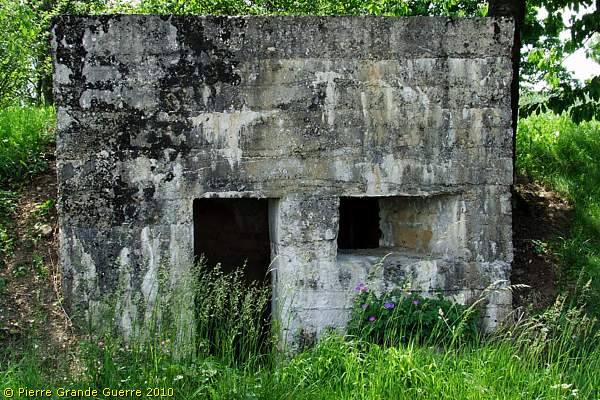
... of the D 20, stand three bunkers next to each other.
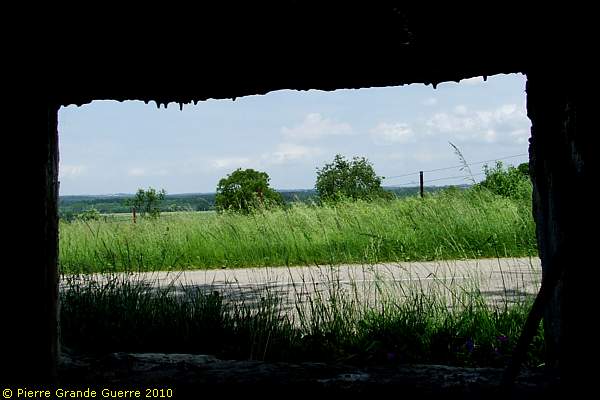
The second bunker.
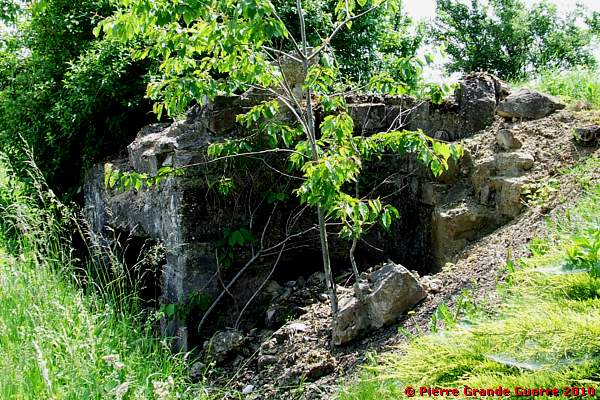
These bunkers belong to a " Stützpunkt ", a support position , of the first German line.
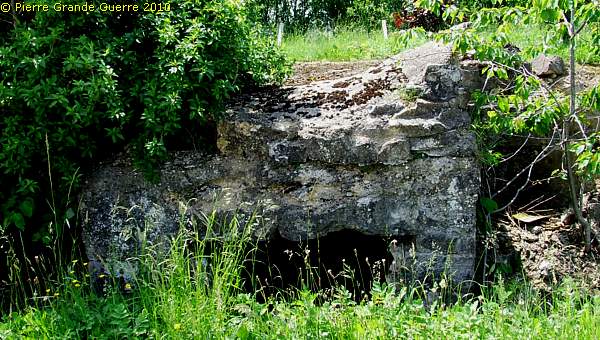
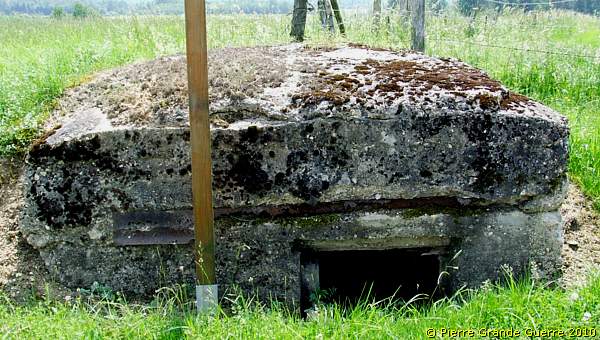
The third bunker is a double machine-gun bunker, ...
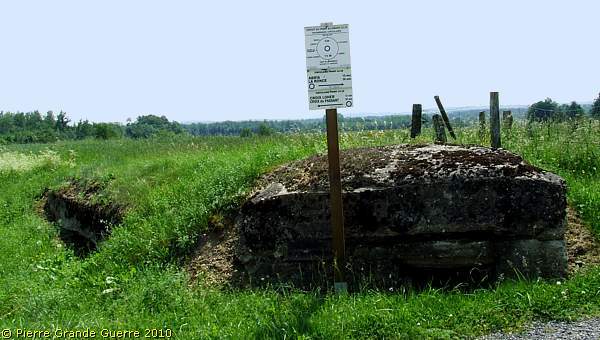
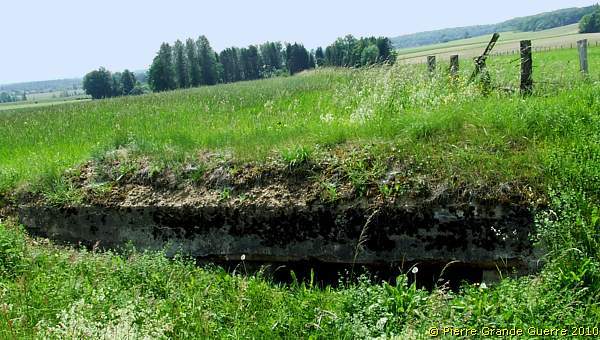
From this bunker starts also an interesting "bunker path ".
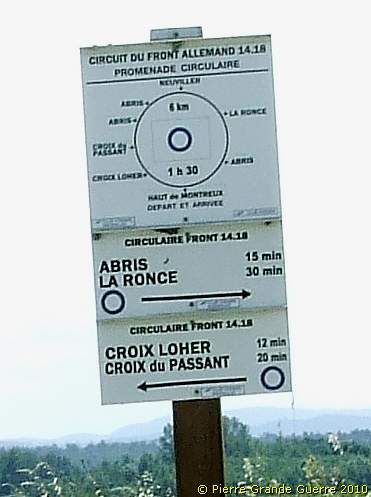
In June 2011 we walked this "Circuit du Front Allemand 14-18". On the next photo page you will find a Photo Impression of the Montreux German Front Walk .
The location
of this
machine-gun bunker offers ...
... a fine panorama of the landscape around Montreux.
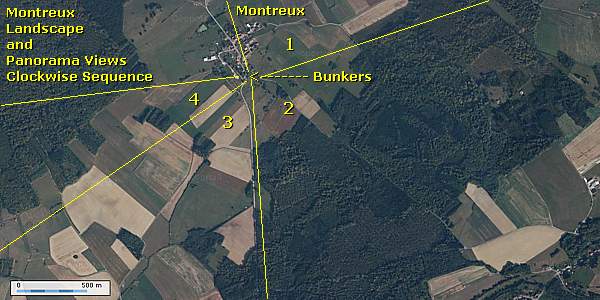
View north-eastward. Left the church tower of Montreux.
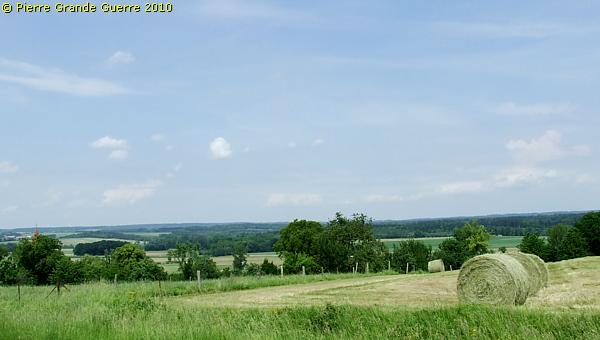
View eastward.
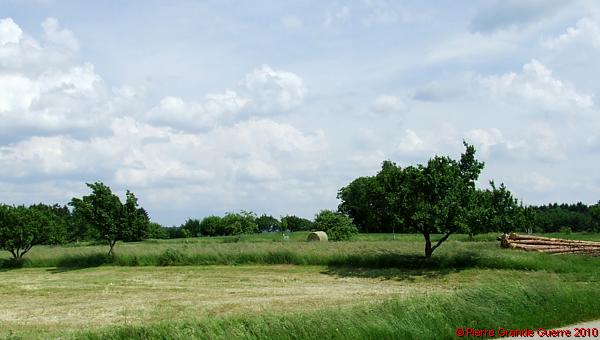
Panorama view south-westward. The D 20 left.
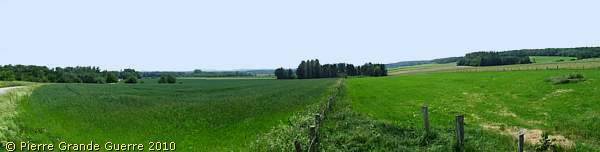
View westward.
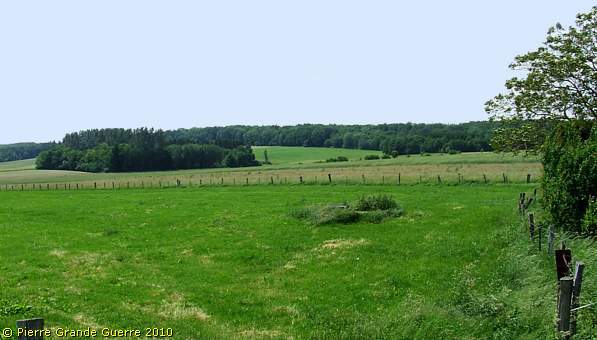
From Montreux we continue westward to Parux , to the Bois du Chêne Fourchu , " Forked Oak Wood ".
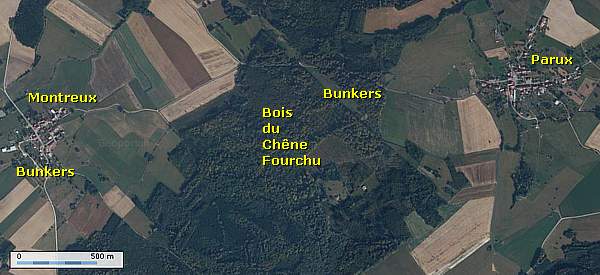
In the wood we visit 6 bunkers near to each other. This location, some 2 km. behind the front line, served as an artillery base.

This first bunker is large enough to have possibly served...
... as a communication post, a "Blinkstelle", for a light signalling system.
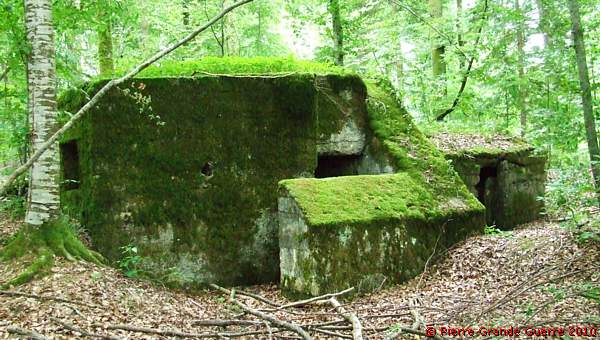
Along a concrete breastwork I enter this rather amazing bunker.
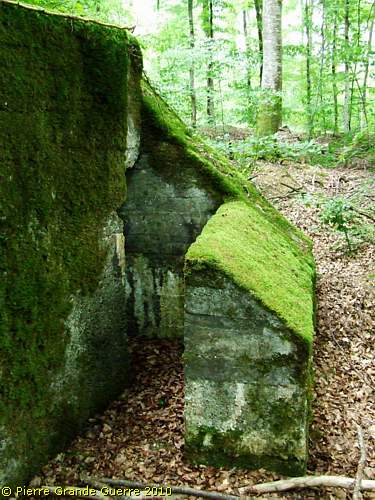
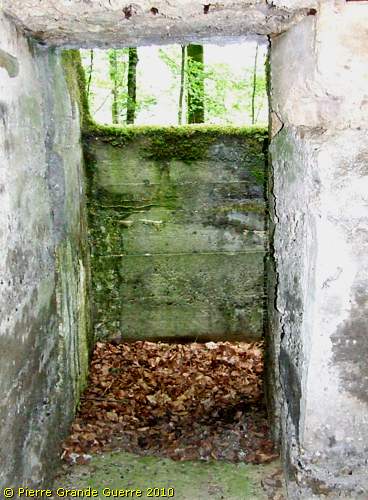
The entrance from inside.
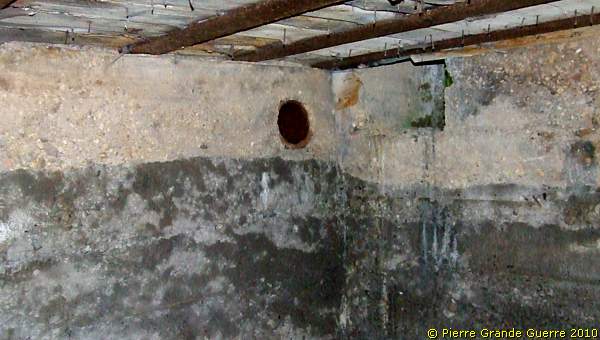
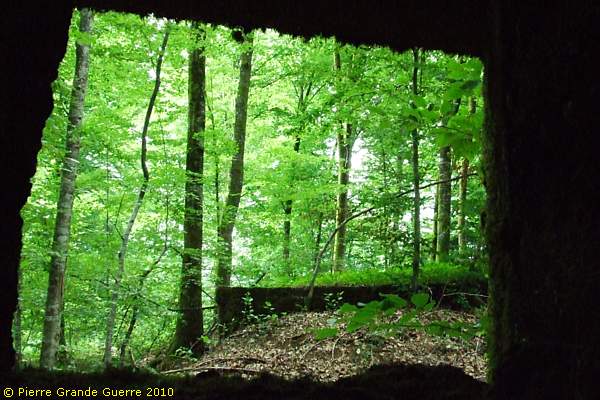
View outside from one of the rooms of this bunker.
This is the same , second bunker, but outside , which might have served as an ammunition bunker.
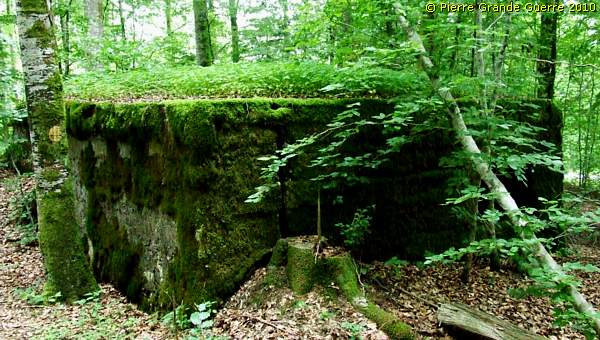
Considering the rather wide opening of the entrance , ...
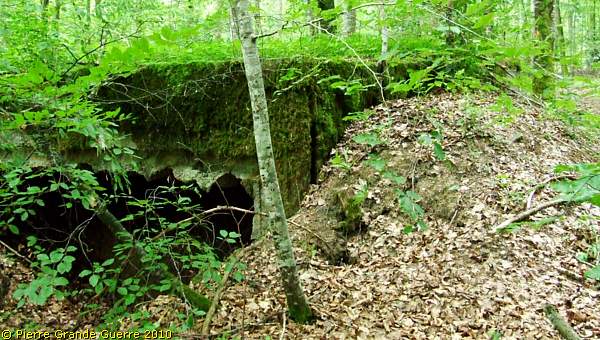
... I presume that this third bunker is also an ammunition depot.
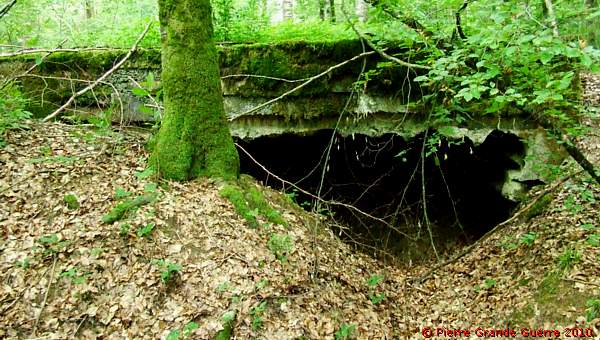
The fourth one looks like a "standard" 1917-18 shelter bunker.
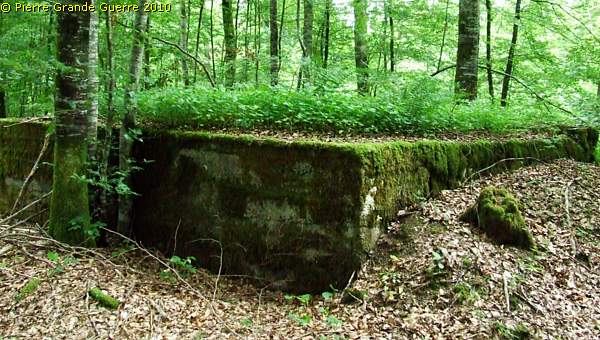
The fifth bunker is so overgrown , ...
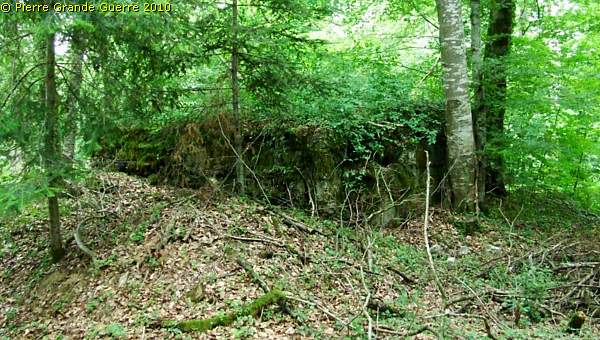
.. I would not dare to comment or to draw any "possible" conclusions.
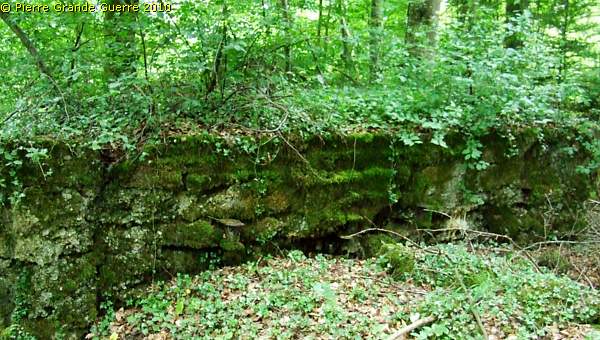
The sixth and last bunker is rather impressive too. The rear side:
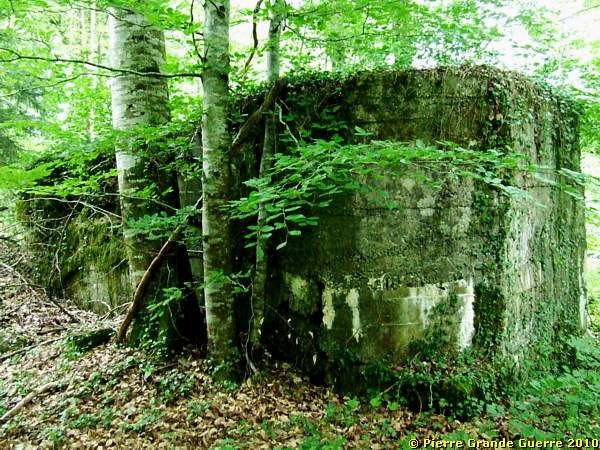
Again , as this bunker is accessible , I have to enter it.
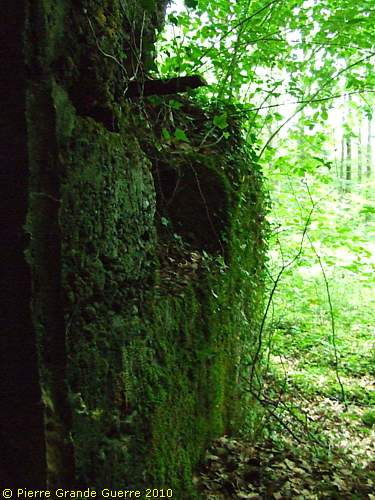
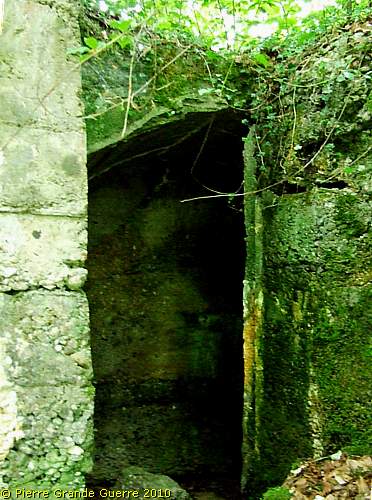
This shelter bunker possesses several rooms ...
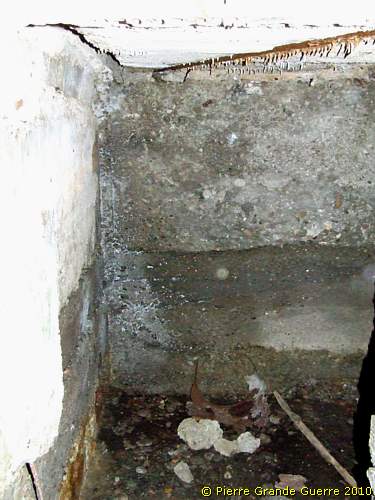
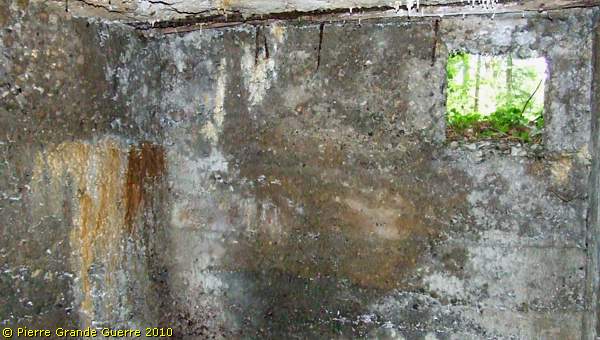
... with windows facing northward to the forest road.
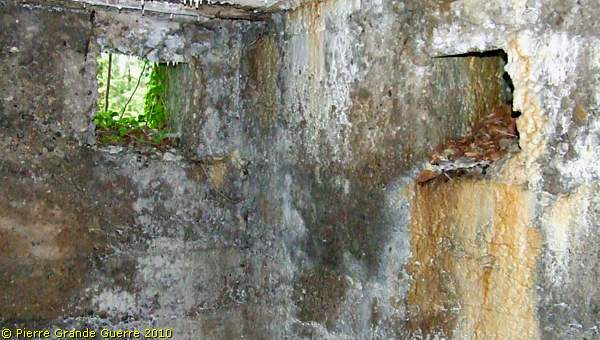
As in the first bunker entrances to tunnels are filled in.
When I leave this last bunker, the weather is rapidly changing.
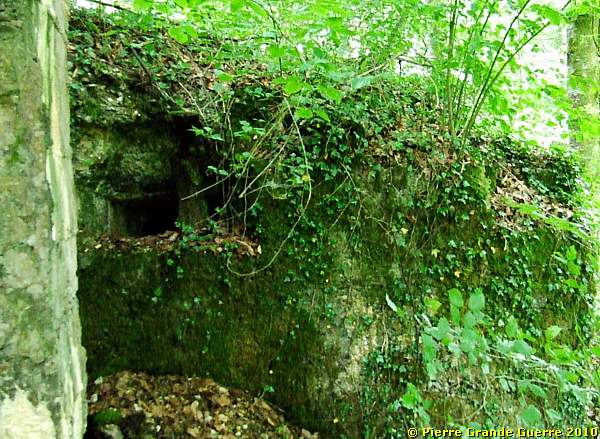
Forced by unexpected , sudden thunder , lightning and rain , ...
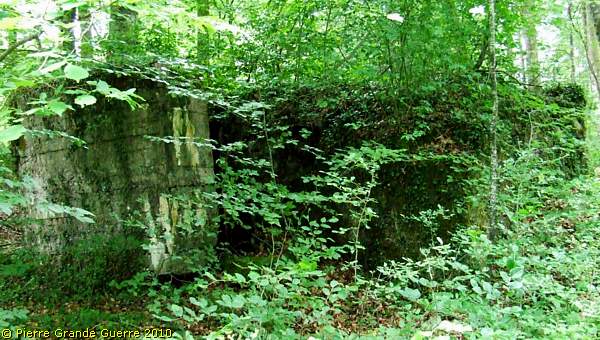
... we have to prematurely abort our explorations in the wood with this last view at the first bunker.
From the Bois du Chêne Fourchu near Parux we return to Montreux to do the Montreux German Front Walk.
Continue to the next chapter: " The Montreux German Front Walk "