
Harry Farr - Eerherstel voor een "Deserteur"
duda-wsm • 14 May 2019
DUTCH Page - Pierre's Column d.d. 17 augustus 2006
De
media vallen op het ogenblik (augustus 2009)
over de bekentenis
van Günter Grass, dat hij als 17-jarige jongen
in 1944 dienst heeft genomen in de Waffen SS.
Vele schrijvers en media veroordelen nu
gemaxhalve al zijn uitspraken en geschriften,
ongeacht zijn boodschap.
Ik
houd mijn goede herinneringen aan “Die
Blechtrommel”, zowel het boek over “Oskarchen”,
als over de verfilming van Volker Schlöndorff.
Uiteindelijk was Günter een door de propaganda
gebrainwashte puber van 17, die een verkeerde
keus heeft gemaakt. Anderzijds heeft hij tijdens
de rest van zijn leven duidelijk getuigd van het
tegendeel. Is dat schijnheilig of is het
schaamte? Ik houd het op het laatste. De Tweede
Wereldoorlog staat weer op uit zijn vermeende
graf in een andere gedaante
Ook de Eerste Wereldoorlog is deze dagen
in het nieuws en vooral in
Engeland.
De
Britse minister van Defensie, Browne, heeft
gisteren besloten tot een algemeen eerherstel
voor de 306 Britse soldaten ,die tijdens de
Eerste Wereldoorlog wegens desertie of
“cowardice”, lafheid, werden
geëxecuteerd.
Desertie of lafheid blijkt maar een
relatief begrip te zijn, dat voor vele soorten
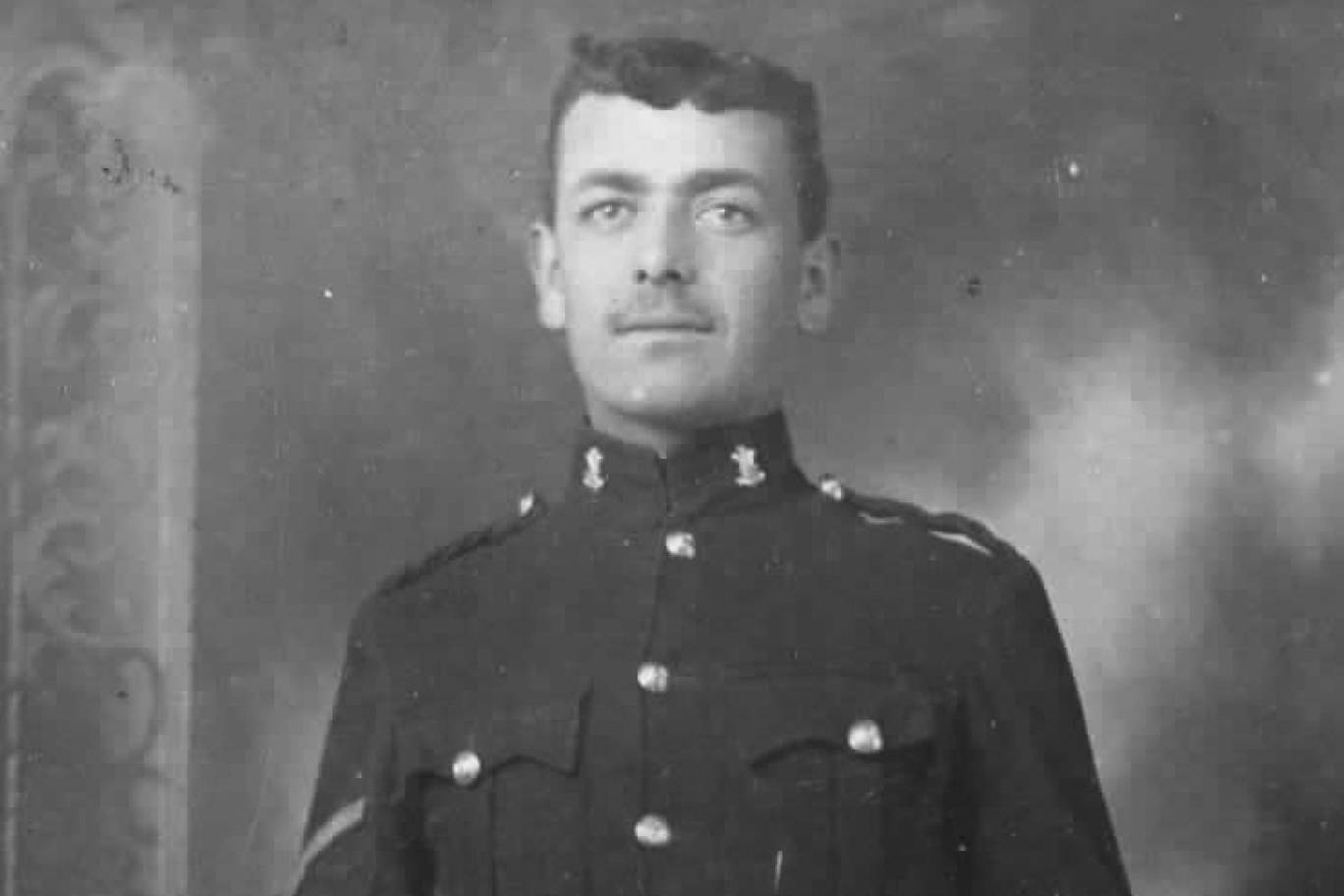
uitleg vatbaar is. Het verhaal van de 25-jarige
Private Farr is tekenend voor vele soldaten van
alle strijdende partijen in die oorlog. Private
Farr had al twee jaar aan het Front gevochten.
Op 11 mei 1915 wordt hij met “Shell shock”, een
vreselijke ziekte, die vaak naast depressiviteit
en angsten ook met lichamelijke spasmen gepaard
gaat, opgenomen in een hospitaal in Boulogne. Na
vijf maanden verblijf in het hospitaal verklaren
de artsen hem weer geschikt voor frontdienst.
Tijdens zijn inzet bij de Slag aan de Somme
weigert Farr, zich beroepend op zijn “Shell
shock”, terug naar de loopgraven te gaan.
In
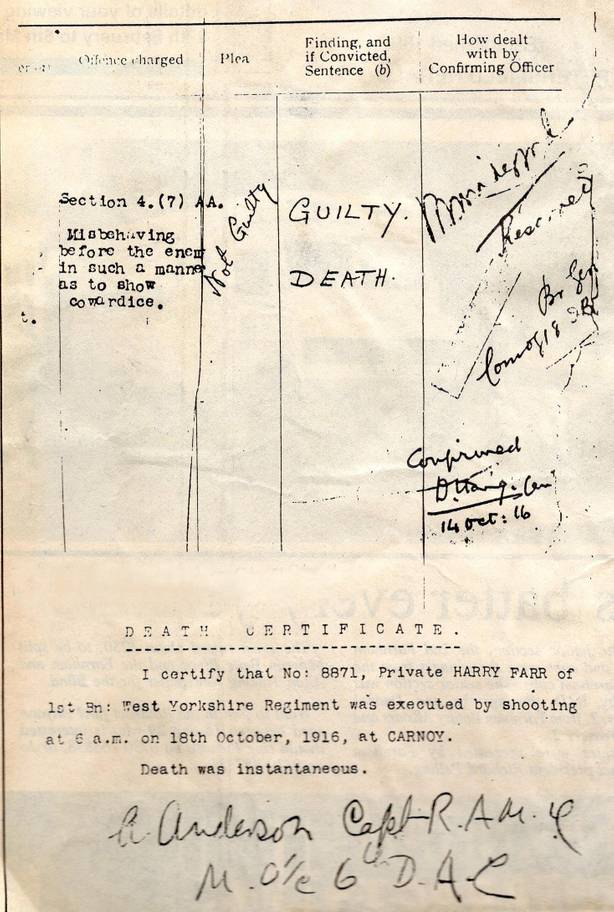
oktober 1916 wordt hij door de krijgsraad ter
dood veroordeeld wegens "mis-behaving before the
enemy in such a manner as to show cowardice",
“wangedrag in het zicht van de vijand op zo’n
wijze, dat hij lafheid vertoonde”. De rechtszaak
schijnt nog twintig minuten geduurd te hebben,
dat nog redelijk lang genoemd mag worden onder
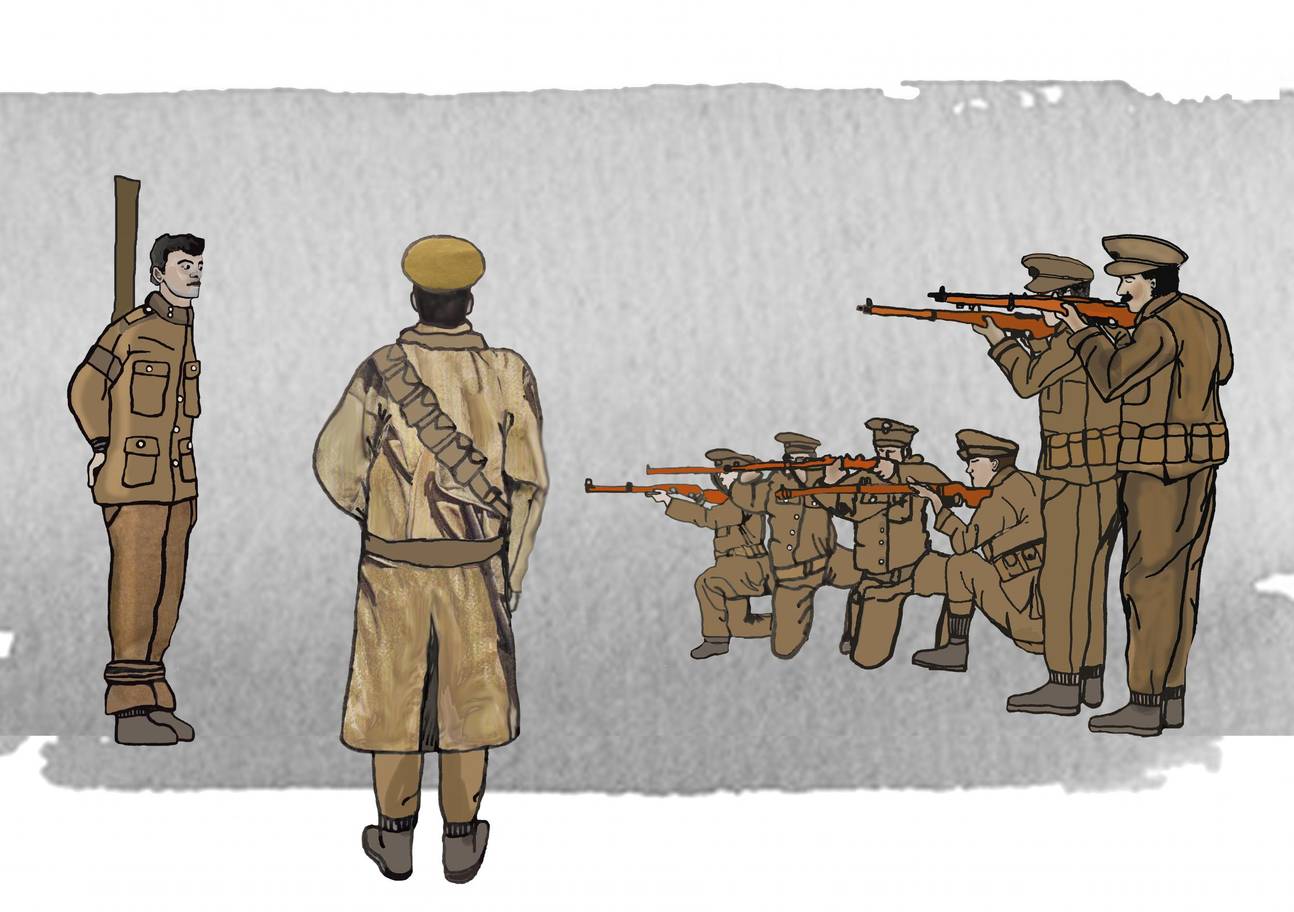
die omstandigheden. Op 18 oktober 1916 , 's ochtends om 6 uur, weigert Harry Farr nabij Carnoy de blinddoek voor zijn executie, die onmiddellijk daarna plaatsvindt.
Zoals ik al schreef, gold deze situatie
voor alle “deserteurs” van alle strijdende
partijen in die oorlog. Na het Franse
Nivelles-offensief aan de Aisne rivier, nabij
Reims, sloegen de manschappen in 1917 aan het
muiten. Nivelles’ opvolger, generaal Pétain liet
27 muiters wegens desertie als afschrikwekkend
voorbeeld executeren.
Eerder al in de Franse sector aan de
Somme waren er soldaten die zich expres verwondden om aan de dienst in de loopgraven te
ontkomen. Zij konden de druk, het voortdurende
gebulder van explosieven, de geur van dood en
kruit, de onmenselijke gevechten, en de vaak
nodeloze stoet met gewonden en doden niet meer
verwerken.
Ben je dan laf? Ben je dan deserteur? Met
de ogen van nu erkennen wij “Shell shock” als
een neurose, een post traumatisch
oorlogssyndroom. In 1916 werd daar heel anders
over gedacht. Dit soort vonnissen werd in het
heetst van de strijd geveld. Die doodvonnissen
waren in de oude krijgstraditie geheel gericht
op het behouden van de discipline onder de
troepen om hun kadavergehoorzaamheid ten volle
te benutten om de soldaten als willoos
kanonnenvoer “over the top” van de loopgraaf te
kunnen sturen.
Vorig jaar is er een goede speelfilm
uitgebracht, die een aardig beeld geeft van hoe
het Franse leger met zijn “deserteurs” omging.
De film is overal te huur of te koop. De film
van Jean-Pierre Jeunet heet “ Un Long Dimanche De
Fiançailles
”, vrij vertaald “Een Lange
Verlovingszondag”. Audrey Tatou speelt een
verloofde die op zoek gaat naar haar “vermiste”
soldaat, die tot een groepje van 5 “deserteurs”
behoorde aan het Somme-front, nabij Bouchavesnes. Tijdens de executie van de
“deserteurs” in Niemandsland vindt er een
Duitse aanval plaats en wordt de verloofde
soldaat aan zijn lot overgelaten. Iedereen denkt
dat hij vermist is, maar niet de vastberaden,
licht gehandicapte verloofde, Amélie. Ik raad
deze oorlogsfilm aan, omdat hij een genuanceerd
beeld geeft van de redenen om te deserteren of
je zelf te verwonden.
Ik
bewonder de hardnekkigheid van de weduwe en de
kleindochter van Private Harry Farr, om de
(rechts-)zaak voor dit eerherstel negentig lange
jaren vol te houden en uiteindelijk te winnen.
Goed nieuws, dat weer eens een ander licht werpt
op het begrip “desertie”.
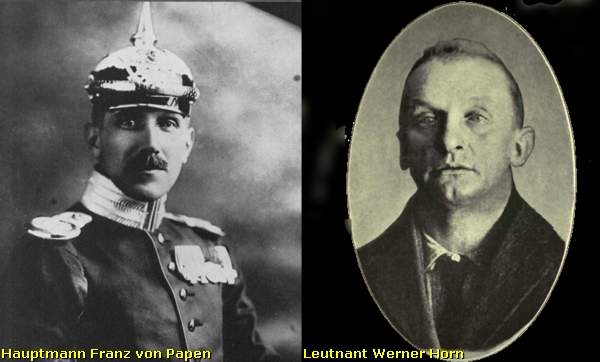
Inleiding: Franz Von Papen & Werner Horn; schaker en pion Onlangs stuitte ik in een oud boek (1) van 1919 op een opmerkelijk verhaal over een Duitse Luitenant, die in begin februari 1915 een half geslaagde bomaanslag pleegt op een spoorbrug over een grensrivier tussen de Verenigde Staten en Canada. Ook al staat de bekentenis van de dader, Werner Horn, deels in het boek te lezen, de naam van zijn opdrachtgever zal Horn blijven verzwijgen. Na wat verder zoeken vond ik ook de naam van Horn’s opdrachtgever, Franz von Papen, een van de aangeklaagden van het latere Neurenberg Proces in 1946. In een Grote Oorlog als de Eerste Wereldoorlog is Horn’s aanslag op de brug uiteraard slechts een bescheiden wapenfeit. Toch vermoed ik dat dit relatief onbekende verhaal, dat de geschiedenis is ingegaan als de “ Vanceboro International Bridge Bombing ”, nog interessante kanten kent. Het is onder andere een spionageverhaal over hoe in een groter plan een sluwe schaker zijn naïeve pion offert. Beknopte situatieschets Canada en de Verenigde Staten in 1915

This trip we start at the Léomont near Vitrimont and we will with some exceptions concentrate on the Battle of Lorraine of August-September 1914 in the area, called, the “Trouée de Charmes”, the Gap of Charmes. After the Léomont battlefield we continue our explorations to Friscati hill and its Nécropole Nationale. Next we pay a visit to the battlefield of la Tombe to go on to the Château de Lunéville. There we cross the Vezouze to move on southward to the Bayon Nécropole Nationale. At Bayon we cross the Moselle to pass Charmes for the panorama over the battlefield from the Haut du Mont. North-west of Charmes we will visit the British Military Cemetery containing 1918 war victims. From Charmes we go northward to the battlefield of the First French Victory of the Great War, the Battle of Rozelieures of 25 August 1914. North of Rozelieures we will visit the village of Gerbéviller. From there we make a jump northward to visit the ruins of Fort de Manonviller to finish with an interesting French Dressing Station bunker, west of Domjevin.
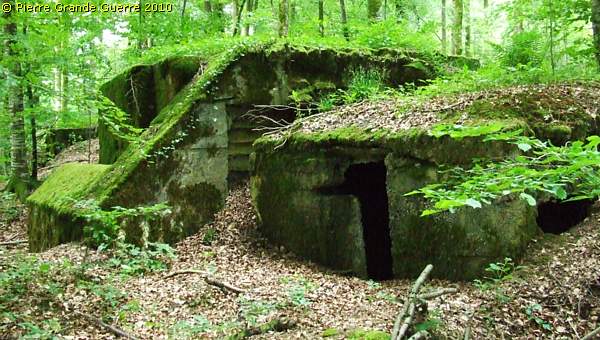
Though we depart from Badonviller in the Northern Vosges , we make a jump northward to the east of Lunéville and Manonviller . We start at Avricourt on the border of Alsace and Lorraine. From the Avricourt Deutscher Soldatenfriedhof we explore the southern Lorraine battlefields ; the mine craters of Leintrey , the Franco- German war cemetery and Côte 303 at Reillon , and some German bunkers near Gondrexon , Montreux , and Parux .
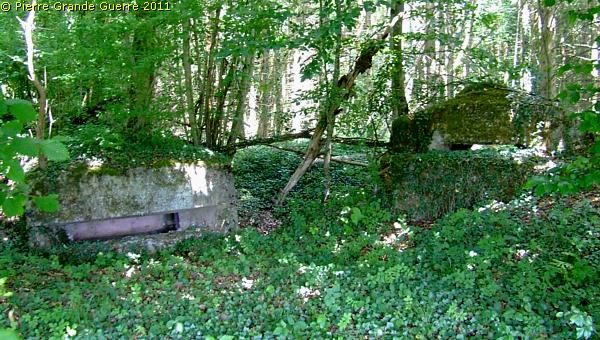
We depart from Raon-l’Etape to drive northward via Badonviller to Montreux to visit the " Circuit du Front Allemand 14-18", the Montreux German Front Walk 14-18, with its trenches , breastworks , and at least twenty bunkers.

North-east of Nancy, east of Pont-à-Mousson, and south-east of Metz we visit the battlefields of the Battle of Morhange of 14 until 20 August 1914. We follow mainly topographically the route of the French advance eastward over the Franco-German border of 1871-1918. During this visit, we try to focus on the day that the momentum of the battle switched from the French side to the advantage of the Bavarian side: the day of 20 August 1914, when the Bavarians rapidly re-conquered the territory around Morhange , being also the day of the start of their rather successful “Schlacht in Lothringen”. We will visit beautiful landscapes of the "Parc Naturel Régional de Lorraine", memorials, ossuaries, and cemeteries. Sometimes we will divert to other periods of the Great War, honouring Russian and Romanian soldiers, who died in this sector. We start our route at the border village of Manhoué, and via Frémery, Oron, Chicourt, Morhange, Riche, Conthil, Lidrezing, Dieuze, Vergaville, Bidestroff, Cutting, Bisping we will finish in Nomeny and Mailly-sur-Seille, where the Germans halted their advance on 20 August 1914, and where they constructed from 1915 some interesting bunkers.
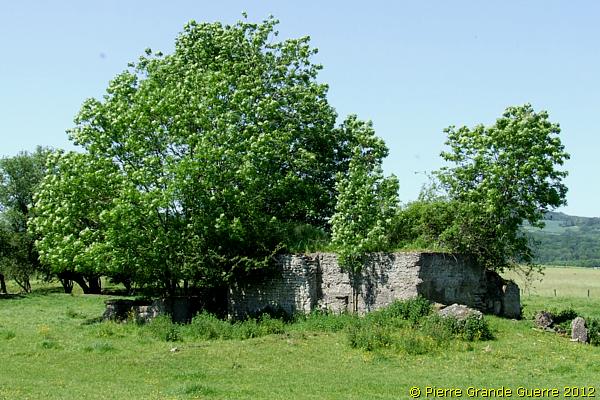
South of Manhoué we start this trip at Lanfroicourt along the French side of the Franco-German 1871-1918 border, marked by the meandering Seille river. We visit some French bunkers in Lanfroicourt, near Array-et-Han and in Moivrons. From there we go northward to the outskirts of Nomeny and the hamlet of Brionne to visit the ( second ) memorial, commemorating the events in Nomeny of 20 August 1914. We continue westward to finish at the Monument du Grand Couronné at the Côte de Géneviève, a former French artillery base, which offers several panoramic views over the battlefield.
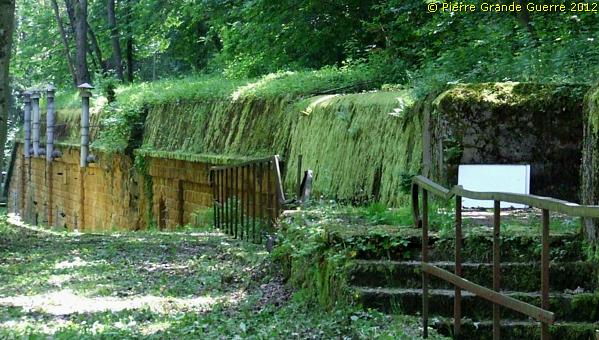
North of Pont-à-Mousson and south of Metz, we explore the relics of German bunkers and fortifications along the Franco-German 1871-1918 border. We start at Bouxières-sous-Froidmont to visit the nearby height of the Froidmont on the front line. This time we will show only a part of the Froidmont, focusing on its military significance. From the Froidmont we continue via Longeville-lès-Cheminot and Sillegny to the “Forêt Domaniale de Sillegny” to explore some artillery ammunition bunkers. Next we continue to Marieulles for its three interesting bunkers and to Vezon for its line of ammunition depot bunkers. From Vezon we continue to the “Deutscher Kriegsgräberstätte Fey – Buch”. From Fey we go eastward, passing 6 bunkers near Coin-lès-Cuvry to finish our trip at the top construction of the “Feste Wagner” or “Fort Verny”, north of Verny.
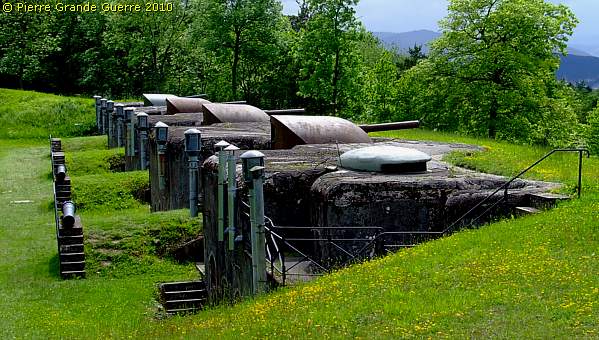
From Badonviller or the Col du Donon we continue north-eastward for a visit to an extraordinarily well restored sample of German fortifications: the Feste Kaiser Wilhelm II, or Fort de Mutzig, lying on a height, some 8 km. away from the 1871-1918 Franco-German Border.
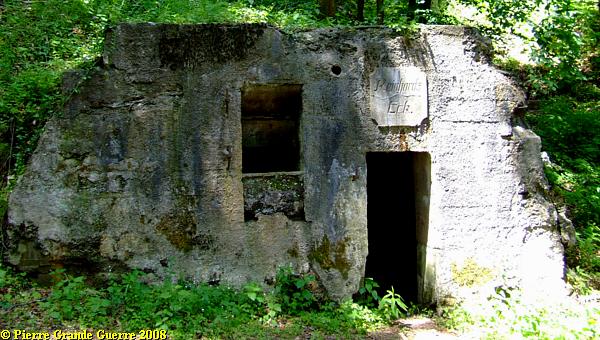
We concentrate on the German side of the front around "Markirch", Sainte Marie-aux-Mines, the so-called "Leber" front sector . We first pay a visit to the Sainte-Marie-aux-Mines Deutscher Soldatenfriedhof, and next to the southern side of the Col de Ste. Marie for the many interesting bunkers of the German positions at the Bernhardstein, at the north-eastern slopes of the Tête du Violu. On the next photo page about the Haut de Faîte we will continue with a visit to the northern side of the pass and the "Leber" sector.